Certified Translation Process UK – How It Works
Send the complete document, language pair, intended recipient and deadline. We review the certification route and quote first, then translate, check, certify and deliver the completed file in the agreed format.
The correct route may be certified, sworn, notarised or apostilled. Sharing the receiving organisation's instructions helps confirm the appropriate service before work begins.
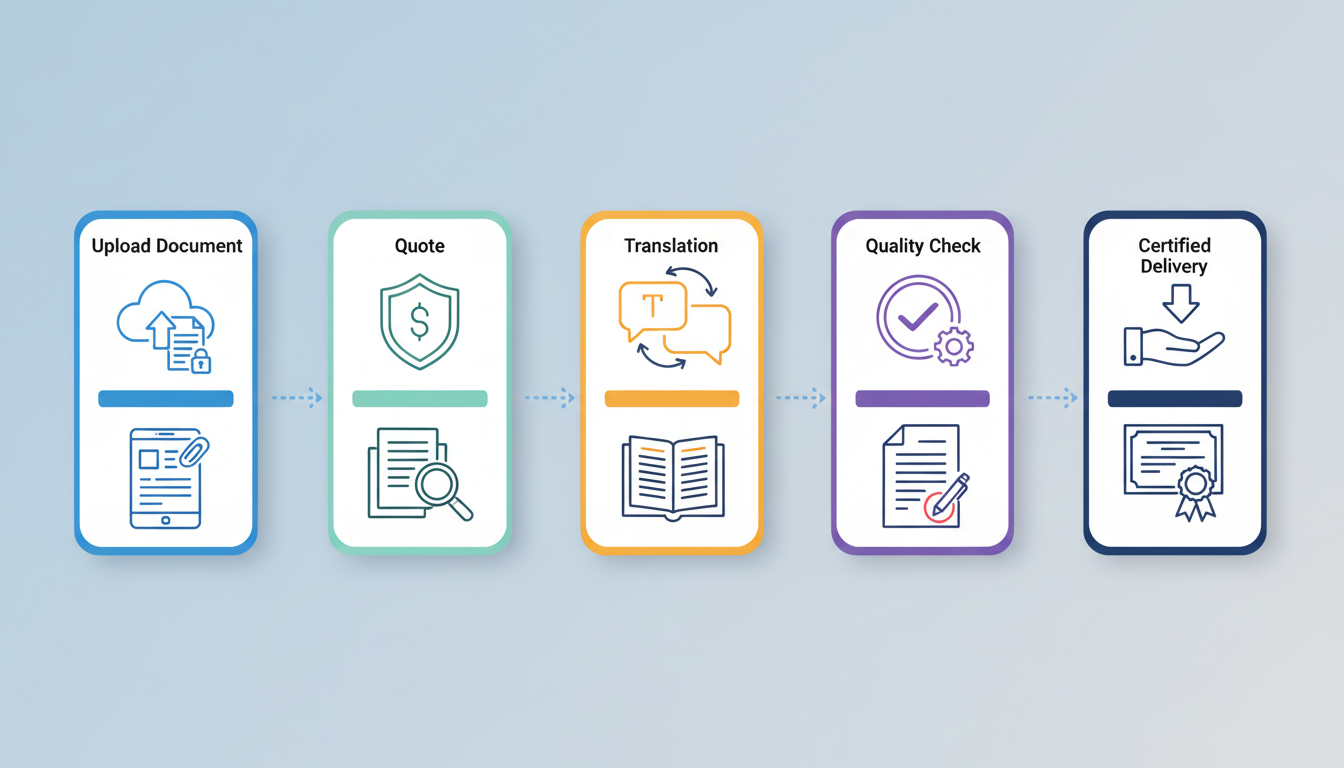
How to Get a Certified Translation in Four Steps
The certification type, price, delivery method and expected turnaround are confirmed before translation begins, so you know what service is being provided before work starts.
How do I get a certified translation in the UK?
Upload the complete document and tell us the language pair, receiving organisation and deadline. We confirm the correct certification route, price and turnaround before work starts.
Send Your Document
Upload a complete scan, photograph, PDF or Word file. Include every page and make sure text, stamps and document edges are visible. Tell us the source language, target language and intended recipient.
Receive and Confirm Your Quote
The document, language pair, certification requirement, deadline and delivery format are reviewed. Work begins after you approve the quoted service and turnaround.
Translation and Quality Checks
Names, dates, identification numbers, terminology, stamps, completeness and layout are reviewed. Unclear or inconsistent source content is queried rather than guessed.
Certification and Delivery
The Certificate of Accuracy is prepared and the completed files are delivered digitally. Printed certified copies can also be arranged when required.
Some organisations accept a certified PDF, while others may request a physical signed copy or additional certification.
What Is a Certified Translation?
A certified translation is a complete translation accompanied by a written statement confirming that it is a true and accurate translation of the original document.
The certification records the translation date and identifies the translator or translation company. Depending on the submission route, additional identifying, contact and signature details may also be required so the translation can be independently verified.
The receiving organisation ultimately decides which certification and delivery format it requires, so its written instructions should be checked before ordering.
Common Documents Sent for Certified Translation
Certified translations are commonly requested when a foreign-language document must be supplied as evidence in a formal application or process.
Immigration and Visas
Birth certificate translations, marriage certificate translations, passport translations, police records and other supporting evidence for visa, settlement, citizenship and residence matters.
Universities and Qualifications
Diplomas and degree certificates, transcripts and academic records for admissions, professional recognition or employment.
Legal Proceedings
Court orders, affidavits, contracts, police documents, powers of attorney and supporting case evidence.
Banking and Finance
Bank statements, payslips, tax records, employment evidence and other financial documents used in formal checks.
Medical Records
Medical reports, vaccination records, health certificates and supporting documents for healthcare or registration purposes.
Overseas Submissions
Documents for embassies, consulates and overseas authorities where sworn, notarised or legalisation steps may also apply.
Certified, Sworn or Notarised: Which Do You Need?
More formal certification is not automatically better. Use the service named in the written instructions issued by the organisation receiving your document.
Certified Translation
A complete translation supplied with a signed statement confirming accuracy and completeness.
Certified translation detailsSworn Translation
A translation completed under the sworn-translator system recognised by a particular country or jurisdiction.
Sworn translation detailsNotarised Translation
A certified translation followed by a notary stage that verifies the relevant declaration or signature.
Notarised translation details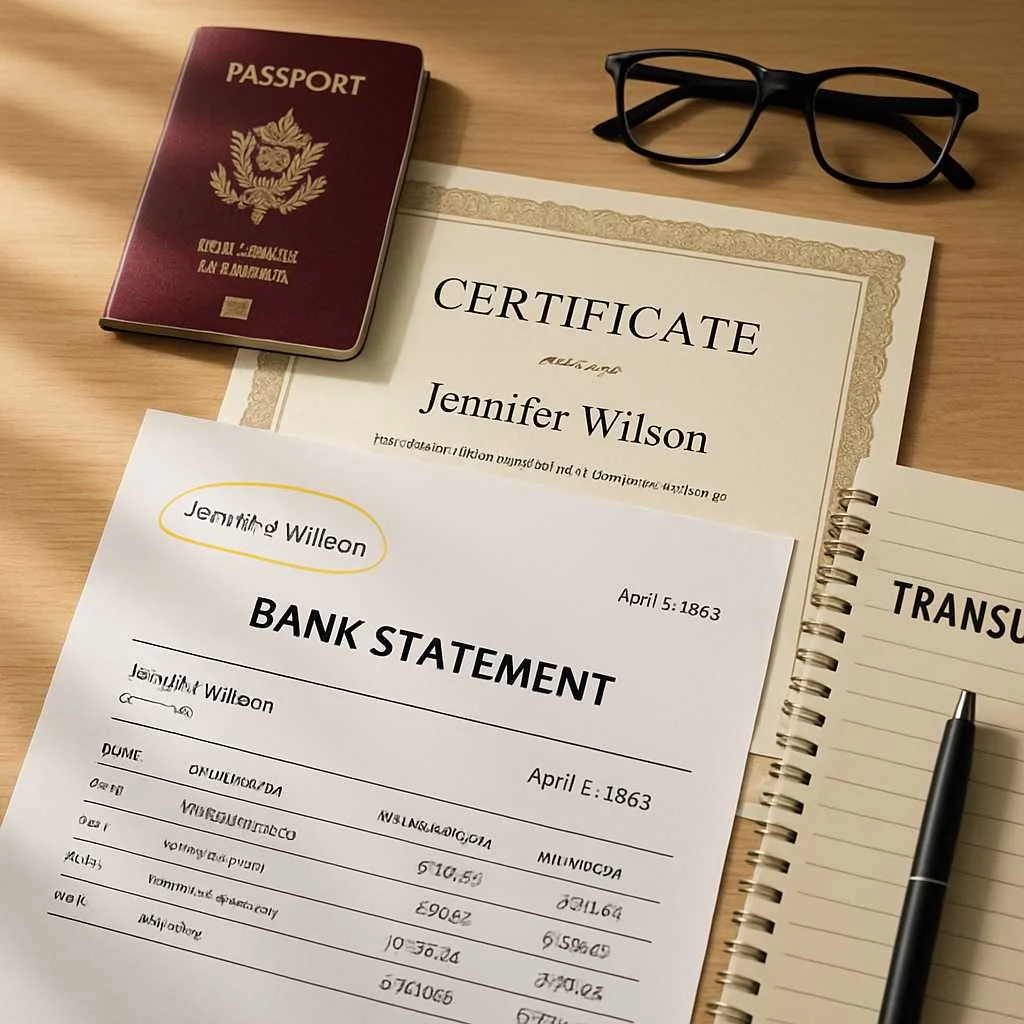
Quality Checks Before Certification
Official documents contain small details that can affect a submission. Review therefore covers more than ordinary spelling and grammar.
- Names and preferred passport spellings
- Dates, numbers and registration references
- Visible stamps, seals and handwritten notes
- All pages and relevant reverse-side content
- Formatting and correspondence between fields
- Certification wording and identifying details
Certified Translation Prices and Turnaround
Choose a delivery speed that fits your deadline. Availability is confirmed after the document, language pair and certification requirements have been reviewed.
Two Days
From £40Certified total for suitable non-urgent personal documents, including certification, checking and digital delivery.
24 Hours
From £119Priority completion for documents requiring next-day delivery, subject to document and language availability.
24-hour certified translation12 Hours
From £134A faster route for time-sensitive documents with a confirmed short deadline.
Two Hours
From £141Emergency service during working hours for suitable documents where capacity is available.
Published starting prices may vary according to document length, language pair, scan quality, formatting, certification level, postal delivery and other project requirements. The complete price and available delivery time are confirmed before work begins.
How to Prepare Your Documents for Translation
A few simple checks can prevent clarification requests and make it easier to confirm the price, certification route and turnaround.
- Use a clear scan or photograph. Make sure printed text, handwriting, stamps, seals and document edges are visible.
- Include every page. Send the front and back where both sides form part of the official document.
- Use PDF where practical. PDF keeps page order together, although clear JPEG and PNG images can also be reviewed.
- Confirm name spellings. Provide the spelling used in your passport or official records where transliteration can vary.
- Share the recipient's instructions. Include written requirements concerning certification, signatures, notarisation or hard copies.
- A complete and readable document copy
- The original and required target languages
- The organisation receiving the translation
- Your deadline and preferred delivery format
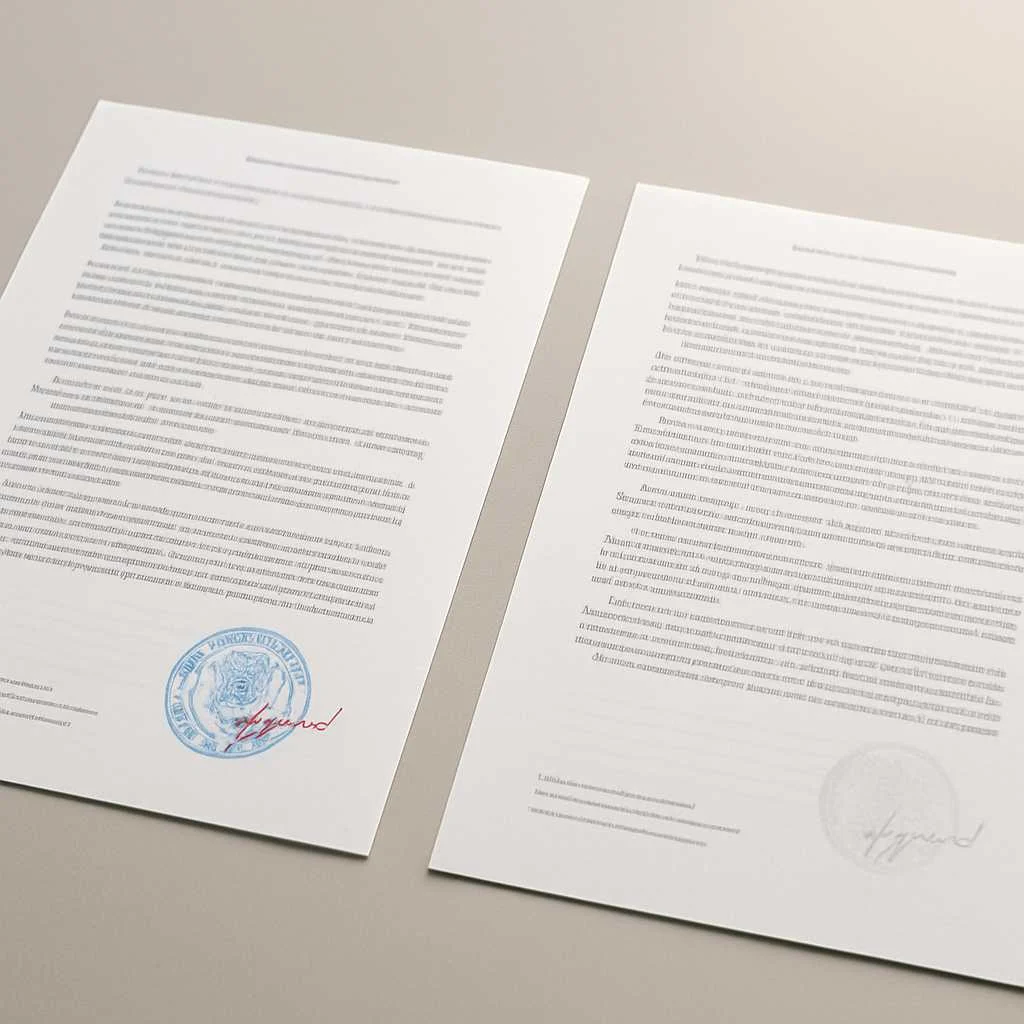
Common Certified Translation Mistakes
Many avoidable problems begin with an incomplete source file or an incorrect assumption about the receiving organisation's requirements.
Submitting an Illegible Scan
Blurry photographs, glare, shadows and cropped edges can conceal text, stamps or document numbers and delay the translation.
Leaving Out Pages or Reverse Sides
Supply every page forming part of the original, including backs that contain stamps, annotations or other official information.
Choosing the Wrong Certification Type
A standard certified translation may not be sufficient when the recipient specifically requests notarisation, sworn translation or legalisation.
Ignoring Inconsistent Names
Explain spelling variations, middle names and transliteration preferences before work starts, especially when passport spelling must be followed.
Assuming Every Authority Has Identical Rules
The organisation receiving the document makes the final decision about the certification and delivery format it requires.
Check UKVI and Home Office Translation Requirements
Requirements depend on the application route. For example, current GOV.UK visitor-visa guidance says that a document not in English or Welsh must be accompanied by a full translation that can be independently verified by the Home Office.
- Confirmation that it is an accurate translation of the original document
- The date of translation
- The translator's full name and signature
- The translator's contact details
Always check the instructions for your specific application or receiving organisation before submitting translated documents.
Certified Translation Process FAQs
Practical answers about obtaining, certifying and submitting translated documents in the UK.
What is the certified translation process in the UK?
The process normally starts by sending a complete copy of your document and confirming the language pair, intended recipient, certification requirement and deadline. The document is then translated and checked, the certification statement is prepared, and the completed translation is delivered in the agreed format.
How long does the certified translation process take?
Published options range from a two-day standard service to 24-hour, 12-hour and two-hour delivery for suitable documents. Availability depends on document length, language pair, scan quality, certification level and current capacity.
What is included in a certified translation?
It includes the complete translated document and a certification statement confirming accuracy. The certification normally records the date and identifying or contact details, with an appropriate signature where required. The document is also checked and formatted so it can be compared with the original.
Is a certified translation the same as a notarised translation?
No. A certified translation includes a formal statement of accuracy. A notarised translation involves an additional notary stage that verifies the relevant declaration or signature. Only request notarisation when the receiving organisation requires it.
Can I translate my own document and certify it myself?
A formal submission may require a translation that can be independently verified. Self-translation can create a conflict because the applicant is not independent from the document. Check the receiving organisation's rules and use a professional translation service where certification is required.
Do certified translations expire?
A certified translation does not have one universal expiry date. However, the receiving organisation may require a recently issued source document or apply its own recency rules. Check this before ordering when the application has a time limit.
What file format should I submit?
A complete PDF is usually easiest to review because it keeps pages in order. Clear JPEG or PNG photographs can also be used, and Word files may be suitable for editable digital documents. All text, stamps, signatures and document edges should be readable.
What are the Home Office and UKVI translation requirements?
Requirements vary by application route. Current GOV.UK guidance for several immigration routes requires a full translation that can be independently verified and includes confirmation of accuracy, the translation date, the translator's full name and signature, and contact details. Check the current guidance for your specific application before submission.
What happens if a receiving organisation questions the translation?
Obtain the organisation's written reason and send it to the translation provider. The concern can then be checked to establish whether it relates to the translation, certification wording, file format or a separate submission requirement.
Do I need to send the physical original document?
A clear digital copy is normally enough for review, quotation and many translation projects. The organisation receiving your application may still ask to see the original source document or require a posted certified translation, so check its instructions separately.
How do I know whether I need certified, sworn or notarised translation?
Start with the written requirements issued by the recipient. Certified translation is a common UK route, sworn translation applies within certain country-specific systems, and notarisation adds a separate notary stage. Send the instructions with your document when the wording is unclear.
Send Your Document for a Clear Translation Quote
Upload a readable copy and include the destination, required language, deadline and delivery preference. The appropriate certification route, price and available turnaround can then be confirmed before work begins.