When a deadline is tight, the last thing you need is a translation that comes back quickly but creates a problem at submission.
A strong translation quality check process is what protects urgent work from the errors that matter most: wrong names, inconsistent terminology, dropped lines, date mistakes, number mismatches, and formatting that makes an official document harder to verify.
That matters even more for certified translations. If a document is being prepared for immigration, legal, academic, business, or official use, speed only helps when the final file is still accurate, complete, and ready to submit. Review and proofreading, terminology validation, number checks, and formatting inspection are not optional extras. They are what stop an urgent job from becoming a delayed application.
At Urgent Certified Translation UK, urgent work should mean a tighter workflow, not lighter checking. The goal is simple: deliver fast without losing control of the details that official recipients notice first.
Need a document translated quickly and carefully? Send your file now and get a clear turnaround, certification guidance, and a submission-ready delivery plan before work starts.
Why urgent translations need better checking, not less
Most translation errors are not dramatic. They are small. That is exactly why they cause trouble.
A single incorrect digit in a reference number can break a match with the source document. A surname spelled one way on a certificate and another way in the translation can create avoidable questions. A missing stamp note, incomplete heading, or poorly handled table can make a document look unfinished even when the language itself is acceptable.
Urgent deadlines increase the pressure on these details because there is less room for rework. A proper translation quality check process reduces that risk by focusing attention on the parts most likely to trigger follow-up questions:
- personal names
- dates and date formats
- passport, case, ID, and reference numbers
- official terminology
- signatures, stamps, seals, and handwritten notes
- tables, boxes, headers, and page structure
- certificate wording and delivery format
The fastest translation is not the one finished first. It is the one that does not need to be corrected and reissued.
What a real translation quality check process looks like
A good process is not one big check at the end. It is a series of checks performed at the right moments.
1. File review before translation starts
Before a translator writes a single line, the document should be assessed for risk. That includes:
- document type
- language pair
- recipient or intended use
- urgency level
- scan quality
- certification needs
- visible formatting features such as stamps, tables, signatures, seals, annotations, and official headings
This first step matters because the quality of the final translation depends on the quality of the brief. If the team knows the document is for a visa file, court submission, university application, or employer check, they can prepare the translation in the right format from the start.
2. Translation by a linguist suited to the document
Not every urgent file is just “text in another language.” A birth certificate, bank statement, diploma, police certificate, and power of attorney each carry their own terminology, layout habits, and risk points. The translator should be matched to the document type, not just the language pair. That is how you reduce errors before the review stage even begins.
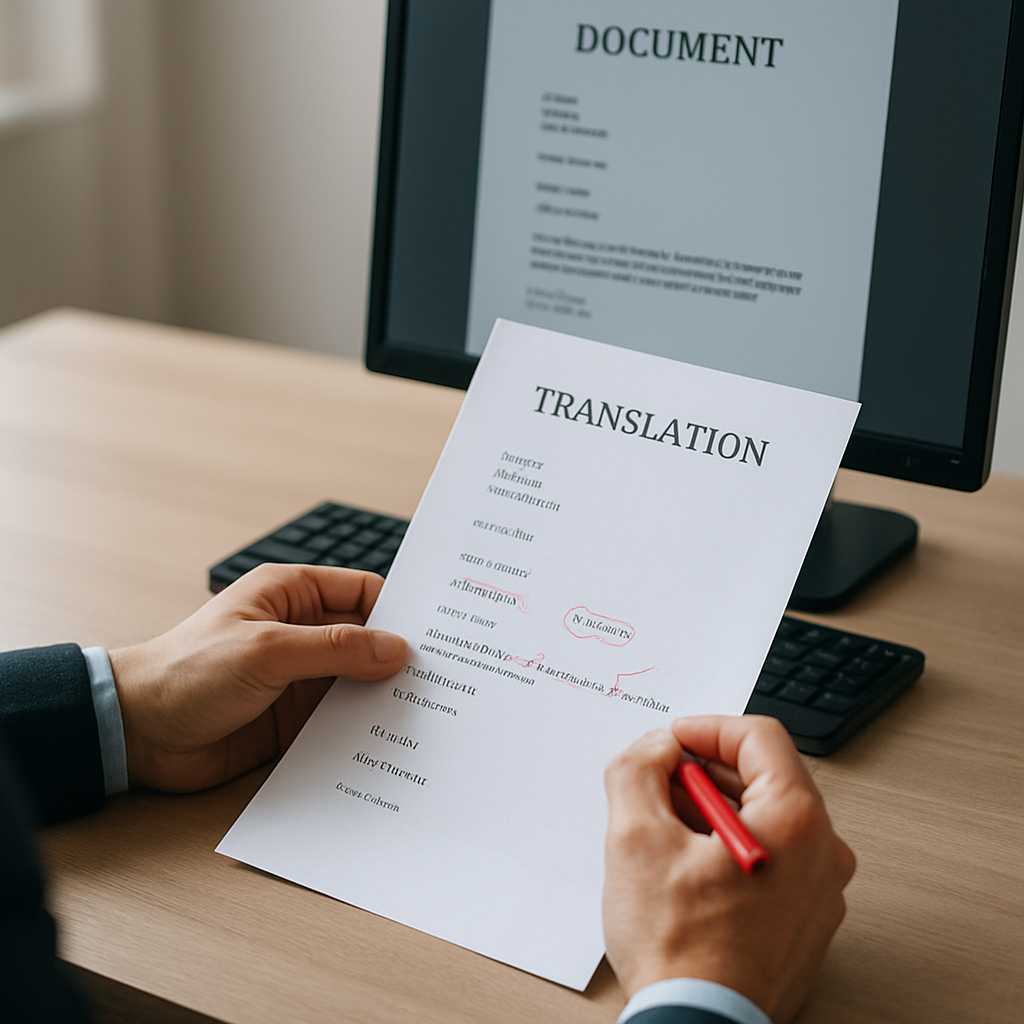
3. Review and proofreading are separate checks
Many clients hear “proofread” and assume every part of quality control has been covered. It has not. A proper workflow separates checks by purpose.
Review
Review compares the source document and the translation together. It checks whether the meaning is complete, accurate, and consistent. That includes:
- omissions
- additions
- mistranslations
- inconsistent terminology
- awkward literal renderings
- wrong interpretation of official phrases
- errors in names, places, and institutional titles
Proofreading
Proofreading checks the final target text as a finished document. That includes:
- spelling
- punctuation
- grammar
- spacing
- line breaks
- formatting consistency
- visual polish before delivery
Review protects meaning. Proofreading protects presentation. Urgent jobs need both.
4. Terminology validation
Terminology is where many urgent translations quietly fail. The problem is not always a dramatic mistranslation. It is often inconsistency. A term is translated one way in the heading, another way in the body, and a third way in the certificate note. That weakens credibility immediately.
Terminology validation checks that:
- legal, academic, medical, or administrative terms stay consistent
- repeated phrases are handled the same way across the file
- titles of authorities, institutions, and qualifications are rendered clearly
- abbreviations are treated consistently
- translator notes are used only where genuinely needed
This matters especially in documents such as transcripts, court papers, company records, and official certificates, where repeated labels and structured terminology appear throughout.
5. Number, date, and identity checks
This is one of the most important parts of the translation quality check process, especially when the document is being used for official purposes. A focused check should cover:
- names exactly as shown in the source
- date order and date clarity
- passport and ID numbers
- case numbers
- registration numbers
- addresses and postcodes
- account figures and totals
- page numbering
- reference codes
These details should never be left to “general proofreading.” They need a deliberate verification pass.
6. Formatting inspection
A translation can be linguistically correct and still look unreliable if the layout is careless. Formatting inspection checks whether the document is easy to compare against the source and easy for the recipient to read. For official translations, that often means preserving structure rather than redesigning the file.
This step typically includes:
- mirrored headings
- clear table structure
- visible stamp and seal notes
- consistent line order
- paragraph alignment
- page breaks in sensible places
- readable certificate section
- clean digital delivery format
For official documents, formatting is not decoration. It is part of usability.
7. Final certification and delivery check
For certified work, the last stage is not just sending the file. It is confirming that the delivered version is complete and properly prepared. That means checking:
- the final translated file
- certification wording
- translator or company details
- signature block where applicable
- date of translation
- file naming
- PDF readability
- whether digital and hard-copy requirements have been understood correctly
This final stage is where a rushed provider often makes avoidable mistakes. A careful provider treats delivery as part of quality control, not an afterthought.
The details that matter most in certified translations
When a document is being submitted to an official body, some details carry more weight than others. These are the areas that deserve extra attention on urgent jobs.
Names
Names must stay consistent with the source document and with any supporting identity document. Even minor differences can create unnecessary questions.
Dates
Dates must be accurate and unambiguous. The translation should not introduce confusion where the source was clear.
Numbers
Case numbers, certificate numbers, account figures, tax references, and official IDs must be checked character by character.
Official labels
Headings, registry terms, qualification titles, legal roles, and issuing authority names should be translated clearly and consistently.
Stamps, seals, signatures, and notes
These often matter as much as the main text. A document that ignores them can look incomplete.
Layout
A translation that preserves structure helps the recipient compare source and target more easily. That can speed up review and reduce questions.
What should stay the same when the deadline gets shorter
Urgent translation does not mean removing steps. It means tightening handoffs and reducing wasted time. Here is what should stay the same even when the deadline is the same day:
- source-to-target review
- review and proofreading
- terminology validation
- number and date checks
- formatting inspection
- certification check before delivery
What changes is the workflow around them:
- file assessment happens earlier
- risks are flagged sooner
- translators and reviewers may work in a tighter sequence
- communication with the client becomes more direct
- preventable revision rounds are reduced
In other words, quality is preserved by better coordination, not by hoping the first draft is enough.
Common urgent translation mistakes that strong QA catches
Name mismatch across documents
A birth certificate shows one spelling, a passport shows another transliteration, and the translation follows neither consistently. This is exactly the kind of issue that should be flagged before delivery, not after submission.
Wrong date interpretation
A date written numerically in the source is carried into the translation without enough clarity, creating room for misunderstanding. A proper quality check process catches this and resolves it cleanly.
Missed handwritten or stamped content
A corner stamp, registry note, or handwritten annotation is small on the page but important in context. If it is legible enough to matter, it should be accounted for.
Inconsistent terminology in structured documents
Academic transcripts, company records, and court documents often repeat labels across multiple sections. If one term shifts meaning from page to page, the file feels unreliable.
Formatting that breaks document comparison
Tables collapse, sections move out of order, or important notes blend into body text. The translation may be accurate, but the presentation creates friction for the person reviewing it.
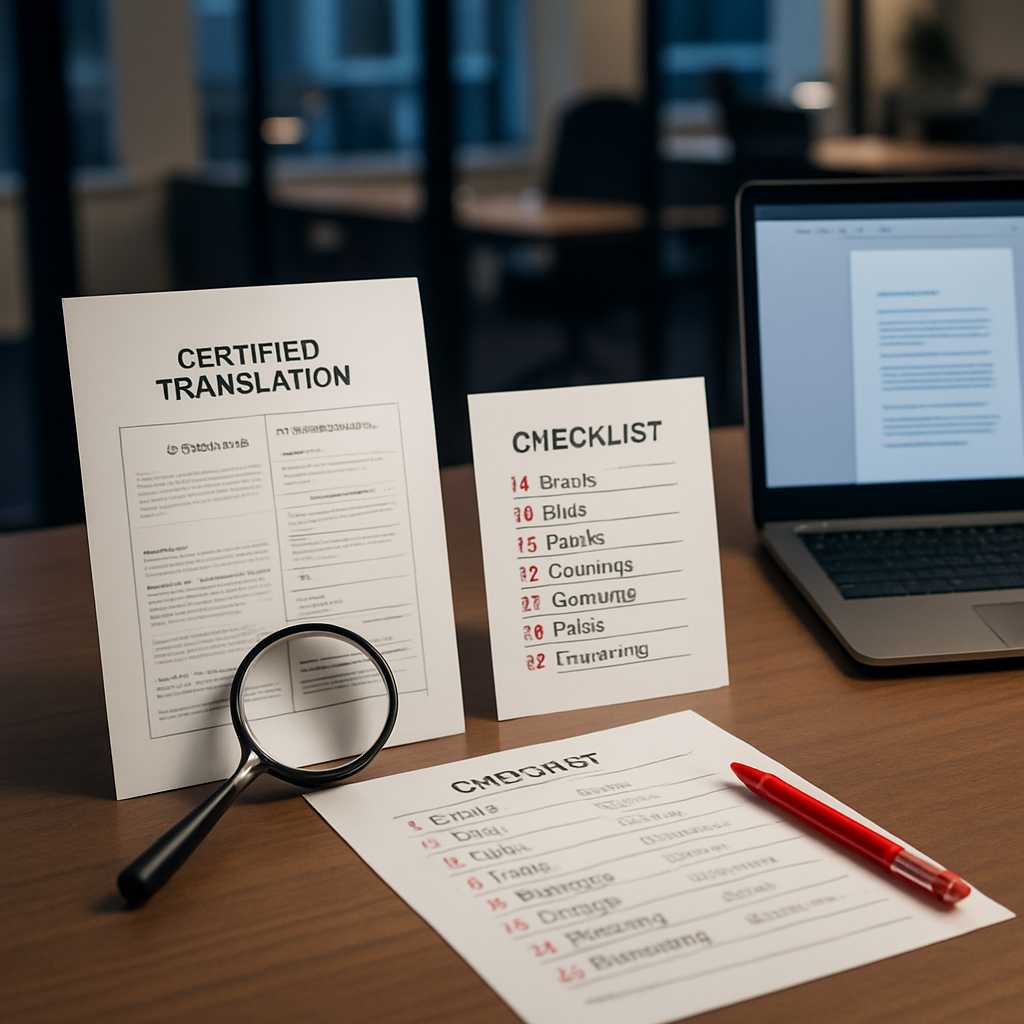
A practical checklist before you send your urgent file
You can help protect quality and speed up turnaround by sending the right information from the start. Before you upload your file, make sure you include:
- a clear scan or high-resolution photo
- the language pair
- your deadline
- the country or organisation receiving the translation
- whether certification is required
- whether you need digital delivery only or printed copies too
- any preferred spelling already used in your passport or supporting documents
- any previous translation of the same document, if consistency matters
A better brief usually means fewer questions, faster quoting, and a safer delivery timeline.
How to judge whether a provider takes quality seriously
If a translation is urgent, it is reasonable to ask how it will be checked. A reliable provider should be able to explain, in plain language:
- who translates the document
- whether there is a separate review stage
- how names, numbers, and dates are checked
- how formatting is handled
- what certification includes
- what happens if the scan quality is poor
- whether the deadline is realistic for the language pair and file type
That is a much better sign than a vague promise of “fast and accurate” with no process behind it. Red flags include:
- quoting without looking at the file
- no questions about intended use
- no mention of review and proofreading
- no discussion of certification
- no check on scan quality
- unrealistic promises for highly specialised or hard-to-read documents
Why this matters for official submissions
For official use, quality is not only about fluent language. It is also about verifiability, completeness, and presentation. A translation prepared for submission should make it easy for the receiving body to understand what the source says, identify who produced the translation, and compare the translated content with the original without confusion.
That is why the right translation quality check process matters so much on urgent certified work. It protects both the language and the document’s credibility.
Final thought
Urgent translation should feel calm on the client side. You send the document, receive a clear plan, and get back a translation that is ready to use. That only happens when the important checks are built into the workflow from the beginning. Review and proofreading, terminology validation, number checks, and formatting inspection are not the parts to skip when time is short. They are the parts that matter most.
If your deadline is close and the document needs to be right the first time, upload your file today and get a fast, carefully checked certified translation prepared for official use.
FAQ Section
What is a translation quality check process?
A translation quality check process is the set of review steps used to make sure a translated document is accurate, complete, consistent, and ready to use. It usually includes source-to-target review, proofreading, terminology validation, number checks, and formatting inspection.
Does urgent translation still include review and proofreading?
It should. Urgent translation should not remove review and proofreading. A reliable provider keeps the key checks in place and speeds up the workflow through faster coordination, early risk checks, and clearer communication.
Why are number checks so important in certified translation?
Number checks help catch mistakes in passport numbers, case references, dates, certificate numbers, account figures, and other details that official bodies often compare closely against the original document.
How does terminology validation improve translation quality?
Terminology validation makes sure repeated terms are translated consistently throughout the document. This is especially important in legal, academic, medical, and business documents where one inconsistent label can weaken the credibility of the whole file.
Does formatting inspection really matter in official document translation?
Yes. Formatting inspection helps preserve headings, tables, stamps, seals, signature notes, and overall structure so the translated document remains easy to compare with the original and easier for the recipient to review.
Can I get a certified translation from a scan instead of the original paper document?
In many cases, yes, provided the scan is clear and complete. The key issue is legibility. If names, dates, stamps, handwritten notes, or other important elements are hard to read, the quality check process becomes more difficult and the file may need a better scan before work starts.