The simple definition
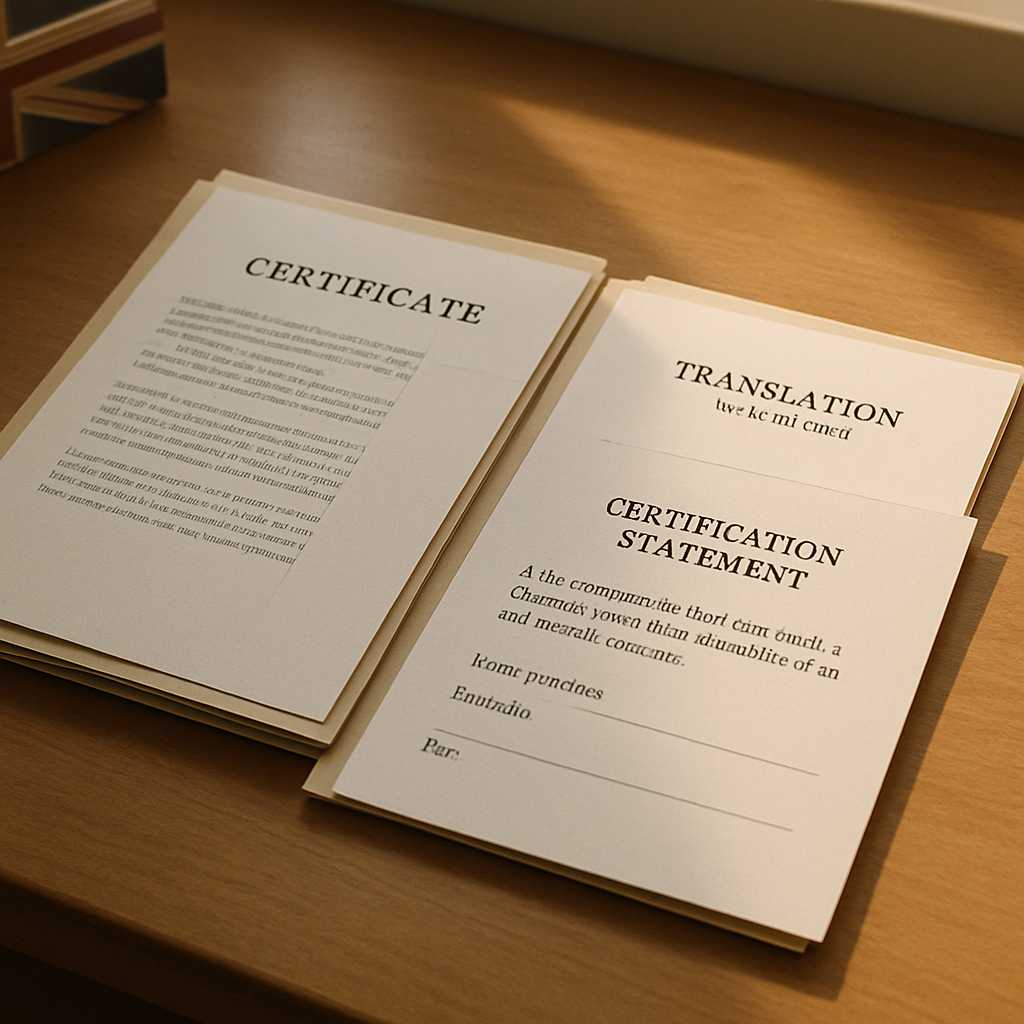
In UK practice, a certified translation is usually made up of three parts:
- The original document
- A complete translation into English or Welsh
- A signed certification statement confirming the translation is accurate
A useful way to think about it is this: A certified translation is not just translated text. It is translated text plus accountability. That accountability is what official bodies are looking for. They want to know who prepared the translation, when it was prepared, and who stands behind its accuracy.
The five-point acceptance test
If you want a quick way to judge whether a translation is likely to be accepted, use this five-point test. A certified translation should usually include:
- A statement that it is a true and accurate translation of the original document
- The date of the translation
- The full name of the translator or an authorised representative of the translation company
- A signature
- Contact details so the translation can be independently verified
If one of those pieces is missing, the risk of delay goes up. For some recipients, especially in passport-related situations, there may also be extra expectations such as a stamp and evidence that the translator belongs to a recognised professional organisation. That is why the safest approach is to check the recipient’s wording first, then match the certification to it.
What must be included in a certified translation
A certified translation is not just about wording. It is also about presentation and completeness.
The translation itself
The translated document should be full and faithful to the source document. That normally means it should include:
- All visible text, not only selected parts
- Names, dates, places, reference numbers, and registration details
- Stamps, seals, handwritten notes, headers, and footers where relevant
- Tables, signatures, annotations, and official markings where they affect meaning
A summary is not a certified translation. An extract is not a certified translation unless the receiving body has specifically asked for an extract.
The certification statement
The certification statement is the part that turns a normal translation into a certified one. A strong certification statement will usually confirm:
- The translation is true and accurate
- The document was translated from the original
- The translator or company takes responsibility for the work
- The date the certification was issued
- The name and contact details of the person or company certifying it
The translator or company details
This is where many DIY or low-cost translations fail. The recipient must be able to identify the translator or translation company behind the work. That means the certification should include real, checkable details rather than a first name, an unreadable signature, or a generic file label.
A signature and, where appropriate, a stamp
A signature is commonly expected. A stamp is not always mandatory for every UK submission, but it is often helpful and sometimes specifically requested by the receiving body. The practical rule is simple: If the authority mentions signed and stamped, give them signed and stamped. If it only requires signed certification with contact details, do not assume a stamp alone is enough.
A sample certification statement you can actually use
Here is a clean example of the kind of wording commonly used in the UK:
Certification Statement
I certify that this is a true and accurate translation of the original document presented to me.
Translator / Authorised Representative: [Full Name]
Signature: [Signature]
Date: [Date]
Contact Details: [Email / Telephone / Business Address]
Many translation companies also add:
- Source language and target language
- Company letterhead
- Company stamp
- Membership or qualification details
- Reference number for internal tracking
Those extras are useful because they make the translation easier to verify and more professional to submit.
Who can provide a certified translation in the UK?
In the UK, certified translations are usually provided by:
- A professional translator
- A translation company
- An authorised representative of a translation company
There is no single UK-wide system where every certified translator is sworn in by a court in the same way as in some other countries. That is why the wording on the certification statement matters so much. The key issue is not whether someone calls themselves a “certified translator.” The key issue is whether the translation is properly certified, signed, and verifiable for the purpose you need.
Does the translator need professional membership?
Sometimes yes, sometimes not, depending on the recipient. For many UK submissions, the core requirement is accurate translation plus a proper certification statement. But some authorities, especially certain passport-related requirements, may ask for the translation to be signed and stamped by a translator who is a member of a recognised professional organisation. That is why experienced providers often mention memberships, qualifications, or company credentials on the certificate. It can make acceptance smoother.
Can you certify your own translation?
In most official situations, this is a bad idea. Even when there is no law stopping you from translating your own document, self-certification is often rejected in practice because it is not independent, not easily verifiable, and not trusted by the receiving body. If the document affects a visa, passport, court matter, academic admission, bank process, or registry submission, the safer route is to use a professional translator or translation company.
What does not make a translation certified?
This is the section most pages skip, and it is where many avoidable rejections begin.
Not accepted on its own
Why it falls short:
- A plain translation in Word or PDF format: It has no certification statement.
- A bilingual summary: A summary is not a full certified translation.
- A self-translation: It is usually not independent or verifiable.
- AI output pasted into a document: Accuracy may be unverified and nobody has certified responsibility.
- A signed translation with no contact details: The recipient may be unable to verify it.
- A stamped translation with no statement of accuracy: A stamp alone does not certify accuracy.
- A solicitor-certified copy of the original document: That certifies the copy, not the translation.
- Only translating the “important bits”: Most official bodies expect a full translation.
Certified translation vs other services people confuse it with
These terms are often mixed together, but they are not the same.
Certified translation
A full translation with a signed certification statement confirming accuracy.
Sworn translation
A translation completed under a country-specific sworn system, usually outside the UK. This is common in some European and civil-law jurisdictions.
Notarised translation
A translation where a notary adds a further layer of authentication, usually confirming identity, signature, or formal declaration. This is not the default for most UK submissions.
Apostille
An apostille does not certify the translation itself. It authenticates a public document or signature for international use under the Hague Apostille system.
Certified copy
A certified copy is a copy of a document confirmed as a true copy of the original. It is not the same thing as a certified translation.
The important takeaway: Most people who ask for a “legal” or “official” translation in the UK usually need a certified translation first. Notarisation or apostille is only added if the receiving authority specifically asks for it.
When you usually need a certified translation in the UK
Certified translations are commonly needed for:
- Visa and immigration applications
- Passport applications and supporting evidence
- Birth, marriage, divorce, and death certificates
- Academic transcripts, diplomas, and degree certificates
- Bank statements and financial records
- Court documents and legal submissions
- Police certificates and official records
- Employment, licensing, and compliance paperwork
If your original document is not in English or Welsh and it is being submitted for an official purpose, assume a certified translation may be required unless the recipient says otherwise.
Why “accepted certified translation” depends on the recipient
One of the biggest mistakes people make is assuming there is one universal format that works everywhere. In reality, there is a core UK standard, but the receiving body may ask for extras.
Immigration and visa submissions
For immigration-related evidence, the key focus is usually:
- A full translation
- Confirmation of accuracy
- Date
- Translator’s full name
- Signature
- Contact details
- Enough information for independent verification
If the translation cannot be verified, the document may not be accepted.
Passport-related submissions
For some passport cases, the wording can be stricter, and the translation may need to be signed and stamped by a translator who belongs to a recognised professional organisation.
Universities, ENIC, employers, and professional bodies
These organisations may accept standard certified translations but still ask for:
- Company letterhead
- A clearer formatting match to the source
- Hard copies
- Original-language copies alongside the translation
- Extra authentication for overseas use
That is why the best service is not simply “translation.” It is matching the translation pack to the organisation that will review it.
The easiest way to tell if your translation is submission-ready
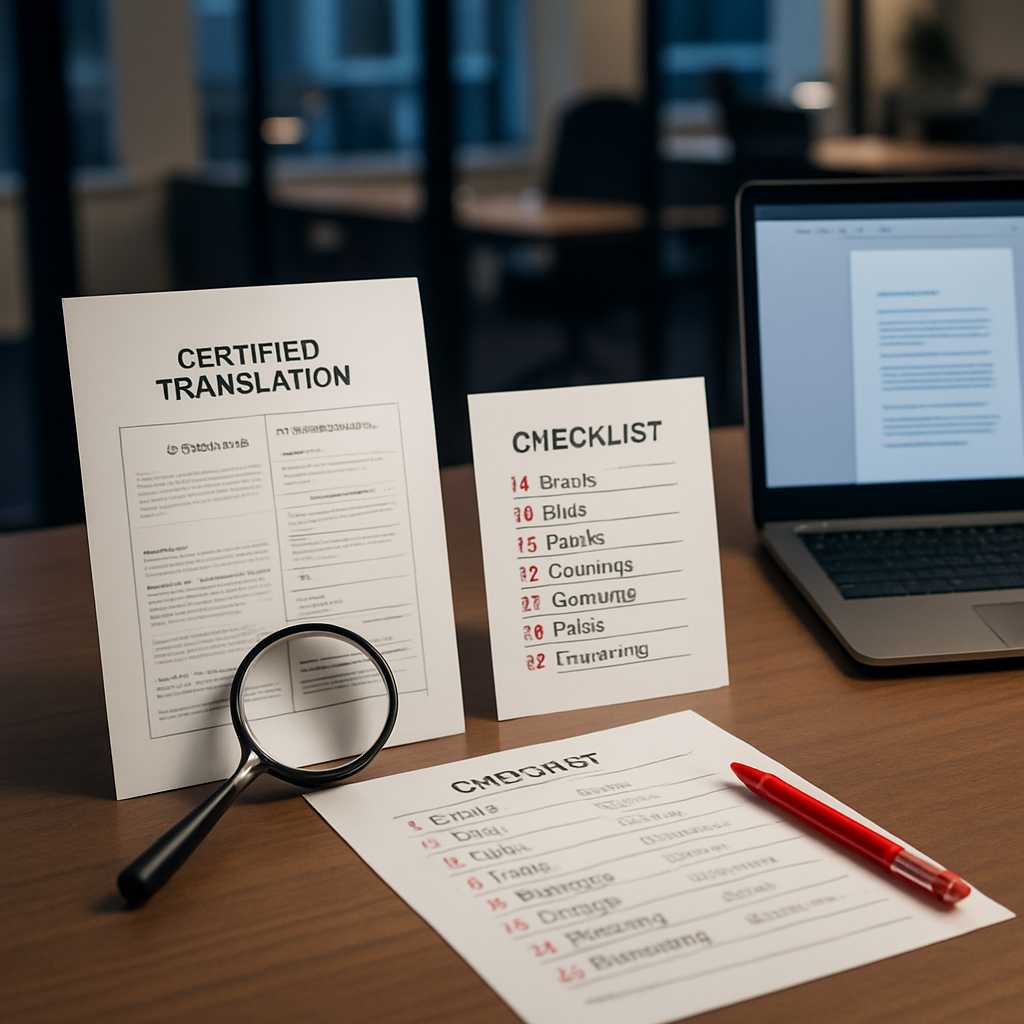
Before you send anything, check this list:
- Is the entire document translated?
- Does the translation include a clear certification statement?
- Is it signed?
- Is it dated?
- Are the translator or company details visible?
- Can the translation be independently verified?
- Does the presentation look professional and complete?
- Have you checked whether the recipient also wants notarisation, apostille, hard copy, or professional membership details?
If you cannot confidently answer yes to all of those, pause before submitting.
Common reasons certified translations get delayed or rejected
Even strong translations get delayed for avoidable reasons.
1. The certification statement is missing
The translation may be accurate, but without the statement, it reads like a normal translation rather than an official one.
2. Only part of the document was translated
If the original contains notes, stamps, annotations, or reverse-side details, those may matter.
3. Names and dates do not match supporting documents
A single spelling difference can create problems across visa, legal, and academic files.
4. The translator cannot be verified
No surname, no business details, no signature, no contact information.
5. The wrong service was ordered
Some clients order a standard translation when the recipient actually requires certified, notarised, or apostilled documents.
6. The scan quality is poor
If the original document is blurry, cropped, or incomplete, the translation may reproduce those problems.
How to choose the right certified translation provider
When the document matters, do not buy on price alone. A strong provider should offer:
- Human translation for official documents
- Clear certification wording
- Careful handling of names, dates, stamps, and formatting
- Fast turnaround options when needed
- Clear communication about whether certification alone is enough
- The ability to explain when notarisation or apostille is also needed
A good provider also asks useful questions before they start:
- Who is receiving the translation?
- What country is it for?
- Do you need digital delivery, hard copy, or both?
- Is the deadline urgent?
- Does the authority require professional membership, stamp, or notarisation?
That early checking often saves far more time than rushing a translation that later has to be redone.
What to send before ordering
To get an accurate quote and avoid back-and-forth, prepare:
- A clear scan or photo of the full document
- The language pair
- The deadline
- The country and authority receiving it
- Any instructions from the recipient
- Whether you need certified only, or also notarised or apostilled copies
If your deadline is close, send the document first and ask for the correct service to be confirmed before work begins. Need it checked quickly? Upload your file and get a clear answer on whether certified translation alone is enough or whether your case needs an extra step.
Why this matters more than people think
Certified translation is not paperwork for the sake of paperwork. It exists because official bodies need confidence that:
- The translation is accurate
- It covers the full document
- A real professional or company stands behind it
- The translation can be verified if questions arise later
That is why “good English” is not the same as “accepted certified translation.” For official purposes, the difference is the certification.
Final word
So, what is a certified translation in the UK? It is a full, accurate, verifiable translation of a document, supported by a signed certification statement that identifies the translator or translation company and confirms the work is true and accurate. And what does not count? A plain translation, a summary, a self-translation, an AI output with no human certification, a stamp with no statement, or a certified copy of the original instead of a certified translation. If your document is going to an authority, university, court, passport office, employer, or official reviewer, do not leave this to guesswork. Send a clear copy of your document, get the right certification format confirmed at the start, and submit a translation that is built to be accepted the first time.
FAQ
What is a certified translation in the UK?
A certified translation in the UK is a full translation of a document accompanied by a signed statement confirming that it is a true and accurate translation of the original. It should also include the date, the translator’s or translation company’s details, and information that allows the translation to be verified.
Can I certify my own translation in the UK?
For official use, self-certified translations are usually not a safe choice. Many authorities want a translation from an independent professional translator or translation company, with a proper certification statement and verifiable contact details.
Does a certified translation need a stamp?
Not always. A signed certification statement is the core requirement in many UK cases. However, some receiving bodies may also expect or request a stamp, and certain passport-related situations may be stricter. The safest option is to match the certificate to the recipient’s instructions.
Who can provide an accepted certified translation?
An accepted certified translation is usually provided by a professional translator or translation company that can certify the translation in writing and provide full contact details. In some cases, membership of a recognised professional organisation may strengthen acceptance or be specifically required.
Is a certified translation the same as a notarised translation?
No. A certified translation confirms the translation is accurate. A notarised translation adds an extra layer of formal authentication. Most UK submissions start with certified translation, and notarisation is only added when the receiving body specifically asks for it.
What documents usually need certified translation in the UK?
Common examples include birth certificates, marriage certificates, divorce papers, passports, ID cards, academic transcripts, diplomas, bank statements, legal documents, police certificates, and visa application evidence.