When a visa deadline, court filing, university application, employer request, or passport submission lands at the worst possible time, the questions come fast.
Can this be done today? Do I need certified translation or notarisation? Will a PDF work? How much will it cost? This guide answers the urgent translation questions people usually ask when time is short and mistakes are expensive.
If your deadline is tight, send a clear scan, say where the translation is going, and mention the exact time you need it back. That one step alone usually saves the most time.
Speed and same-day questions
1) Can I get a document translated the same day?
Yes, often for short, clear documents submitted during working hours. One-page certificates, passports, IDs, and simple statements are usually the best candidates for same-day turnaround. Longer files, poor scans, rare language pairs, or documents with tables, handwriting, and stamps can take longer.
2) What is the fastest possible turnaround?
The fastest jobs are usually short official documents that arrive as clear scans with a common language pair and no special formatting problems. In some cases, urgent handling can be measured in hours rather than days. The real answer depends on length, readability, language pair, and whether certification is required.
3) Is same-day translation available for certified translations too?
Yes. Urgent delivery and certified delivery are not opposites. A certified translation can still be handled quickly, as long as there is enough time to translate, check, prepare the certification page, and deliver it properly.
4) What is the cut-off time for same-day work?
Earlier is always better. Morning submissions usually have the best chance of true same-day delivery, especially when hard-copy printing or courier dispatch is involved. Late-afternoon submissions may still be possible digitally, but the options narrow quickly.
5) Are weekends or public holidays possible?
Sometimes, but not every language pair or document type is available outside normal working hours. If your deadline falls on a weekend or holiday, say so immediately instead of assuming standard timings still apply.
If today is the deadline, send the file now rather than waiting until you have every detail. A quick review can confirm the fastest safe option before more time is lost.
Certified translation and acceptance questions
6) What is a certified translation?
A certified translation is a full translation accompanied by a signed statement confirming that it is accurate and complete. For official use, that certification should clearly identify the translator or translation provider and make verification possible.
7) Will UK authorities accept an urgent certified translation?
They can, provided the translation meets the relevant requirements. Speed is not the problem. Missing certification details, incomplete translation, or poor readability are the usual causes of rejection.
8) Can I translate my own document?
For official submissions, that is usually a bad idea. A self-translation is often rejected because the receiving authority wants an independent, accountable translator or translation provider behind the certification.
9) Do I need notarisation or just certification?
Usually, you need certification first. Notarisation is an extra step used when a receiving authority specifically asks for it. If nobody has asked for notarisation, do not assume you need it.
10) What about apostille?
An apostille is different again. It is not the same as certified translation and not the same as notarisation. It is an official legalisation step used when a country or authority asks for a document to be legalised for overseas use.
11) What should appear on the certification page?
A strong certification page should make life easy for the person checking your file. That means the translated document should identify the document translated, the source and target languages, a statement of accuracy and completeness, the translator’s name, signature, date, and contact details.
Pricing questions
12) How is urgent translation priced?
Pricing usually depends on five things: document length, language pair, complexity, certification type, and deadline. Urgency affects price because the job has to be prioritised immediately, often with tighter reviewer coordination and less scheduling flexibility.
13) Are one-page documents always cheap?
Not automatically. A one-page birth certificate is usually simpler than a one-page court order with handwritten notes, seals, and marginal annotations. Page count helps, but difficulty matters too.
14) Why do rare language pairs cost more?
Because specialist translator availability is lower and urgent scheduling is harder. If you need a less common language urgently, the key factor is often who is available right now and qualified for that document type.
15) Does certification cost extra?
It often does, because certification adds preparation, checking, and a formal declaration. If you also need notarisation, hard copies, or courier delivery, those are usually separate costs again.
16) Will I get one quote for everything?
You should. A good urgent quote should separate the core translation from extras such as certification, notarisation, hard copy, and courier delivery. Clear pricing is especially important when you are working fast and do not want surprises.
Need a fixed price before you commit? Send the document and deadline together so the quote includes the right certification and delivery method from the start.
Delivery and file questions
17) Do I need to send the original document?
Usually not. In most urgent cases, a clear scan, photo, or PDF is enough to start the work. The exception is when a receiving authority specifically asks for originals, certified copies, or a physical notarisation or legalisation chain.
18) Which file formats are best?
PDF is usually the easiest because it preserves layout. Clear JPG, PNG, and phone photos can also work for short documents. Word files are useful when the source is already editable. The most important thing is readability.
19) Will I receive a PDF or a hard copy?
Most urgent jobs are delivered digitally first because that is fastest. If you need a printed certified copy, say so at the start, especially if there is a fixed filing date or overseas delivery involved.
20) Can you translate stamps, seals, signatures, and handwritten notes?
Yes, and they should not be ignored. A proper official translation should account for visible stamps, seals, headers, handwritten notes, and where relevant mark anything unreadable clearly rather than guessing.
21) What if my scan is poor?
Poor scans are one of the biggest reasons urgent jobs slow down. Blurred dates, cut-off edges, shadows, glare, folds, and low resolution create avoidable back-and-forth. If the document cannot be read confidently, it cannot be translated safely.
Accuracy, edits, and practical issues
22) What slows an urgent translation down most?
Three things cause most delays: unreadable files, missing instructions, and last-minute changes. If you send a clean scan, say where the document is going, confirm whether you need certification, and give the exact deadline, the job usually moves much faster.
23) What information should I send with my file?
Send the document, target language, deadline, receiving country or authority, whether you need certified translation, whether hard copies are required, and the exact spelling of names as they should appear in English if that matters for matching passports or application forms.
24) What if there is a typo in the original document?
A translator should not silently “fix” the source document. If the original contains an error, the translation usually has to reflect the source faithfully and, where appropriate, note the issue clearly rather than rewriting history.
25) What happens if the receiving authority asks for a small change?
That depends on the request. If it is a formatting adjustment, an added reference line, or a specific certification wording requirement, that is usually straightforward. If the source file changed, the translation may need rechecking. This is why it helps to share the authority’s instructions before work begins, not after delivery.
The fastest way to get an urgent translation right first time
If you want the fastest realistic turnaround without risking rejection, send this in one message:
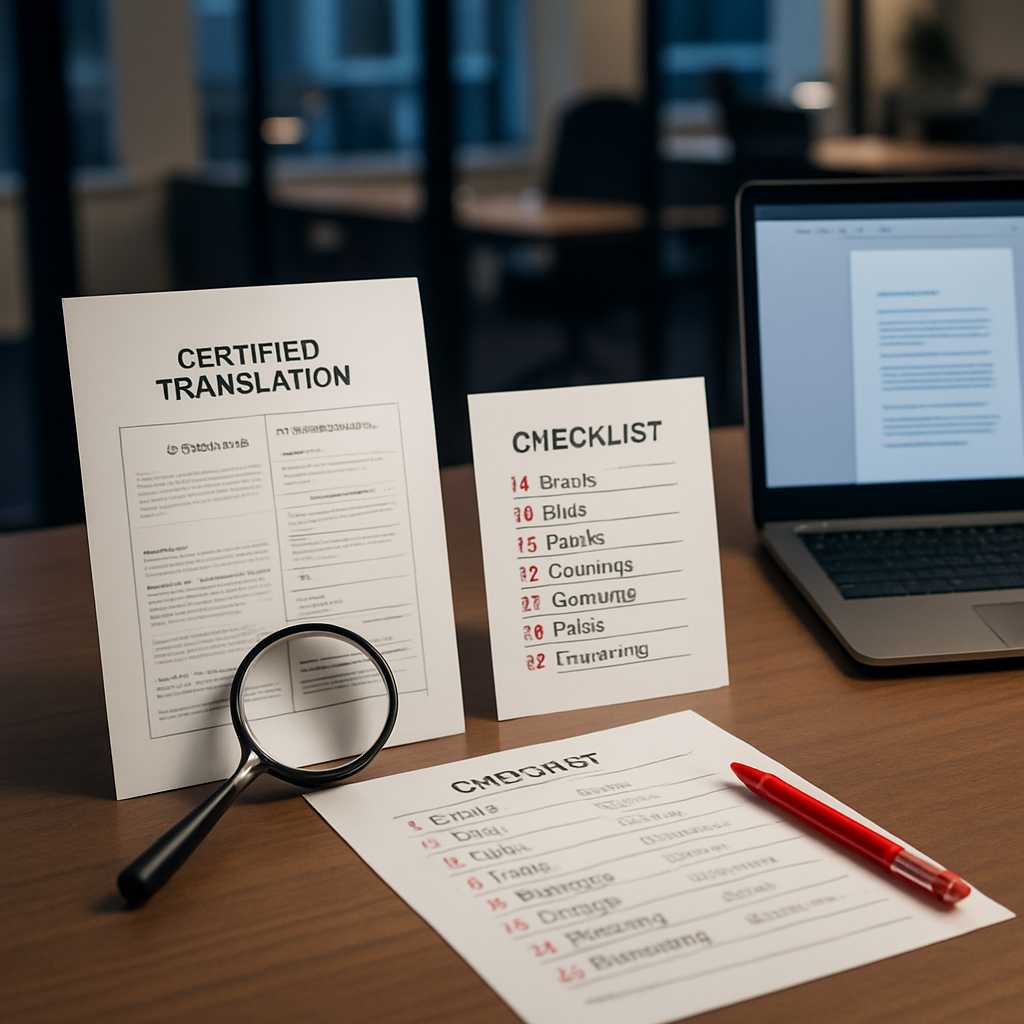
- Your document as a clear PDF or straight-on photo
- The language you need
- Your deadline, including date and time
- The authority or organisation receiving it
- Whether you need certified translation, notarisation, or apostille
- Whether you need digital only or printed copies too
- The exact spelling of names as they should match your passport or application
That single brief usually removes the delays that waste the most time.
A simple rule that saves people money
Do not order notarisation or apostille unless the receiving authority actually requires it. Many people overpay by adding extra steps they were never asked to provide. Start with the authority’s requirement, then order only what matches it.
When speed matters, quality matters more
Urgent does not mean rushed and careless. The fastest accepted translation is usually the one that is complete, readable, correctly certified, and easy for a caseworker to compare with the original. A cheap “done today” file that comes back for corrections is rarely the real fastest option.
If your deadline is tight, upload your file as soon as you have it and ask for the fastest realistic option. A clear brief at the start is the difference between a stressful scramble and a smooth same-day delivery.
Common urgent translation questions
Can I get a same-day certified translation online?
Yes. Many urgent translations can be handled fully online from scan to delivery, especially when digital PDF delivery is acceptable.
Do I need a certified translation for every non-English document?
Not always. It depends on the authority, country, and purpose. For official submissions, always check the exact wording of the requirement rather than guessing.
Are urgent translation prices higher than standard turnaround?
Usually, yes. Priority scheduling, tighter review windows, and limited same-day availability are the main reasons urgent jobs cost more.
Can bank statements, passports, and birth certificates be translated urgently?
Yes. These are among the most common urgent document types, especially for immigration, application, and identity-check purposes.
Is a digital certified translation enough, or do I need paper?
A digital certified PDF is often enough for online submissions. If the receiving organisation wants an original signed hard copy, courier time needs to be factored in from the start.