Understanding Overpayment in Urgent Translation
To avoid overpaying for urgent translation, it’s essential to recognize that most individuals do not overspend due to the need for speed. Instead, they often pay more because they opt for the wrong type of speed, compare quotes that do not reflect the same scope, or pay for additional services that the receiving authority did not request.
This situation typically arises when a deadline looms, the document appears straightforward, and every provider claims they can assist. In such moments, it’s easy to accept the first reassuring quote without taking the time to verify what is included and ensure that you are paying for the appropriate service rather than the most expensive one.
While urgent translation does incur higher costs when genuine priority handling is required, it is not normal to pay a premium for avoidable confusion, such as unclear page counting, duplicate certification, poor scans that necessitate rework, or opting for a same-day service when a next-day turnaround would suffice.
The good news is that a more thoughtful process can often save money without increasing risk. In many instances, it can even reduce the likelihood of rejection because the quote is clearer, the timeline is more realistic, and the finished translation aligns better with the submission’s purpose.
Why Urgent Translation Feels Expensive
Pricing for urgent translation tends to escalate quickly due to time constraints that affect how work is scheduled. Providers may need to rearrange other projects, allocate an available linguist immediately, prioritize reviews, and confirm delivery faster than usual. This is why rush options are available.
However, there is a distinction between paying for genuine priority handling and incurring costs due to avoidable inefficiency. A fair urgent quote typically reflects:
- The document type
- The language pair
- The number of pages or words
- The level of certification required
- The delivery format
- The actual deadline
Inflated quotes often arise when one or more of these details are missing, guessed, or misunderstood.
The Biggest Reasons People Overpay
1) Choosing the Fastest Rush Option by Default
The most frequent error is selecting the shortest turnaround time without verifying its necessity. For instance, if your appointment is tomorrow afternoon, a two-hour service may seem reassuring. However, if a 24-hour or by-end-of-day option would suffice, paying for the fastest slot may yield no practical benefit.
Consider urgent translation as a ladder, not a single button:
- Fastest possible
- Same day
- Within 24 hours
- Next working day
- Priority but not immediate
The key question is not, “How fast can this be done?” but rather, “What is the latest safe delivery time for this file?” This simple change in wording can often lead to a lower quote.
A Better Way to Ask
Instead of stating, “I need this urgently,” try saying:
“I need this by 10am tomorrow as a certified PDF for submission. Please quote the most cost-effective option that still meets that deadline.”
This approach allows the provider to suggest the most appropriate rush option rather than assuming you want the most expensive one.
2) Comparing Quotes That Are Not Like for Like
Quote comparison is only effective when every provider is pricing the same job. A low quote can quickly become costly if it excludes certification, reformatting, a second page, or digital delivery timing. Conversely, a higher quote may offer better value if it includes all necessary items.
Before comparing prices, ensure that each quote is based on the same:
- Files
- Page count
- Certification level
- Deadline
- Delivery format
- Language pair
- Source legibility
If one quote is based on one page and another is based on “up to 250 words,” you are not comparing equivalent services.
The Like-for-Like Quote Test
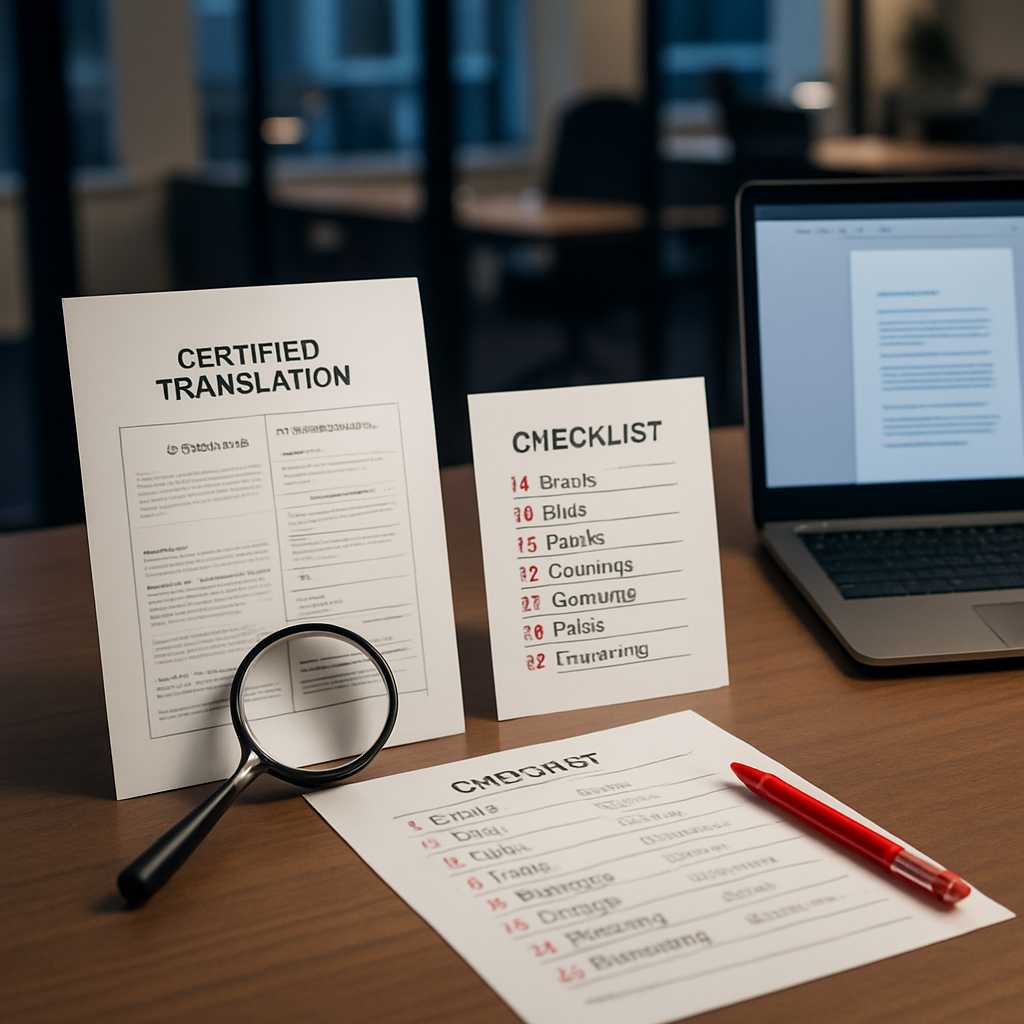
Before approving any urgent job, use this five-point checklist:
- Have all pages been included? Fronts, backs, attachments, notes, and stamp pages all matter.
- Is the certification level the same in every quote? Certified, notarised, and apostilled services are not interchangeable.
- Is the delivery promise the same? “Same day” can mean very different things depending on the cut-off time.
- Does the quote include formatting and non-body content? Headings, tables, seals, signatures, and handwritten notes all affect the scope.
- Is the provider pricing the final version of the file? A quote based on a cropped mobile photo may change when the full PDF arrives.
3) Paying for the Wrong Certification Level
This is one of the most costly avoidable mistakes. Many clients hear terms like certified, notarised, legalised, apostilled, sworn, or official and assume that the safest route is to purchase the highest level available. In reality, this can lead to paying for unnecessary steps.
For many UK submissions, a properly prepared certified translation is sufficient. For some overseas uses, notarisation or apostille may be required later. These are separate requirements that should be confirmed before payment.
Overpaying often begins with the thought: “I’d rather add everything now just in case.” While this may seem sensible, it frequently results in unnecessary costs.
What to Do Instead
Ask the receiving authority one clear question:
“Do you require a certified translation only, or do you also require notarisation or apostille?”
Then quote exactly that level of service. If the answer is unclear, request the provider to price the options separately rather than bundling everything together. A split quote helps you see the true base cost and determine what is genuinely necessary.
4) Underestimating Page Counting
Page counting may seem straightforward until urgent work begins. A “one-page document” may actually include:
- One page plus a reverse side
- A stamp area
- Handwritten notes
- Marginal annotations
- A seal impression
- A second language section
- An attached explanatory page
This is significant because urgent translation is often priced by page bands, standard document types, or the time required. If the file is more complex than it initially appears, the quote changes.
This is particularly common with:
- ID cards with two sides
- Certificates with seals and registry notes
- Academic records with grading tables
- Legal bundles with annexes
- Medical documents with codes, totals, and abbreviations
The Simple Rule
Count what must be translated, not what merely appears to be a page. If it is present in the source file and is significant to the receiving authority, it should be included in the scope.
5) Sending Poor Scans and Creating Rework
Poor file quality is an expensive shortcut. When a provider receives a dark photo, a cropped edge, a folded document, or a blurred stamp, the job slows down immediately. More messages are required, and missing details must be verified. A file that should have proceeded directly into production becomes a clarification exercise.
This delay can push a job into a higher rush band, even when the original deadline was manageable. To keep costs lower:
- Send the full document, not cropped sections
- Use flat, clear scans whenever possible
- Include both sides of cards and permits
- Photograph seals, stamps, and signatures clearly
- Combine pages in the correct order
- Send the final version once, not three different versions over the next hour
Cleaner files not only enhance accuracy but also protect your timeline.
6) Mentioning the Real Purpose Too Late
A provider can only provide an accurate quote if they know the intended use of the translation. Urgent work for a visa submission, university deadline, court filing, or internal business review does not always require the same presentation. If the purpose is revealed only after the quote, the provider may need to adjust the price or timeline once the actual requirements become clear.
For example:
- A plain translation may require certification
- A certified translation may need hard copies
- A digital copy may suffice, making courier costs unnecessary
- A simple document may become more complex if seals and notes must be mirrored carefully
The sooner the purpose is clarified, the less likely surprise charges will arise.
The Three Details That Reduce Overpayment
Always include:
- Your exact deadline
- What the document is for
- Whether digital delivery is sufficient
These three points often prevent the extra costs that clients later complain about.
7) Splitting One Urgent Job into Several Separate Orders
Panic can lead to fragmentation. A client may send one certificate now, another in twenty minutes, and then remember a passport page an hour later. Each new email is treated as a separate priority request, causing the price to rise accordingly.
Whenever possible, group related documents into a single instruction. Even if the provider still prices each file separately, a single coordinated job is usually easier to schedule and quality-check than three disconnected urgent orders.
Bundling also aids in maintaining consistency:
- Names match across documents
- Dates remain aligned
- Terminology stays stable
- The certification approach remains uniform
This reduces the risk of incurring double charges for avoidable administration.
8) Focusing on Headline Price Instead of Rejection Risk
The lowest urgent quote is not always the most economical outcome. If the translation is delivered quickly but contains avoidable formatting issues, inconsistent names, missing notes, or unclear certification, the real costs may manifest later:
- Missed deadlines
- Rejected submissions
- Revised translations
- Second provider fees
- Additional courier or filing costs
This is where many misunderstand value. Good urgent translation is not merely fast; it must be timely enough, clear enough, and properly prepared for its intended use. Paying slightly more for a provider who meticulously checks names, dates, stamps, seals, and document structure can ultimately be cheaper than fixing a rushed job twice.
A Quick Quote Comparison Table
Before accepting any urgent quote, check the following:
| Check | What to Ask | Why It Matters |
|---|---|---|
| Scope | “Have you quoted all pages, including backs, stamps, and notes?” | Stops surprise additions later |
| Certification | “Is certification included in this price?” | Avoids false low headline prices |
| Rush Option | “What is the cheapest option that still meets my deadline?” | Prevents buying unnecessary speed |
| Delivery | “Is digital delivery included, and do I need hard copies?” | Stops paying for courier services too early |
| File Quality | “Is this scan clear enough, or do you need a better version?” | Avoids rework and delay charges |
| Purpose | “This is for UKVI / court / university / employer use” | Helps the provider price the right format first time |
What Realistic Timelines Look Like
One reason people overpay is that they assume every document can be translated at the same speed. This is not the case. A simple certificate with clean text is very different from a legal document filled with clauses, an academic transcript with tables, or a multi-page file containing stamps and annotations.
A realistic urgent timeline usually depends on:
- How many pages are involved
- Whether the text is repetitive or varied
- Whether formatting must be preserved closely
- Whether the language pair is common or less common
- Whether certification is needed
- When the file was sent
This means that “urgent” should be matched to the file, not just the feeling of urgency.
A Practical Way to Think About It
The fastest turnaround is best reserved for short, standard documents with a hard submission deadline. A 24-hour priority is often the best-value option for personal documents when the deadline is close but not immediate. Next working day or planned priority often provides the best balance of cost, review time, and confidence.
Longer files should be quoted honestly. If a provider promises unrealistic speed on a dense file, this should be viewed as a warning sign rather than a benefit. To avoid overpaying for urgent translation, seek realistic timelines rather than heroic promises.
When Paying More Actually Makes Sense
Not every premium is unnecessary. Sometimes, a higher urgent quote is justified, especially when:
- The document is legally sensitive
- The language pair is less common
- The formatting is complex
- Multiple pages must be aligned consistently
- Same-day certification is genuinely required
- The file arrives late in the day
- The deadline cannot be adjusted
In these instances, the goal should not be to find the cheapest price but to ensure safe, accurate delivery within the real time constraints. A reputable provider should be able to explain the rationale behind the premium. If the reason is clear, specific, and related to your file, it is reasonable. If the explanation is vague, generic, or solely based on pressure, it’s time to look elsewhere.
How to Reduce Cost Without Increasing Risk
Here are the most effective strategies to lower urgent translation costs without compromising quality:
Send Better Files
A clean PDF or flat scan is cheaper to process than a rushed phone photo.
Ask for the Lowest Safe Rush Level
Avoid ordering “same day” if “tomorrow morning” is sufficient.
Confirm the Exact Certification Requirement
Do not add notarisation or apostille unless the recipient explicitly requires it.
Bundle Related Documents
One complete instruction is usually more efficient than multiple mini-orders.
State the Purpose Up Front
Indicate whether the translation is for a visa, court, university, employer, insurer, registrar, or bank, as this can affect presentation.
Ask What Is Included
Ensure that certification, digital delivery, formatting, and revisions are clear before making a payment.
Keep One Final Version
Last-minute file changes can create delays, confusion, and scope changes.
A Simple Script You Can Use When Requesting Quotes
Feel free to copy, paste, and adapt this message:
“Please quote for a certified translation from [language] into English. This is for [purpose]. The deadline is [date and time]. Digital PDF delivery is sufficient unless hard copies are required. Please confirm the total page count you are pricing, whether certification is included, and the most cost-effective rush option that still meets the deadline.”
This message accomplishes three important things:
- It enhances quote comparison
- It minimizes hidden extras
- It provides the provider with enough detail to recommend the right service instead of the most expensive one
Final Takeaway
People rarely overpay for urgent translation due to unfair pricing. Instead, they often overspend because urgency amplifies small mistakes: vague instructions, incomplete files, overbought rush options, unclear certification, and poor quote comparison.
The most cost-effective urgent translation is not simply the cheapest quote presented. It is the one that aligns with the document, meets the actual deadline, includes the correct certification, and arrives ready for submission.
If your deadline is approaching, the smartest next step is straightforward: send the complete file, clearly state the purpose, and request the most cost-effective safe turnaround instead of the fastest possible promise.
Need a clear fixed quote for an urgent certified translation? Upload your file with your deadline and intended use to receive the appropriate turnaround before you pay for speed you don’t require.
FAQs
How can I avoid overpaying for urgent translation?
To avoid overpaying for urgent translation, compare quotes on a like-for-like basis, confirm the exact certification level required, send clear full-page scans, and ask for the lowest rush option that still meets your deadline.
Do urgent translation services always cost more?
Urgent translation services typically cost more when genuine priority handling is involved, but the premium should reflect the actual deadline, document complexity, and certification requirements. Paying extra for the fastest slot is not always necessary.
What should I check when doing a quote comparison for urgent translation?
Your quote comparison should verify page counting, certification, delivery format, turnaround promise, language pair, and whether seals, notes, tables, and back pages are included.
Does page counting affect urgent translation prices?
Yes, page counting impacts urgent translation prices because what appears to be one page may include backs, registry notes, stamps, tables, or handwritten annotations that still need to be translated and formatted correctly.
Which rush options usually provide the best value?
The best-value rush options are often 24-hour or next-working-day services rather than the fastest same-day slot. The right choice depends on your actual deadline, not just your initial instinct.
What are realistic timelines for urgent certified translation?
Realistic timelines depend on document type, page volume, file quality, language pair, and certification needs. Short standard documents are generally easier to prioritize than lengthy legal, academic, or technical files.