No. An official document should not be translated word for word if that creates awkward, misleading, or inaccurate English.
What it should be is full, faithful, clear, and submission-ready. That distinction matters. A literal, word-for-word version can look “safe” because it appears close to the original. In reality, it often causes the opposite problem: strange phrasing, wrong legal meaning, unclear headings, and English that does not sound like a real official document. On the other hand, a loose rewrite is just as risky because it can remove important details, flatten legal nuance, or drift away from the source text.
The right approach sits in the middle. A professional translator preserves all the information, legal effect, dates, names, reference numbers, stamps, seals, notes, and structure that matter, while expressing that information in natural, correct English for official use. If your document is going to a visa officer, university, court, employer, registry, or licensing body, that is the standard that protects you.
The real rule: faithful, not formulaic
The biggest misunderstanding in document translation is this: “If it is official, it must be word for word.” That sounds logical, but it is not how strong official translations work.
A professional translation for official documents should be:
- Complete — every meaningful visible element is accounted for
- Accurate — the meaning is correct, not guessed or simplified
- Readable — the English follows normal grammar and official phrasing
- Traceable — names, numbers, dates, seals, and document details are preserved
- Certifiable — the finished translation is suitable for certification where required
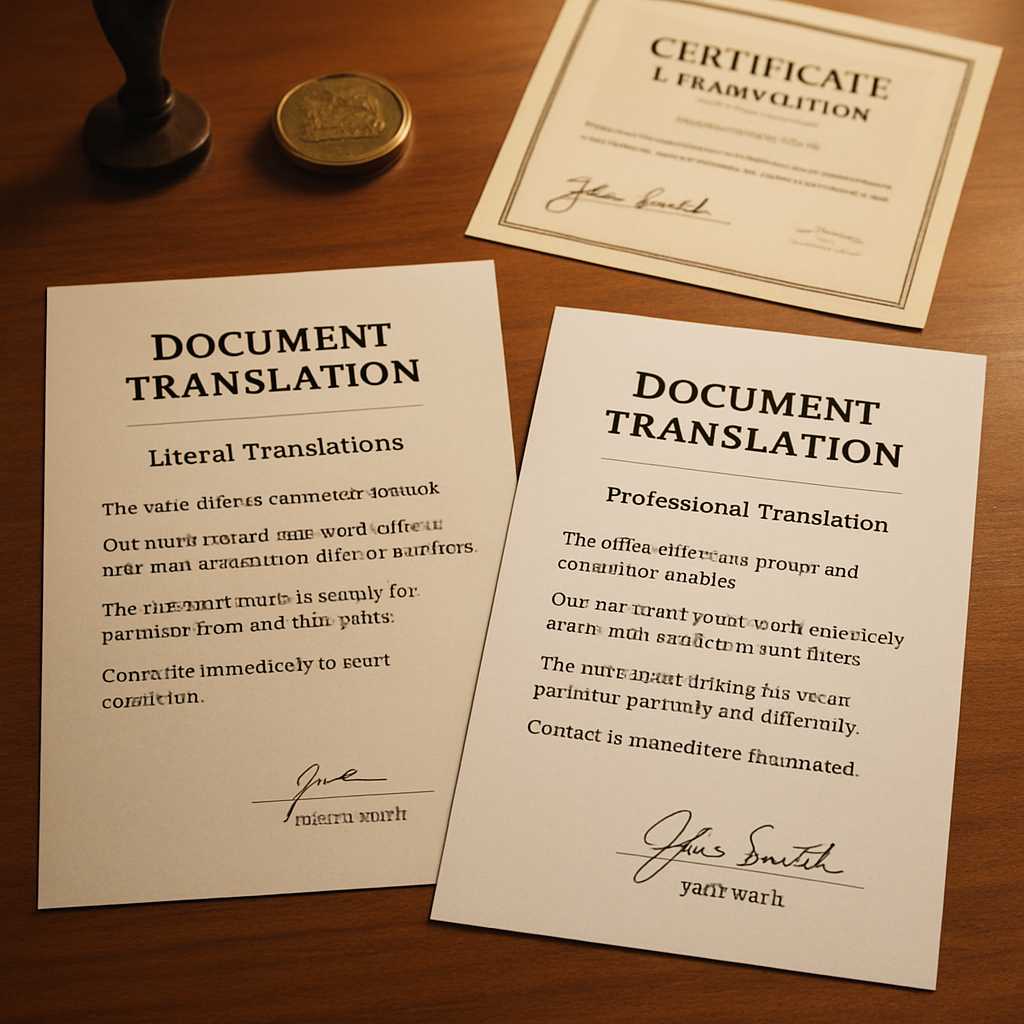
A poor translation usually fails in one of two directions:
Approach
What happens
Why it is risky
- Word-for-word — The translator copies source-language structure too closely. The result sounds unnatural, confusing, or legally off-target.
- Loose paraphrase — The translator “smooths out” the text too much. Important wording, formality, or document detail may be lost.
- Faithful professional translation — The translator preserves meaning and all essential details in natural target-language wording. This is the safest option for official use.
What authorities usually care about most
For official submissions, the issue is rarely whether the English is mechanically word-for-word. The issue is whether the translation is full, accurate, and verifiable.
UK immigration guidance states that documents not in English or Welsh must be accompanied by a full translation that can be independently verified, and that the translation must include confirmation of accuracy, the date, the translator’s full name and signature, and contact details. Relevant Immigration Rules and caseworker guidance repeat the same core standard, and caseworker guidance also says a document may not be accepted if the translation is missing or cannot be verified. (GOV.UK)
Professional bodies describe the same principle in practice. ITI explains that translation goes beyond literal word-for-word conversion, and CIOL guidance warns that word-for-word or literal translation can create stilted or inappropriate wording and may even lead to misinterpretation. (iti.org.uk)
For US filings, USCIS materials likewise require a complete and accurate English translation with certification that the translator is competent to translate into English. (USCIS)
That is why the safest standard is not “literal at all costs.” It is accurate in meaning, complete in content, and professional in presentation.
What must stay exact
A common mistake is thinking that “not word-for-word” means “flexible.” It does not. Some elements must be carried across with extreme precision:
Names
Personal names should be handled consistently and carefully. If the source document shows a particular spelling, the translation should not casually “improve” it. Where passport spelling or an established Latin-script spelling matters, the translator should check consistency across the whole file.
Dates
Dates must remain accurate and unambiguous. If the original uses a format that could confuse an English reader, the translator may need to preserve the original date while presenting it clearly in the target language.
Numbers and identifiers
Reference numbers, passport numbers, ID numbers, account numbers, tax numbers, case numbers, and certificate numbers should never be casually reformatted or guessed.
Tables and structured data
Marksheets, bank statements, court tables, registry extracts, and medical results often depend on layout for meaning. A professional translator recreates the structure so the English is easy to compare against the source.
Stamps, seals, signatures, annotations
These should not disappear. If they contain readable text, that text should be translated. If they are partly readable, unclear, handwritten, or purely visual, the translator should mark them appropriately. Examples of responsible notation include:
- [Signature]
- [Round stamp]
- [Illegible handwritten note]
- [Official seal: Ministry of Justice]
- [Stamp partly legible]
Omissions and gaps
A professional translator does not invent missing content. If part of the source is cut off, smudged, faint, or unreadable, that should be marked honestly.
What should not be forced word-for-word
This is where good judgment matters. A translator may need to change:
- sentence order
- article use
- prepositions
- punctuation
- gender agreement
- tense choice
- noun/adjective order
- standard official phrasing
- fixed institutional labels
Those changes are not “unfaithful.” They are often the only way to produce correct English. For example, a literal rendering may preserve the shape of the original sentence while distorting its meaning. A professional translation preserves the message, not the awkwardness.
A simple example of the difference
Here is where the myth becomes obvious.
- Source idea: Place where a passport was issued
Literal version: Place of expedition
Professional version: Place of issue - Source idea: Status label on a civil document
Literal version: Familiar situation
Professional version: Family status / Marital status - Source idea: Registrar note on a certificate
Literal version: Practised in my presence
Professional version: Signed in my presence - Source idea: Transcript heading
Literal version: Relation of disciplines
Professional version: List of subjects / Modules
The literal version may look closer to the original word choice. The professional version is what an English-speaking reviewer can actually understand without confusion. That is the difference between surface similarity and functional accuracy.
Official documents are not creative writing
It is true that official translation is not the place for marketing language, embellishment, or stylistic freedom. But that does not mean robotic English is correct. A good official translation is disciplined. It is careful. It is restrained. It mirrors the source closely in content and structure. Yet it still has to sound like valid English used in official settings.
The safest mindset is this:
- do not rewrite
- do not simplify away meaning
- do not “tidy up” facts
- do not guess
- do not force bizarre literal wording when standard English exists
That balance is what makes a document both faithful and usable.
Where the word-for-word myth causes the most damage
Birth, marriage, and civil status documents
These documents look simple, but they are packed with fixed labels, registry language, seals, marginal notes, and naming conventions. Literal translation often produces clumsy headings that make a genuine document look amateur.
Academic transcripts and diplomas
Course titles, grading language, award wording, rector or registrar notes, and institutional labels often do not map neatly word-for-word into English. The translation must stay accurate without producing strange or misleading academic English.
Bank statements and financial evidence
Bank statements must preserve figures, dates, balances, transaction order, institution names, and visible notes. Literal translation of transaction descriptions can easily become unclear, especially when abbreviations or local banking shorthand appear in the source.
Legal documents
Court orders, powers of attorney, affidavits, agreements, and notarial documents are especially sensitive. Literal translation can damage legal intent; loose paraphrase can damage evidential value. Legal meaning must be preserved with extreme care.
Medical documents
Test names, diagnoses, abbreviations, handwritten notes, and result tables need context-sensitive handling. A literal rendering can be misleading; an over-smoothed rewrite can hide uncertainty that should remain visible.
The three-part test every official translation should pass
A strong translation for official use should pass all three of these checks.
1. Is it complete?
Every meaningful visible element should appear in some form:
- body text
- headings
- boxes
- tables
- stamps
- seals
- signatures
- handwritten notes
- footnotes
- side notes
- reference numbers
If something is unreadable, that should be marked.
2. Is it correct?
The translation should preserve:
- factual information
- legal effect
- institutional meaning
- tone and formality
- intended function of each section
A translation can be grammatically beautiful and still be wrong. Correctness comes first.
3. Is it credible?
A reviewer should be able to see that the translation was prepared professionally. That means clean presentation, consistent terminology, accurate formatting, and certification details where needed. If you are preparing a visa, court, academic, or official submission, this is the point at which it makes sense to upload your file and get it checked before you submit it. Fixing a poor translation after a rejection is usually slower and more expensive than getting it right the first time.
How professional translators handle formatting expectations
Formatting is not decoration. In official document translation, formatting often carries meaning. A professional translator will usually aim to:
- preserve heading hierarchy
- mirror table logic
- keep line-by-line alignment where useful
- show stamps and seals clearly
- mark signatures and handwritten notes
- maintain page order
- reflect side notes or marginal entries
- keep bilingual comparison straightforward
That does not always mean reproducing the source visually pixel for pixel. It means preserving the structure in a way that makes the document easy to verify. For example, a well-prepared certified translation of a bank statement or academic transcript should let the reviewer follow the English without losing sight of where each item comes from.
What a professional translator does when the source wording is awkward
Many official documents are badly drafted even in the original language. Some use archaic formulas. Some are handwritten. Some are full of abbreviations. Some mix official jargon with local administrative language. A professional translator does not panic and does not guess.
Instead, the process normally looks like this:
- Read the full sentence, not just the word
- Identify the function of the phrase in the document
- Check how that concept is normally expressed in official English
- Preserve all factual content
- Rebuild the phrase in natural, formal English
- Add a translator note only where genuinely necessary
- Proof the final text against the source again
This is one reason official translation is a specialist task. The goal is not just to convert vocabulary. The goal is to deliver a version that an English-speaking reviewer can trust.
A practical rule: faithful does not mean free
This is the best way to explain the difference to a client: A certified translation should not be word-for-word, but it should be meaning-for-meaning with full documentary fidelity. That means:
- the meaning must not drift
- the legal effect must not shift
- no visible content should quietly vanish
- the English should not read like machine output
- the formatting should help, not hinder, verification
So when someone says, “I need it translated exactly,” what they usually mean is this: “I need nothing important changed, omitted, or misrepresented.” That is correct. And that is precisely why blindly literal translation is often the wrong choice.
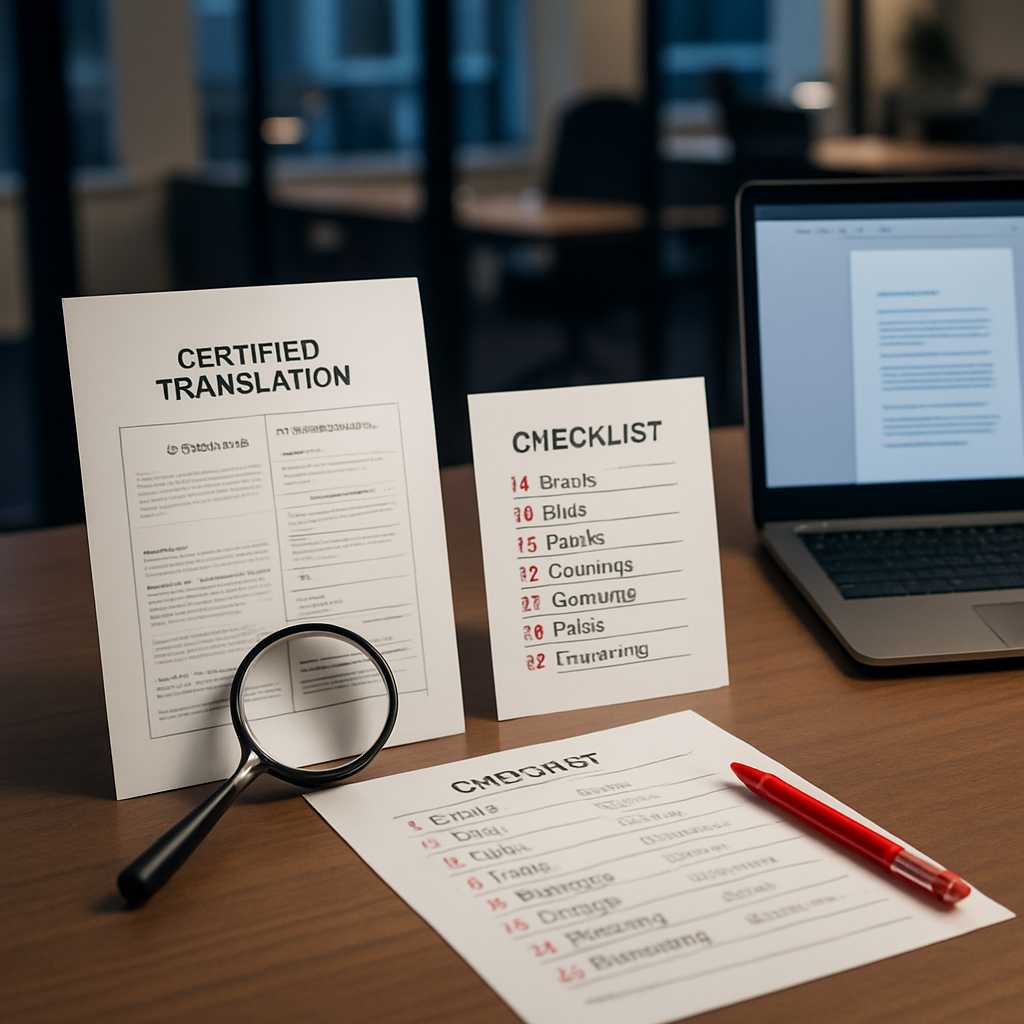
A quick self-check before you submit your document
Before sending a translated document to an authority, ask:
- Does it include every visible section of the original?
- Do names, dates, numbers, and reference codes match exactly?
- Are stamps, seals, signatures, and handwritten notes accounted for?
- Does the English sound formal and natural rather than awkward or robotic?
- Would an English-speaking reviewer understand the document without guessing?
- Is there certification where the receiving authority requires it?
If the answer to any of those is no, the document is not ready yet.
When literal wording may still be appropriate
There are limited cases where very close wording is correct:
- fixed labels
- standard institutional titles
- short form fields
- formulaic registry wording
- repeated document headers
- exact caution notices where an established English equivalent exists
But even here, the translator is still making a professional judgment. “Literal” only works when the literal version is also the correct English equivalent. That is very different from copying source-language grammar line by line.
Final word
The safest translation for official documents is not the one that looks most mechanically similar to the original. It is the one that preserves everything that matters while reading like valid, professional English. That is what protects meaning. That is what protects credibility. And that is what gives your document the best chance of being accepted without delay.
If you are dealing with certificates, court papers, academic records, bank statements, or immigration documents, the smart move is simple: send the file for review, confirm the certification standard, and make sure the translation is prepared for official use from the start.
FAQs
Is word-for-word translation required for official documents?
Usually, no. Official documents generally need a full and accurate translation, but not awkward line-by-line English that distorts meaning. The translation should preserve the content faithfully while using correct target-language wording.
Can a meaning based translation still be accurate?
Yes. A meaning based translation can be more accurate than a literal one when it preserves the true sense, legal effect, and document function without forcing unnatural phrasing.
Do certified translations have to keep the formatting?
They should preserve the structure in a way that helps verification. That often includes headings, tables, stamps, seals, notes, numbering, and page order, even if the final layout is not a perfect visual replica.
Should names be translated or copied exactly?
Names should be handled carefully and consistently. In many cases, the spelling shown on the source document or matching passport spelling is critical. A translator should not casually alter a personal name.
Can stamps, handwritten notes, and signatures be left out?
No. Visible document elements such as stamps, seals, signatures, and handwritten notes should be translated or clearly marked where readable or partially readable. Omitting them can weaken the usefulness of the translation.
What is the biggest risk in the word for word translation myth?
The biggest risk is false confidence. A word-for-word version may look “exact,” but it can produce misleading English, damage legal or administrative meaning, and make an otherwise genuine document look unreliable.