Why “Free Translation Apps” Can Get Your Application Rejected
Free apps are excellent for getting the gist of a menu, email, or social media post. However, they are a poor choice for important documents such as birth certificates, bank statements, police certificates, court orders, academic records, and visa evidence. The reason machine translation is often rejected is straightforward: official bodies are not merely assessing whether the words appear understandable. They are verifying if the document is complete, accurate, verifiable, and supported by a qualified individual.
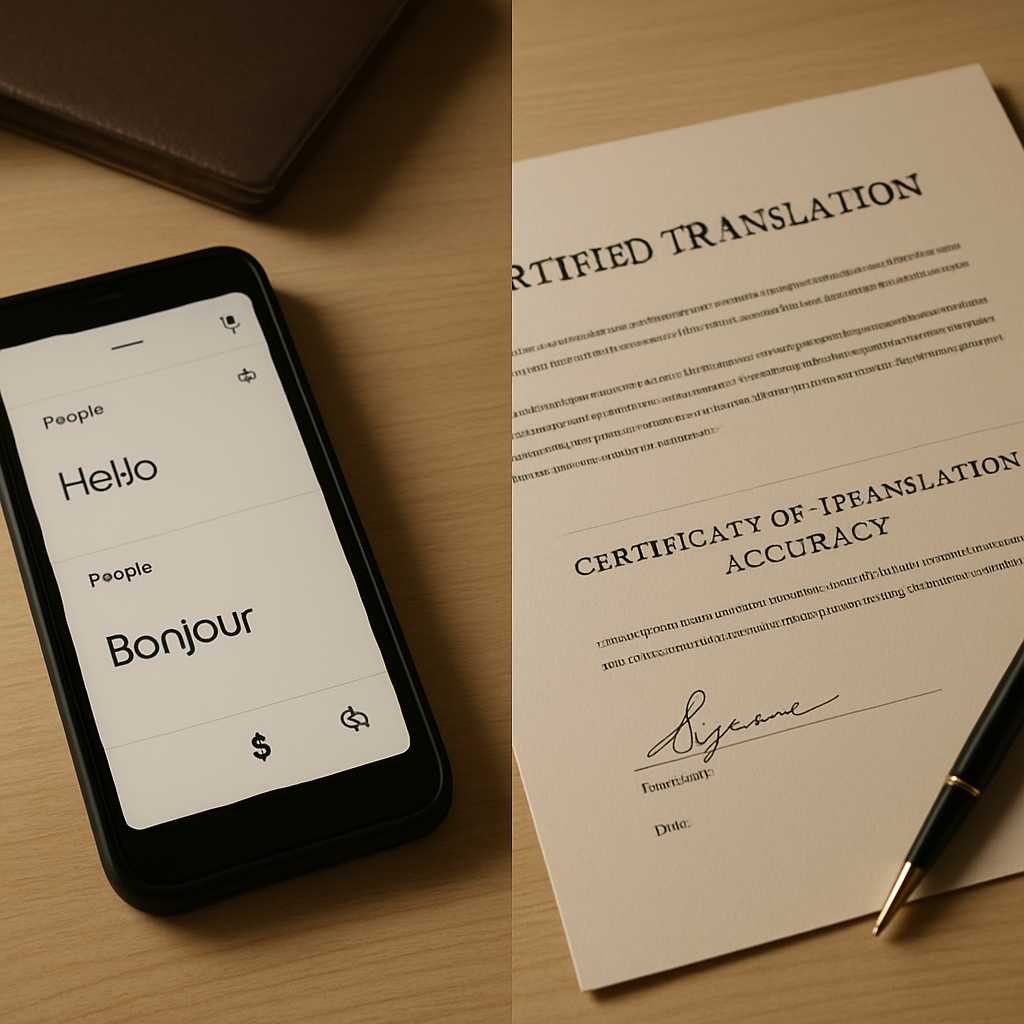
A translation that seems fluent on screen can still lead to delays, requests for additional evidence, or outright rejection. Machines cannot sign a certificate of accuracy, explain the choice of a specific legal term, clarify an ambiguous stamp, or take responsibility for incorrect translations of names, dates, or statuses.
In official applications, while speed is important, accountability is paramount.
What Official Reviewers Are Really Checking
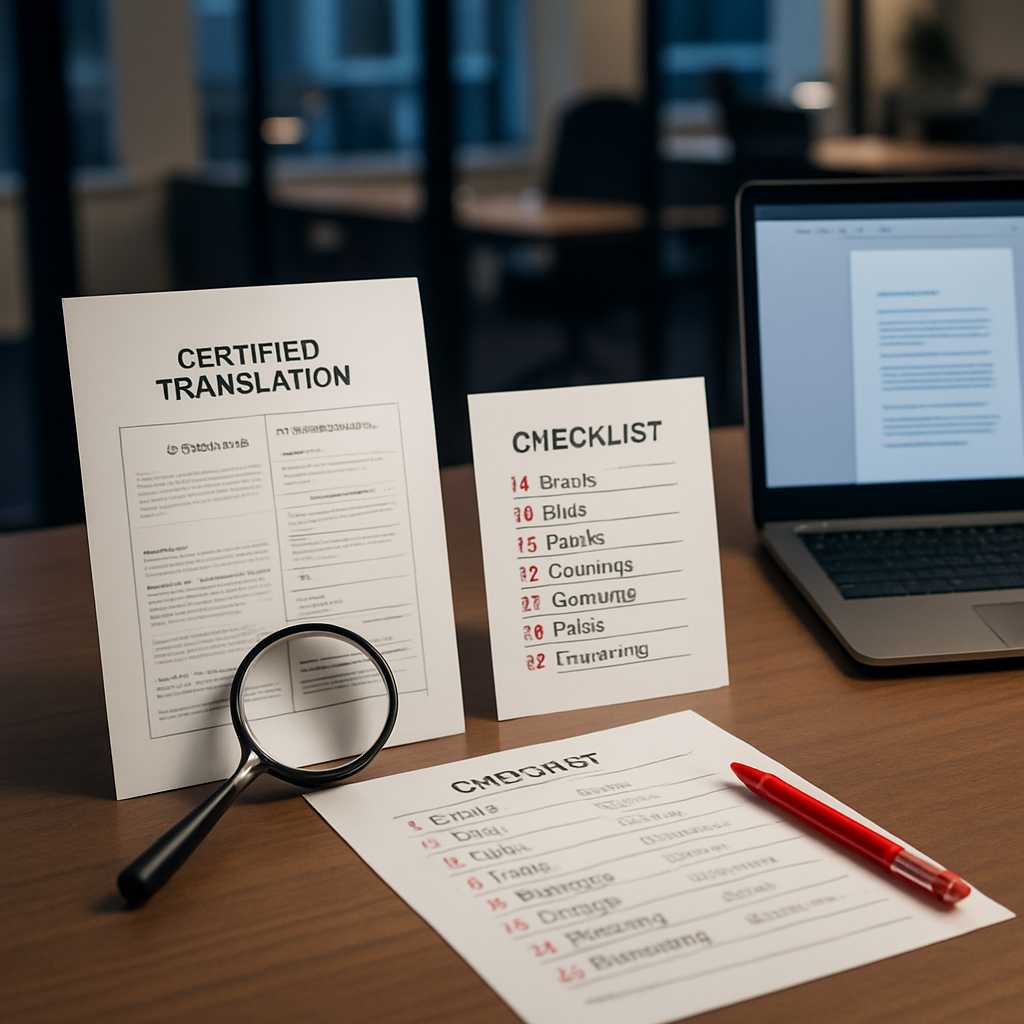
Many people assume that a translation is evaluated solely on whether it “makes sense” in English. In reality, the reviewer is asking a much stricter question: Can I rely on this translation as evidence? A useful way to understand this is through a four-part acceptance test.
1. Is It Complete?
Official translations must encompass the entire document, not just the main body text. This includes:
- stamps
- seals
- marginal notes
- handwritten comments
- headers and footers
- tables
- references and case numbers
One of the biggest risks with AI translation is that the tool may focus on readable text while neglecting the crucial details that matter most.
2. Is It Consistent?
Applications rely heavily on consistency. A reviewer may compare your passport, bank statement, certificate, and application form side by side. If your name is transliterated differently on page one than on page three, or if the date format is inconsistent, the entire file becomes less trustworthy.
3. Is It Certifiable?
A machine can generate text, but it cannot issue a proper certification. For many official uses, the translation needs to come with a signed statement confirming its accuracy, along with the translator’s or company’s details and the date.
4. Is It Contactable?
If an authority needs to verify the translation, who can they contact? A free app does not provide a named professional who can confirm the work, which can lead to acceptance issues.
Why Machine Translation Is Rejected So Often
The core issue is not that machine output is always nonsensical; rather, it can appear convincing while still being incorrect. This poses a significant risk in official document work.
It Cannot Take Legal or Professional Responsibility
A human translator can review the original document, make judgment calls, preserve official meaning, and certify the final text. A free app lacks this capability. Even when the wording appears polished, there is no accountable professional behind it.
It Struggles with Document Context
Machine systems often treat text as isolated fragments, whereas official documents do not function that way. The meaning of a term can depend on the legal system, document type, country of issue, and surrounding layout. For instance, a civil-status term or court phrase may have an accepted translation in one context but be misleading in another.
It Often Misses Non-Standard Text
Many application documents are not clean digital files; they may be phone scans, photocopies, faded originals, handwritten records, or stamped certificates. This is where common machine translation errors become more likely:
- partial OCR reading
- missed lines
- duplicated lines
- broken names
- incorrect punctuation in dates and numbers
- untranscribed notes or stamps
It Gives Applicants False Confidence
This is one of the most significant reasons people encounter issues. The translation may appear neat, quick, and inexpensive, leading applicants to believe it is “good enough.” However, official document review is not based on convenience; it hinges on whether the translation can be trusted as formal evidence.
The Mistakes That Cause the Biggest Acceptance Issues
Some errors are glaring, while others are subtle enough to go unnoticed until the document reaches a reviewer.
Names, Dates, and Numbers
A single incorrect character in a surname, passport number, or issue date can create discrepancies across the file, triggering questions that slow the process.
Civil Status and Legal Terms
Terms such as “single,” “separated,” “annulled,” “registered residence,” or “certificate extract” do not always translate neatly into plain English. A literal translation may be technically readable but administratively incorrect.
Stamps, Seals, and Handwritten Notes
These elements are often the most critical parts of the document. A stamp can signify that a record is official, while a handwritten annotation can alter the document’s status. If these details are omitted or vaguely described, the translation may be deemed incomplete.
Layout and Hierarchy
In certificates, statements, and court papers, meaning is often conveyed through the layout itself. A tool may translate the words but flatten the structure, making it unclear what belongs to which field.
Inconsistency Across Pages
A machine may translate the same term differently in various locations. This inconsistency can be particularly problematic in application packs, especially where names, institutions, and official labels are repeated.
Three Examples of Rejection Waiting to Happen
Example 1: The Birth Certificate That Looked Fine at First Glance
A free app translates a marital-status field too loosely and overlooks a registrar’s stamp at the bottom of the page. The result appears readable, but the translation is incomplete, missing essential official details.
Example 2: The Bank Statement with One Invisible Problem
The balances and transactions are translated, but the tool fails to capture a note showing the account holder’s full legal name in a side column. The reviewer cannot confidently link the statement to the applicant.
Example 3: The Court Document with a Date Error
A date presented as 03/04/2025 is translated in a way that alters its meaning, changing whether it refers to 3 April or 4 March. In an official filing, this is not a trivial mistake; it can impact the sequence of events.
Google Translate for Official Use: Where People Go Wrong
Many applicants turn to Google Translate for official use due to its speed, familiarity, and cost-free nature. The issue is not whether it can produce understandable English; rather, it is whether that output is suitable for submission.
For informal understanding, a free app may suffice. However, for official submission, it is risky because it does not provide:
- certification
- professional accountability
- document-level consistency
- reliable handling of stamps, seals, or handwritten content
- confidence that the entire page has been interpreted correctly
This is why using Google Translate for official purposes is usually the wrong approach. A better question to ask is:
What kind of translation will the receiving authority actually accept?
What an Acceptable Translation Usually Needs
For official applications, the safest route is typically a full human translation prepared for submission, accompanied by the appropriate certification details. This generally includes:
- a complete and accurate translation of the original document
- the date of translation
- the full name of the translator or translation company representative
- a signature
- contact details
- certification wording confirming accuracy
- translation of material stamps, seals, notes, and markings
- the original-language document alongside the translation where required
This distinction separates text that is merely readable from text that is ready to be trusted. If your deadline is approaching, it’s advisable to get a fast quote before submitting anything. It is far easier to check the requirements now than to rectify an application after a rejection or follow-up request.
The Hidden Cost of “Free”
Free translation tools may seem inexpensive until you consider the real cost of an error, which can include:
- missed deadlines
- re-submission fees
- extra courier costs
- delayed decisions
- repeated document requests
- increased stress at critical moments
The cheapest translation is not necessarily the one with the lowest upfront price; it is the one that does not need to be done twice.
Can AI Ever Be Part of the Process?
Yes, but not as a submit-and-hope shortcut. Technology can assist professional workflows. A qualified translator or translation company may use tools internally for speed, terminology support, or draft handling. The crucial difference lies in the fact that a human expert still reviews the source, corrects the output, makes judgment calls, ensures completeness, and takes responsibility for the final certified version.
Thus, the issue is not simply “AI bad, human good.” The real question is:
Is unreviewed machine output equivalent to a professionally prepared translation for official use?
What to Do If You Already Used a Free App
Do not panic, and do not submit the app output as your final version. Instead, follow these steps:
- Keep the original scan or PDF.
- Note where the document will be submitted.
- Check whether you need standard certified translation, notarisation, or legalisation.
- Have the full document reviewed by a professional translator or translation company.
- Ensure names, dates, numbers, stamps, and notes are all checked against the original.
If you are uncertain about which service level you need, send us your document first. A quick review can save you from a much larger delay later.
Why Applicants Choose a Human-Certified Route Instead
When the document is significant, individuals seek more than just translated words; they desire a submission-ready file. This entails:
- human review of every page
- careful handling of names, dates, and official terminology
- formatting that reflects the original structure
- a signed certificate of accuracy where needed
- clear turnaround times
- digital delivery, with printed copies available if required
At Urgent Certified Translation UK, this is the difference in focus. The goal is not merely to produce English text as quickly as possible, but to assist you in submitting a document that can withstand official scrutiny.
If your application includes certificates, statements, court papers, academic records, or immigration evidence, do not rely on a free app and hope for leniency from the reviewer. Send a clear scan, allow us to confirm the correct certification route, and proceed with confidence.
Final Word
Machine translation is rejected not because authorities are opposed to technology, but because official documents require more than quick wording; they necessitate completeness, consistency, certification, and accountability. Free apps are designed for convenience, while applications are evaluated based on trust.
If the document is important, treat the translation as an integral part of the application—not as a last-minute shortcut. Upload your file, seek the right advice upfront, and submit with confidence.
FAQs
Why is machine translation rejected for official applications?
Machine translation is often rejected because official applications require a translation that is accurate, complete, certifiable, and linked to a named professional or company. While machine output may appear fluent, it does not provide the necessary level of accountability.
Can I use Google Translate for official use in the UK?
For informal understanding, it may be acceptable. However, for official submission, it is risky. A free app does not offer certification, does not reliably manage all document features, and cannot be independently verified in the same manner as a professional certified translation.
What are the most common machine translation errors in official documents?
The most frequent issues include incorrect names, date confusion, inconsistent terminology, missed stamps or handwritten notes, incomplete extraction from scans, and awkward translations of legal or civil-status terms.
Can AI-assisted translation ever be accepted?
AI-assisted translation can be acceptable only when a qualified human fully reviews, corrects, and takes responsibility for the final version, and when the final translation is issued in the format required by the receiving authority.
Do stamps, seals, and handwritten notes need to be translated?
Yes, if they carry meaning or affect the document’s status. Omitting them can render a translation incomplete.
What should a certified translation include?
A certified translation should encompass a full and accurate translation, certification wording, the date, the name and signature of the translator or authorized company representative, and contact details. Some recipients may require additional credentials or formalities.