How to Translate a Foreign Driving Licence for UK Use (Step-by-Step)
If you need to translate a driving licence for UK use, the safest approach is to treat it as an official document from the start. That means checking whether your licence is being used to drive in Great Britain, exchange for a GB licence, support a job or insurance application, or form part of a wider official document pack. Great Britain and Northern Ireland follow different official processes, so the first step is always to check which authority you are dealing with before you order the translation. (GOV.UK)
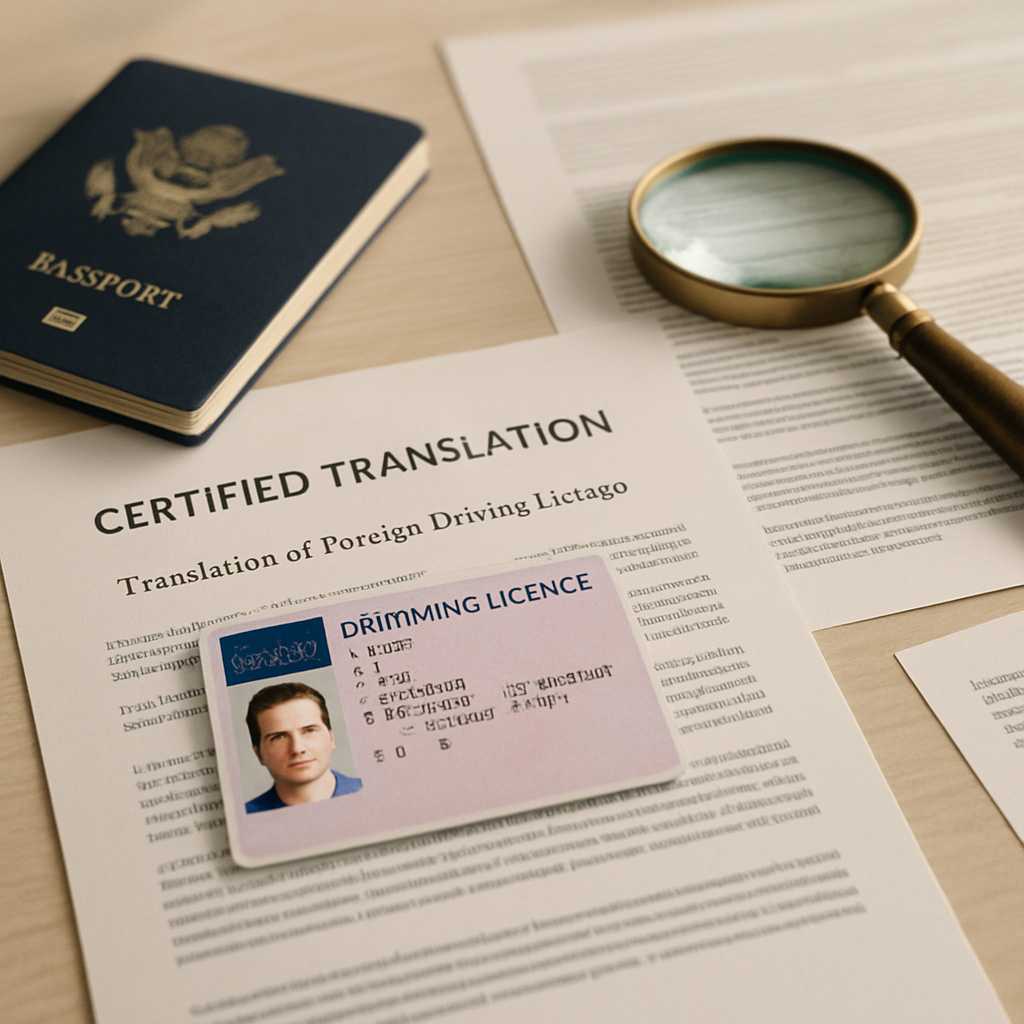
A good translation does more than convert words. It preserves names, dates, categories, restrictions, issuing authority details, and any notes on the reverse side so the receiving body can understand exactly what your original licence says. That is where many people lose time: not because the document is difficult, but because the first version submitted was incomplete, unclear, or not certified properly.
Start with the real question: what is the licence being used for?
Before you order anything, decide what the translated licence needs to do. You may need a translated licence because:
- you are exchanging a foreign licence for a GB or Northern Ireland licence
- an employer needs to review your entitlement to drive
- an insurer wants to verify the licence details
- you are adding the licence to a visa, legal, or identity document pack
- another organisation needs an English version because the original is not in English or Welsh
For Great Britain, GOV.UK provides separate tools for driving on a non-GB licence and exchanging a non-GB licence. Northern Ireland uses a different DVA process. (GOV.UK)
That distinction matters. A person can sometimes still drive on a foreign licence for a period, yet still need a certified translation for an application, verification check, or exchange process. The translation is about readability and evidence. It is not a substitute for checking whether your licence is valid for the specific UK purpose involved.
Step 1: Confirm whether you are dealing with Great Britain or Northern Ireland
This is the first mistake many applicants make. For Great Britain (England, Scotland, and Wales), use the official GOV.UK tools for:
- driving in Great Britain on a non-GB licence
- exchanging a non-GB driving licence (GOV.UK)
For Northern Ireland, the exchange process is different and handled through DVA guidance. In some Northern Ireland cases, licences from Japan, the Republic of Korea, and Taiwan must come with official translations from specific sources, not just any translation provider. (nidirect)
That is why the best process is not “translate first, ask later.” It is “check the route, then order the right translation pack.”
Step 2: Prepare a clean source file before translation starts
Most avoidable delays happen before the translator even begins. Send:
- the front and back of the licence
- a full image with all corners visible
- a glare-free scan or clear photo
- a readable image of every category, code, number, date, stamp, and note
- any supporting letter or explanation if a restriction, endorsement, or test entitlement appears elsewhere
If the licence is laminated, reflective, worn, or partly faded, take more than one image under different lighting. If the reverse side includes categories, issue dates, restrictions, or codes, do not assume it is “just background information.” On many licences, the reverse side carries the details the receiving body actually needs to assess.
A translator cannot safely certify what is not legible. A perfect certification statement attached to a weak scan still creates risk.
Step 3: Make sure the translation covers every field that matters
A driving licence translation for UK use should normally include all meaningful content, not just the obvious headline items. That usually means:
- licence holder’s full name
- date of birth
- address, if shown
- licence number
- date of issue
- expiry date
- issuing authority
- place or country of issue
- vehicle categories and entitlements
- restriction codes or notes
- endorsements, observations, or remarks
- reverse-side tables, legends, and category lines
- visible stamps, seals, and non-English labels
This is where many low-value translations fail. They translate the front, skip the back, summarise the categories, or leave out the code legend. For an official-use document, that is not enough.
A stronger approach is to translate the document as a document, not as a short note. If a code cannot be expanded safely, it should be reproduced clearly and, where appropriate, identified as a code appearing on the original rather than guessed or reinterpreted.
Step 4: Order a certified translation pack, not plain translated text
If the receiving body needs an official-use translation, ask for a certified translation pack. GOV.UK guidance on certifying a translation says the translator should confirm on the translation that it is a “true and accurate translation of the original document,” and include the date, full name, and contact details. Home Office guidance for non-English or non-Welsh documents also requires a full translation that can be independently verified, with confirmation of accuracy, the translation date, the translator’s full name and signature, and contact details. (GOV.UK)
In practice, a strong certified driving licence translation pack should include:
- the full English translation
- a certification statement confirming accuracy
- the translator’s or agency representative’s full name
- signature
- date of certification
- contact details
- the source and target language
- a PDF version ready to submit digitally
- a printed certified copy if the recipient asks for hard copy
Urgent Certified Translation’s quote and service pages already position certified translation as including a signed translator declaration, with digital delivery and printed-copy options where required. (Urgent Certified Translation)
Step 5: Check name matching before the translation is finalised
A driving licence translation can be linguistically correct and still cause problems if the personal details do not line up with the rest of your document pack. Check these carefully:
- Does the licence name match the passport spelling?
- Is there a middle name on one document but not the other?
- Has the surname changed after marriage?
- Is the date format being read correctly?
- Are numerals easy to confuse because of local formatting?
- Are place names transliterated consistently across your documents?
This matters because authorities and reviewers tend to look across the whole submission. A driving licence rarely stands alone. If the spelling on the licence translation does not match the spelling on the passport, BRP, visa file, or employer records, you may end up answering questions that were easy to avoid.
The most useful instruction you can give your translator is simple: “Please match spellings with my passport where appropriate, but translate the original faithfully and flag any mismatch.”
Step 6: Submit the translation in the format your recipient actually wants
Not every recipient wants the same output. For some organisations, a PDF certified translation is enough. Others may want a printed and signed copy. Some will only care that the licence is readable in English. Others will want a full certified pack because the document is being used in a regulated or official process.
That is why a quick pre-submission check helps:
- Do they want digital only?
- Do they want hard copy?
- Do they want the original-language copy attached?
- Do they want both sides translated?
- Do they want certification only, or notarisation too?
For official UK document handling, a full certified translation is usually the sensible default starting point when the original is not in English or Welsh. (GOV.UK)
What Great Britain applicants should know before submitting
If your licence is for use in Great Britain, the official place to start is the GOV.UK non-GB driving and exchange tools. These confirm whether you can drive in Great Britain on your current licence and whether you can exchange it for a British licence. (GOV.UK)
If you are exchanging a qualifying foreign licence, current GOV.UK fee guidance says:
- a first full GB licence in exchange for a full European Community, European Economic Area, or other designated foreign licence is £43 by post if no previous GB licence was held
- some exchange cases are free, including certain cases where a previous GB licence was held (GOV.UK)
If you live in Great Britain and drive a bus with 9 passenger seats or more, or a vehicle weighing more than 3.5 tonnes, DVLA says you need to register your non-GB driving licence using form D9. (GOV.UK)
That extra layer is why vocational drivers should not rely on generic advice from a basic driving-licence translation page.
What Northern Ireland applicants should know
Northern Ireland does not follow the same route as Great Britain. DVA has its own exchange rules, forms, identity requirements, and document handling process. It also publishes specific rules for some overseas licences, including official translation-source requirements for certain countries. (nidirect)
Northern Ireland guidance also states that:
- many exchangeable licences can be exchanged within five years of becoming resident
- some drivers may continue driving for a defined period after becoming resident, depending on the licence type and country
- international driving permits are not exchangeable
- Japanese, Korean, and Taiwanese licences have specific translation-source requirements in Northern Ireland (nidirect)
If your licence is for Northern Ireland use, do not assume a Great Britain article or a generic agency page applies unchanged.
Do you need notarisation or apostille?
Usually, no — not for a foreign driving licence being translated for UK use. This is one of the most common ways people overspend. GOV.UK’s Legalisation Office says you cannot use its service to legalise documents issued outside the UK. In other words, apostille is for certain UK-issued documents and certified UK copies, not for turning a foreign driving licence into something “more official” for routine UK use. (GOV.UK)
So the safer rule is:
- start with certified translation
- add notarisation only if the receiving body specifically asks for it
- do not pay for apostille unless you are dealing with a document and process where it actually applies
For most UK-use driving licence cases, certified translation is the first thing to get right.
Common mistakes that cause avoidable delays
Sending only the front side
Many licences carry the categories, dates, and restrictions on the reverse.
Cropping corners or cutting off codes
A neat crop may remove the very details an employer, insurer, or authority wants to see.
Ordering plain translation instead of certified translation
If the document is being used officially, plain text may not be enough.
Ignoring name mismatches
One spelling difference can trigger manual review.
Guessing category meanings
A good translation reproduces what is on the original; it does not invent a licence entitlement that is not clearly shown.
Paying for extras nobody asked for
Notarisation and apostille can add time and cost without improving acceptance when the recipient only wanted a certified English translation.
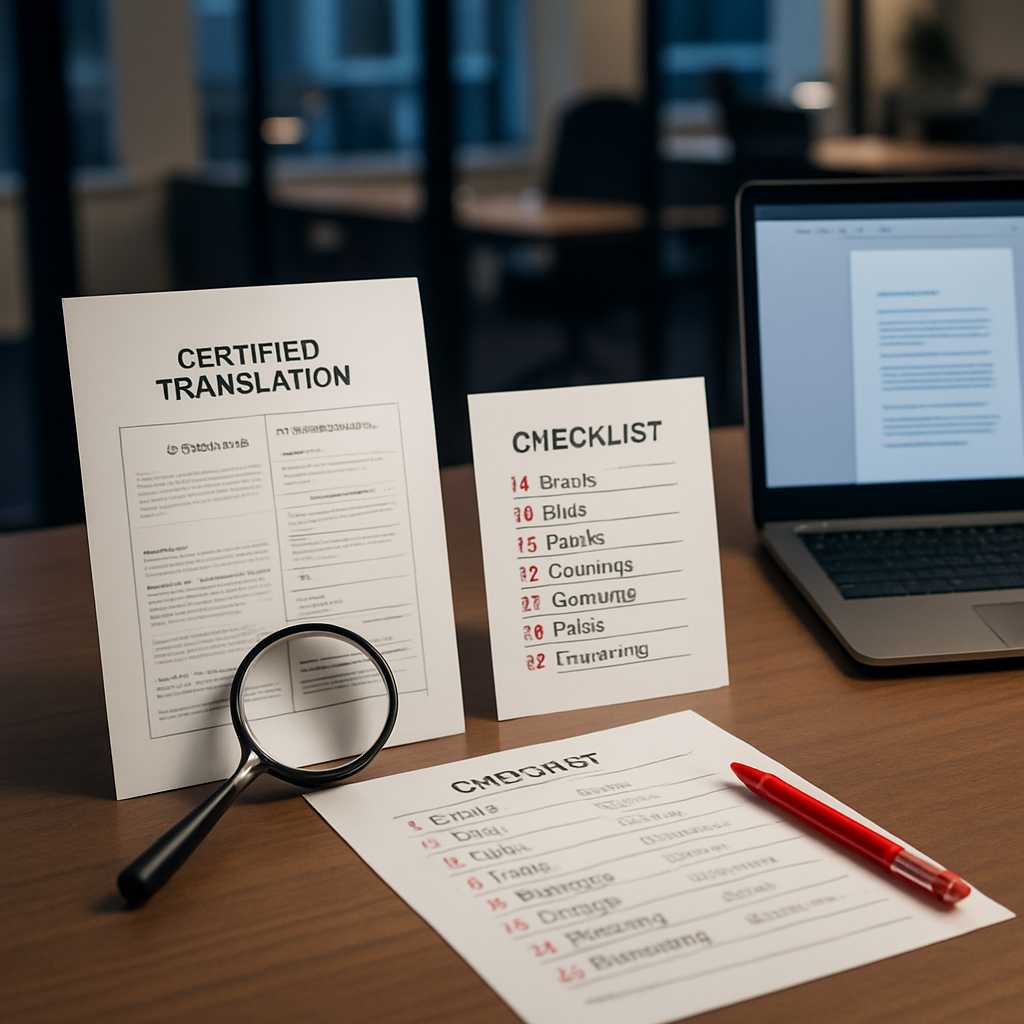
A simple checklist for a submission-ready driving licence translation pack
Before you upload or post anything, make sure you have:
- clear image of the front
- clear image of the back
- full English translation
- certification statement
- translator name
- translator signature
- translation date
- contact details
- matching spelling checked against passport or main ID
- PDF copy ready for upload
- printed certified copy ready if requested
That single checklist prevents more problems than most “urgent” fixes.
The best way to avoid rework
Treat the job as a document pack, not a one-page translation. That mindset changes everything. Instead of asking, “Can someone translate this today?” ask:
- What authority is this for?
- Is this Great Britain or Northern Ireland?
- Do they need certified translation?
- Do they need digital, printed, or both?
- Are all licence fields visible and readable?
- Does the name match the rest of my file?
That is how you avoid the expensive cycle of translating once, reformatting later, then paying again for a corrected certified version.
Ready to translate your driving licence for UK use?
If your licence is not in English or Welsh and you need it ready for a UK authority, employer, insurer, or official submission, the fastest safe route is to upload both sides first and get the certification level confirmed before work starts. Urgent Certified Translation already offers:
- certified translation with a signed translator declaration
- digital delivery
- printed-copy options where required
- urgent turnaround choices including same day, 12 hours, and 24 hours
- document support pages built around official-use handling
- trust signals on site showing acceptance-focused positioning for bodies such as DVLA, FCDO, HMCTS, HM Passport Office, the Home Office, and UK Visas (Urgent Certified Translation)
Upload your file, send both sides of the licence, and ask for a certified driving licence translation pack prepared for UK use. That gives you the best chance of getting it right first time.
FAQs
Do I need to translate my driving licence for UK use?
You may need to translate your driving licence for UK use if the original is not in English or Welsh and a UK authority, employer, insurer, or other recipient needs to read it properly. For Great Britain, always check the official GOV.UK driving and exchange tools first. (GOV.UK)
Does DVLA require a certified driving licence translation?
Where a translation is needed for an official process, the safest route is a certified translation that confirms accuracy and includes the translator’s details. GOV.UK guidance on certifying translations requires a true and accurate statement, date, and full contact details, while Home Office guidance also requires a full verifiable translation with translator name, signature, and contact details. (GOV.UK)
Can I use a normal translator instead of a certified translation service?
A plain translation may not be enough for official use. What matters is whether the translation includes the certification elements the receiving body expects. For official-use documents, a certified translation pack is the safer option. (GOV.UK)
Do I need notarisation for a driving licence translation in the UK?
Usually not unless the recipient specifically asks for it. A certified translation is usually the starting point. Apostille is not a shortcut for foreign documents being used in the UK, and the UK Legalisation Office does not legalise documents issued outside the UK. (GOV.UK)
Can I exchange my foreign driving licence in the UK without retaking the test?
Sometimes, yes, but it depends on the country or territory that issued your licence and whether you are dealing with Great Britain or Northern Ireland. Use the official exchange tool for Great Britain, and the DVA guidance for Northern Ireland. (GOV.UK)
What should a certified driving licence translation pack include?
At minimum, it should include the full translation plus a certification statement confirming it is accurate, along with the translation date and the translator’s full name and contact details. A signature is also required in Home Office-style guidance for translated supporting documents. (GOV.UK)