Why payslip formatting causes problems more often than the wording
In many payslip submissions, the biggest weakness is not the translation of a single payroll term. It is the loss of structure.
A reviewer usually needs to compare:
- employer details
- employee details
- pay period
- gross pay
- allowances
- tax or statutory deductions
- social contributions
- net pay
- year-to-date figures
If these items are turned into plain paragraphs, mixed into one block of text, or reordered for convenience, the translated document becomes slower to verify. That matters even more when several monthly payslips are submitted together.
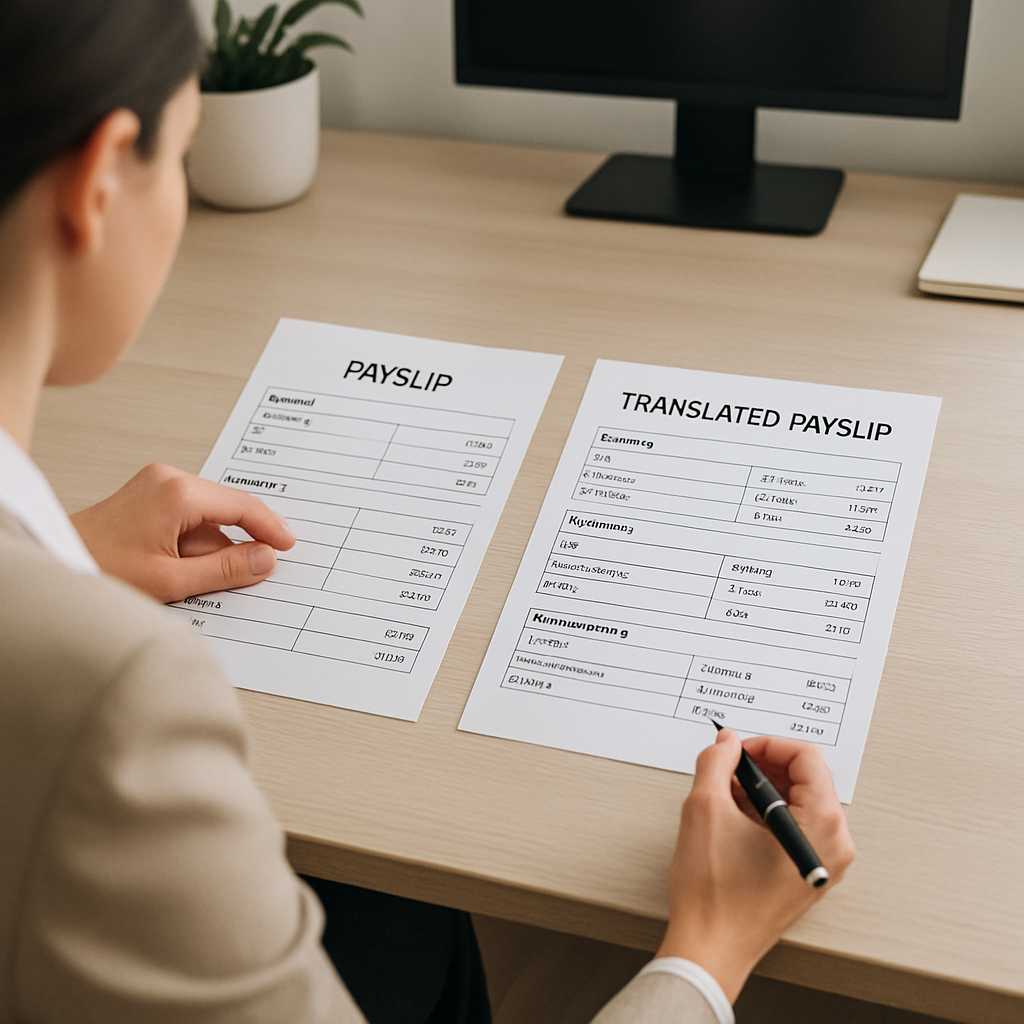
A well-formatted translation helps the reviewer match line to line and month to month without guessing. A good payslip translation does two jobs at once: it translates the meaning and preserves the logic of the payroll table.
What “payslip translation formatting” actually means
Payslip translation formatting means translating every visible, relevant text element while keeping the layout readable and faithful to the original structure. That usually includes:
- table headings
- earnings rows
- deduction rows
- footer notes
- abbreviations and payroll labels
- dates and pay periods
- employer and employee identifiers
- stamps, signatures, and visible annotations
- page numbers and continuation notes
It does not mean:
- redesigning the payslip
- recalculating amounts
- rounding figures differently
- converting currency without a clear note
- merging separate deductions into one simplified label
- removing repeated fields because they “look obvious”
The safest rule: preserve structure before polishing style
The best translated payslips are usually faithful, not creative. If the original has two main columns for earnings and deductions, keep two clear sections. If it uses grouped rows for tax, insurance, pension, and other withholdings, keep those distinctions visible. If totals appear at the bottom, keep totals at the bottom.
This is especially important where the document is used as proof of income. A reviewer should be able to trace:
- the pay period
- the component amounts
- the deductions
- the final payable amount
without hunting across the page.
What should always be translated on a payslip
Some translators lose clarity by leaving too many payroll terms untouched. For official-use submissions, the safer approach is to translate all meaningful labels while preserving source-specific identifiers where needed.
Core pay elements
Translate labels such as:
- basic salary
- base pay
- hourly pay
- overtime
- bonus
- commission
- allowance
- holiday pay
- sick pay
- unpaid leave
Deductions
Translate labels such as:
- income tax
- social security
- pension
- insurance
- loan repayment
- advance deduction
- absence deduction
- union fee
- garnishment
- other deduction
Administrative fields
Translate where visible and relevant:
- pay period
- payment date
- employee number
- department
- position or job title
- employer name
- payroll number
- year-to-date
What should usually stay as shown in the original
Not everything should be rewritten. These items are often preserved exactly as they appear, sometimes with a translated explanation if helpful:
- names of people
- company names
- tax numbers
- employee IDs
- account references
- document numbers
- currency symbols and amounts
- internal payroll codes
The principle is simple: translate the label, preserve the identifier. For example, a clean approach is:
Employee No.: 78411
Tax Code: AB-19
Department: Production
How to handle abbreviations without damaging the table
Payslips are full of abbreviations, especially in payroll software exports. Translating them badly can create two problems at once: confusion and broken spacing.
A practical method is:
- translate the full meaning where known
- keep the original abbreviation in brackets on first mention
- use the shorter consistent form afterwards if space is tight
Example:
Social Insurance Contribution (SIC)
Overtime (OT)
Year to Date (YTD)
If the abbreviation is an internal code with no obvious public meaning, keep the code and add a translator note only when necessary.
The biggest table-layout mistakes to avoid
Turning the whole payslip into running text
This is the fastest way to lose clarity. A payslip is built for scanning, not narrative reading.
Reordering rows
Do not move deductions above earnings or place totals mid-page just because it looks cleaner in English.
Merging separate categories
“Tax + insurance + pension” should not become one umbrella deduction if the source separates them.
Expanding text so much that figures drift out of alignment
Some labels become longer in translation. When that happens, adjust column width or line breaks carefully. Do not let the figures wander into the wrong row.
Ignoring footnotes and side notes
Small-print notes can affect how a reviewer understands the figures. If it is visible and relevant, it should be translated.
“Correcting” the source by assumption
If the source uses an unusual payroll label, inconsistent spacing, or a strange code, translate what is there. Do not silently reinterpret the document.
A practical formatting method that works
1. Rebuild the table logic first
Before translating line by line, identify the main table structure:
- header area
- employee/employer details
- earnings section
- deductions section
- totals
- year-to-date area
- notes or footer
Once the structure is mapped, the translation is far less likely to collapse into a messy page.
2. Create a payroll term list before formatting multiple months
If six payslips from the same employer are being translated, repeated labels should be standardised from the start. This avoids one month using “Basic Salary,” another using “Base Pay,” and another using “Monthly Wage” for the same source term. That consistency matters when a reviewer compares several months together.
3. Keep numbers exactly as shown
Translate labels, not amounts. Do not:
- convert commas to decimal points unless that is part of the faithful target-language presentation and remains unambiguous
- round figures
- re-total the payslip
- convert currencies without instruction and a clear translator note
4. Preserve hierarchy visually
Use:
- clear row spacing
- consistent line alignment
- bold section headers only where the source supports them
- totals separated from line items
- year-to-date figures clearly labelled
5. Use translator notes sparingly
A translator note is useful when a code, stamp, or abbreviation would otherwise confuse the reader. It is not a replacement for translating the actual document.
How to translate deductions clearly
Deductions are one of the first things reviewers check, especially when a payslip supports a financial or employment-related submission. The safest method is to keep each deduction on its own row and preserve the sequence shown in the source.
A clear deductions section should make it easy to identify:
- tax withheld
- social insurance or national insurance equivalent
- pension contributions
- health insurance
- advances or recoveries
- unpaid leave deductions
- court-ordered deductions, if any
Where the original groups deductions by category, keep those groupings. Where it does not, do not invent them.
How to deal with poor scans, screenshots, and PDF exports
Many payslips arrive as compressed screenshots, scanned printouts, or payroll PDFs with faint lines and tiny text. These files can still be translated well, but formatting discipline matters even more. Best practice includes:
- working from the clearest file available
- enlarging the table before rebuilding it
- marking unreadable items honestly rather than guessing
- keeping bracketed notes short and neutral, such as [illegible stamp] or [text unclear]
- checking that row labels still match the correct amounts after reformatting
If the document quality is weak, it is far better to request a clearer scan before certification than to risk a misread row.
When several payslips are submitted together
Multiple-month payslip packs are common. They are also where formatting inconsistency becomes most obvious. A clean multi-month pack should keep:
- the same translated term for the same payroll label across every month
- the same treatment of dates
- the same handling of abbreviations
- the same placement of translator notes
- the same certification format across the full set
A useful internal quality check is this: if someone compares Month 1 and Month 6 side by side, do matching fields still look like matching fields? If not, the formatting needs another pass.
What a certified payslip translation pack should include
For official submissions, the safest package is usually more than the translated page alone. A complete pack often includes:
- the translated payslip or payslips
- a certification statement
- the translation date
- the translator’s full name
- signature and contact details, where required
- company details or stamp, where used
- a copy of the source document if the recipient expects both together
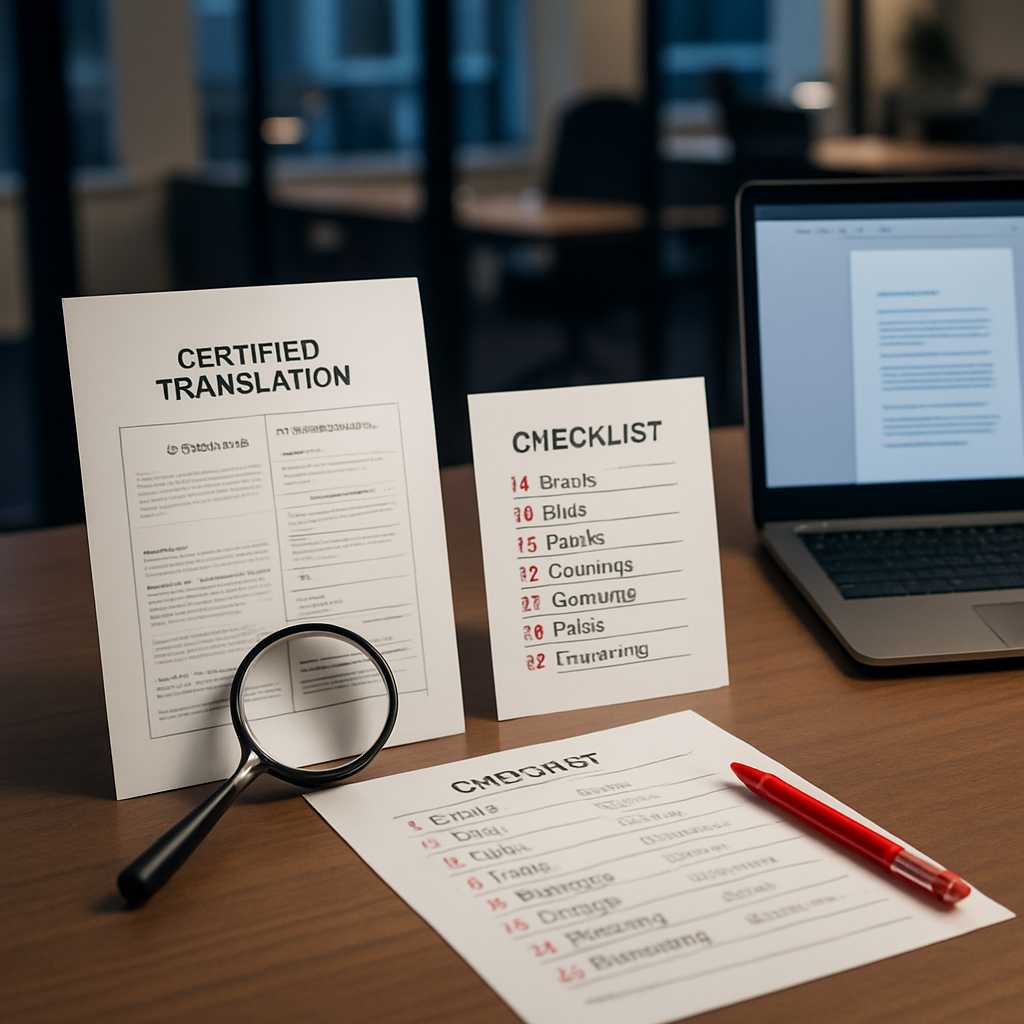
This is where certified translation notes matter. They should be clean, readable, and separate from the payroll table itself.
A simple example of clean presentation
Imagine a source payslip with these rows:
- Basic Salary
- Housing Allowance
- Transport Allowance
- Overtime
- Tax
- Social Insurance
- Net Salary
A poor translation might turn that into one paragraph:
“Salary includes base pay, housing, transport and overtime minus tax and insurance.”
A strong translation keeps the structure visible:
Earnings
Basic Salary
Housing Allowance
Transport Allowance
Overtime
Deductions
Tax
Social Insurance
Net Salary
That difference seems small, but it changes the speed and confidence of review.
The most common reasons translated payslips get questioned
- The table no longer matches the source
- Deductions are translated inconsistently
- Footnotes or abbreviations are ignored
- Figures appear on the wrong line
- Certification wording is missing or incomplete
- The translation looks partial rather than full
- Several months are translated using different terminology
In practice, payslips are rarely doubted because “salary” was mistranslated. They are doubted because the reviewer cannot follow the structure confidently.
A better way to think about layout retention
The phrase “keep the original formatting” is helpful, but not enough on its own. The real target is reviewability. A translated payslip should let a third party verify the source without needing to decode the document from scratch. That means:
- rows should still behave like rows
- columns should still behave like columns
- totals should still look like totals
- notes should still look like notes
That is why payslip translation formatting is not an optional extra. It is part of the accuracy.
A case-style example
A typical income evidence pack might contain six monthly payslips from the same employer, each with near-identical headings but different overtime, deductions, and net pay. If those six months are translated one by one without a shared terminology list, small differences creep in quickly. One month may say “Insurance Contribution,” another “Social Contribution,” and another “Employee Insurance.” None may be technically wrong, but the pack feels inconsistent.
A stronger approach is to approve the repeated payroll labels at the start, then apply them across the whole set. The finished pack reads as one coherent submission rather than six separate formatting decisions.
Why this matters for official UK submissions
When documents are being prepared for official use, the safest standard is a full translation that is clearly laid out, complete, and certifiable. That matters whether the payslip is being reviewed for immigration, employment, legal, tenancy, financial, or academic reasons.
If your payslips are in another language and the deadline is close, it is worth getting them prepared properly the first time. A readable table, clear certification, and consistent payroll terminology save more trouble than a rushed rework later.
Frequently Asked Questions
Do payslips need certified translation for UK submissions?
If the receiving body asks for a certified translation of documents not in English or Welsh, payslips should be translated in full and accompanied by the required certification details. The safest approach is to assume that income evidence should be complete, readable, and formally certified unless the recipient says otherwise.
Should a translated payslip match the original table layout?
Yes. It does not need to copy every design feature perfectly, but it should preserve the structure clearly enough for a reviewer to match earnings, deductions, totals, dates, and identifiers without confusion.
Do deductions and payroll abbreviations need to be translated?
Yes, meaningful payroll labels should usually be translated. Where an abbreviation could cause confusion, it should be clarified while keeping the original code where needed for traceability.
Can several monthly payslips be translated as one pack?
Yes. In fact, that is often the best approach. A multi-month pack allows repeated payroll terms, headings, and certification details to stay consistent across all months.
Should currency values be converted in a payslip translation?
Usually, no. The safest approach is to keep the original figures and currency exactly as shown. If a converted amount is needed for any reason, it should be clearly marked as a note rather than presented as though it were part of the original payslip.
Is a scan or photo enough for a payslip translation?
Often, yes, provided it is clear and readable. Blurry screenshots, cropped images, or faint printouts can create avoidable problems, so a sharp PDF or full scan is always better.