Introduction
A seal on a certificate, court paper, transcript, or official record is easy to mishandle. Many people assume the translator should copy the shape, redraw the emblem, or simply ignore it. None of those approaches is ideal. The correct approach is to show that the seal exists, translate any readable wording it contains, and label it clearly so the receiving authority can understand what appears on the original without mistaking the translation for a copied official mark.
If you have ever wondered how to translate seals correctly, the safest method is simple: describe the seal, preserve its meaning, avoid reproducing the design, and make the translation easy to compare against the original. This is especially important for immigration files, court bundles, academic submissions, and notarised or certified document packs where stamps, seal description notes, and official markings may affect how the document is reviewed.
A properly prepared certified translation does not try to imitate an authority’s visual seal. It records it accurately in words.
When your document contains official markings and you need a submission-ready result, get a fast quote and send a clear scan first. A readable source file makes the difference between a smooth approval and a preventable follow-up.
Why Seals Matter in Official Document Translation
On many official documents, the seal is not decoration. It can help show which authority issued the record, whether the page was validated, whether a registry office applied an official stamp, or whether a notary, court, ministry, university, municipality, or medical institution handled the document.
That means the seal should not be skipped. But it also should not be redrawn as though the translator were recreating the original instrument. The aim is not graphic duplication; the aim is accurate documentary reporting.
Typical documents where this issue matters include:
- Birth certificates
- Marriage certificates
- Divorce decrees
- Police certificates
- Academic transcripts and diplomas
- Court orders and affidavits
- Powers of attorney
- Company certificates
- Notarised and apostilled records
- Medical records with hospital or ministry stamps
In practice, reviewers want clarity. They need to see what the original contains, where the seal appears, and what text inside it says if that text is readable.
The Correct Method: Translate the Content, Not the Artwork
The safest working rule is this: translate the information carried by the seal, but do not reproduce the seal itself. That means:
- Note the presence of the seal
- Describe it neutrally
- Translate any legible text inside it
- State when text is partial, unclear, or illegible
- Keep the note visually separate from the main body text
A good translation makes it obvious to the reader that they are looking at a translator’s note, not an original authority mark.
What This Looks Like in Practice
Examples of acceptable rendering include:
- [Round blue seal: Civil Registry Office, Athens]
- [Official stamp: Ministry of Education]
- [Rectangular stamp in purple ink: Department of Internal Affairs]
- [Embossed seal, text partially illegible]
- [Round seal bearing the words “Municipality of Sofia”]
This method is clear, professional, and easy for a caseworker, solicitor, university admissions officer, or registry clerk to understand.
What Not to Do
Avoid these common mistakes:
- Redrawing a ministry emblem or coat of arms
- Copying a seal image into the translation file
- Typing seal wording as though it were ordinary running text without any label
- Guessing unclear words inside a stamp impression
- Omitting back-page seals or margin stamps because they seem minor
- Using inconsistent labels such as “seal”, “stamp”, “mark”, and “badge” randomly throughout one file
When a translation includes copied artwork, it can blur the line between the original and the translated version. That is exactly what official document translation should avoid.
Seal, Stamp, Embossing, and Impression: What is the Difference?
Clients often use these terms interchangeably, but they are not always the same in practice.
Seal
A seal usually refers to an official validating mark linked to an authority, office, registry, institution, or notarial act. It may be inked or embossed.
Stamp
A stamp is often an ink impression placed on the document. It may contain a date, office name, serial number, department title, or approval wording.
Embossed Seal
An embossed seal is pressed into the paper and may have little or no ink. In translation, this should still be noted if visible.
Stamp Impression Notes
These are translator notes used to explain what can be seen on the source document, especially when the impression is faint, partial, over another section of text, or only partly legible. The important point is not the label alone; it is the consistency and clarity of how that element is handled across the whole translation.
How to Write a Clear Seal Description
A strong seal description is brief, factual, and neutral. It should tell the reader only what can actually be observed. A useful formula is:
[shape/format + colour if relevant + document element + readable text + legibility note if needed]
For example:
- [Round red seal: University of Belgrade]
- [Rectangular stamp: Received 14 March 2025]
- [Embossed official seal, no readable text]
- [Purple oval stamp: Office of the Registrar, text partly illegible]
Good Seal Description Rules
- Use square brackets so the note is clearly separate from translated body text.
- Keep the wording factual rather than interpretive.
- Translate readable text fully.
- Mention if the mark is embossed, handwritten over, faded, cropped, or partially illegible.
- Keep the same style across every page in the file.
Bad Seal Description Rules
- Do not guess missing letters.
- Do not describe imagery you cannot identify confidently.
- Do not turn a visual feature into a long paragraph.
- Do not remove the note just because the authority may “already know” the document type.
When the Seal Overlaps Main Text
This is common on certificates, transcripts, and registry documents. The seal may cover names, dates, signatures, or titles. In that situation, the translation should do two jobs:
- Translate the visible body text as normal.
- Add a separate note for the overlapping seal and indicate partial obstruction if necessary.
For example:
- [Round seal overlapping the signature area]
- [Official stamp partly covering the date]
- [Embossed seal over lower-left corner]
- [Text beneath seal illegible]
- [Final digits obscured by stamp impression]
This is much safer than guessing what the hidden text “must” say.
What to Do When the Seal is Illegible
Not every stamp can be read fully. Some scans are faint. Some embossed marks are visible only at an angle. Some documents are old, folded, or photocopied many times. The correct response is transparency.
Use wording such as:
- [Embossed seal, text illegible]
- [Round stamp, partially legible]
- [Seal impression present; only “…istry of Health” readable]
- [Faint stamp, insufficient legibility for full translation]
A professional translation should never invent missing seal text to make the file look tidier. In official submissions, honesty is better than artificial neatness. If the seal is important and the scan quality is poor, the best next step is to ask for a better image before the translation is finalised. That can prevent avoidable rejection or later requests for a clearer copy.
Do You Translate the Text Inside the Seal?
Yes, where it is readable. This is where many low-quality translations go wrong. They either ignore the seal altogether or note only that a seal exists without translating the wording it contains. If the text inside the seal can be read, it should usually be translated because it may identify:
- The issuing body
- A department name
- A registry office
- A court division
- A date of filing or registration
- A verification status
- A notarial or legalisation step
For example, instead of writing only [seal], a stronger rendering would be:
- [Round official seal: District Court of Plovdiv]
- [Stamp: Received by Civil Status Office on 03.09.2024]
- [Embossed seal: Ministry of Foreign Affairs]
That gives the reviewer useful information without copying the design.
Should a Translator Recreate Logos, Coats of Arms, or Emblems?
No. The translation should indicate their presence rather than recreate them. This matters especially on government certificates, police documents, tax records, court papers, and ministry-issued forms. A translation is not supposed to become a replica document. It is a textual rendering of the source.
When a document includes visual insignia, the right approach is usually a short note such as:
- [logo]
- [coat of arms]
- [government emblem]
- [official seal]
If the emblem appears inside a seal with readable wording, the wording can be translated while the visual element itself is simply identified.
Best Formatting Method for Certified Translations
When you are preparing a certified translation, the handling of seals should be consistent with the rest of the document presentation. A reliable format usually includes:
- A clear title such as “Translation of a Birth Certificate”
- Page-by-page structure that follows the source document logically
- Bracketed notes for seals, signatures, stamps, logos, handwriting, and photos
- Consistent labels for repeated document features
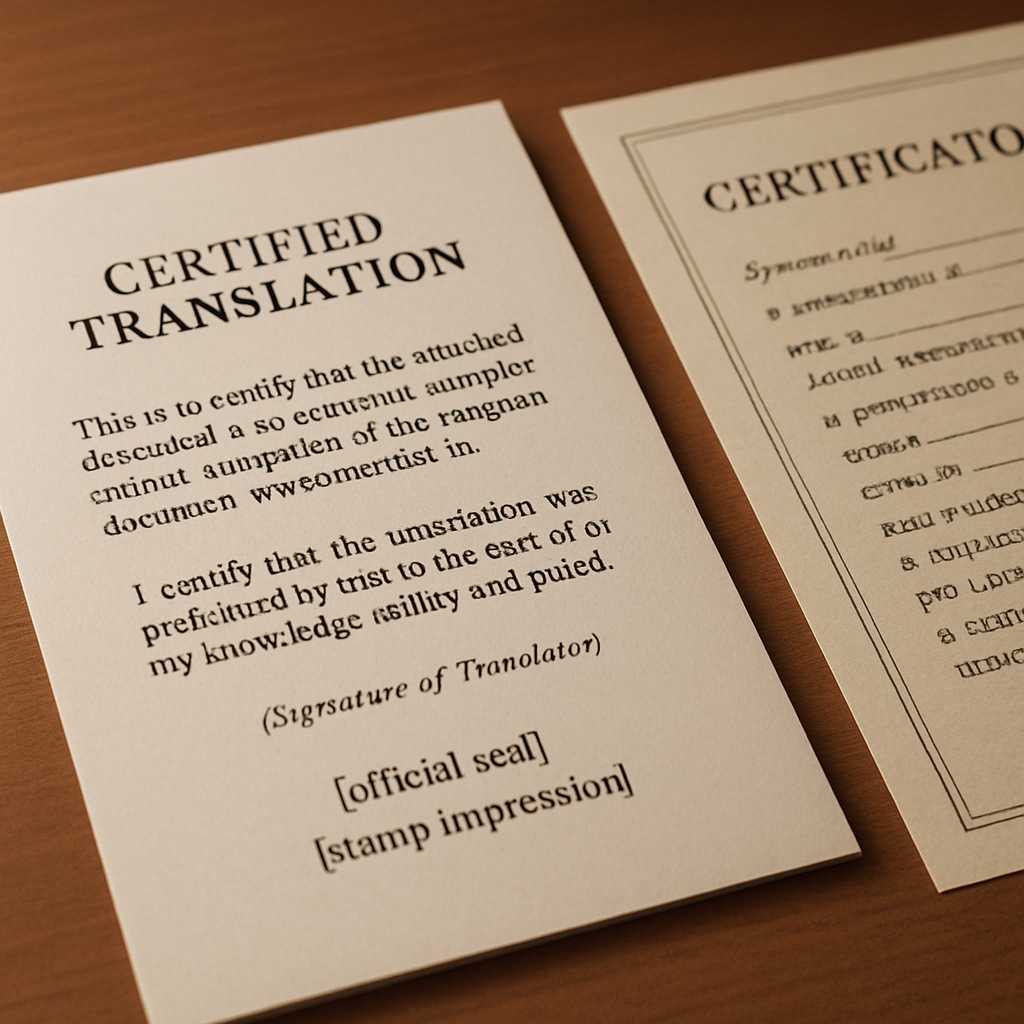
- A certificate of accuracy attached at the end
If your file includes multiple pages, back-page registry marks, or several different authority stamps, the translation should account for each of them in order. Missing the reverse side of a document is a common reason official files become harder to assess. For formal submissions, certified translation services are usually the safest route because they combine full translation, consistent notation, and a signed certificate of accuracy.
Certified Translation Notes for Seals: A Practical Model
Below is a simple way to handle seal notes in a professional translation.
Example 1: Birth Certificate
[Top centre: coat of arms][Round blue seal: Civil Registry Office, Bucharest][Signature][Rectangular filing stamp: Registered on 12 January 2024]
Example 2: University Diploma
[Embossed seal, lower right corner: University of Warsaw][Red circular stamp partly overlapping the Rector’s signature][Stamp impression partly illegible]
Example 3: Court Order
[Round seal: Court of First Instance, Chamber II][Purple filing stamp: Entered on 06 May 2025][Illegible handwritten initials]
The main principle is always the same: identify, translate, and separate the note from the body text.
The Biggest Mistakes That Cause Problems Later
Many rework requests come from avoidable handling errors rather than difficult language itself.
1. Ignoring the Seal Completely
If the seal is visible on the source, it should normally be accounted for.
2. Reproducing the Seal Artwork
This creates unnecessary risk and is not the purpose of a certified translation.
3. Guessing Unclear Wording
A guessed ministry name, date, or office title can cause more damage than a clearly marked illegible section.
4. Skipping the Back Page
Official records often carry registry stamps, legalisation marks, or archive notes on the reverse.
5. Mixing Styles Within the Same File
One page says [seal], another says “stamp impression”, another places the wording in plain text. That inconsistency makes the document harder to review.
6. Leaving Out the Certification Statement
For many official uses, the translation must not only be accurate but also supported by a proper signed declaration.
When you are preparing court, registry, or authority-facing paperwork, certified legal document translation is often the better option because it keeps completeness and documentary clarity front and centre.
How Seal Handling Affects Document Acceptance
Reviewers rarely complain about seals because they enjoy being strict. They raise issues because unclear or incomplete translations make it harder to verify the document. If a submission includes a visible seal in the original but no corresponding note in the translation, the receiving officer may wonder:
- Was something omitted?
- Does the seal contain issuing-authority text?
- Was the page fully translated?
- Is the translation complete enough to rely on?
That is why strong seal handling is really a completeness issue. It helps the receiving body compare the translation with the original and trust that nothing material has been skipped.
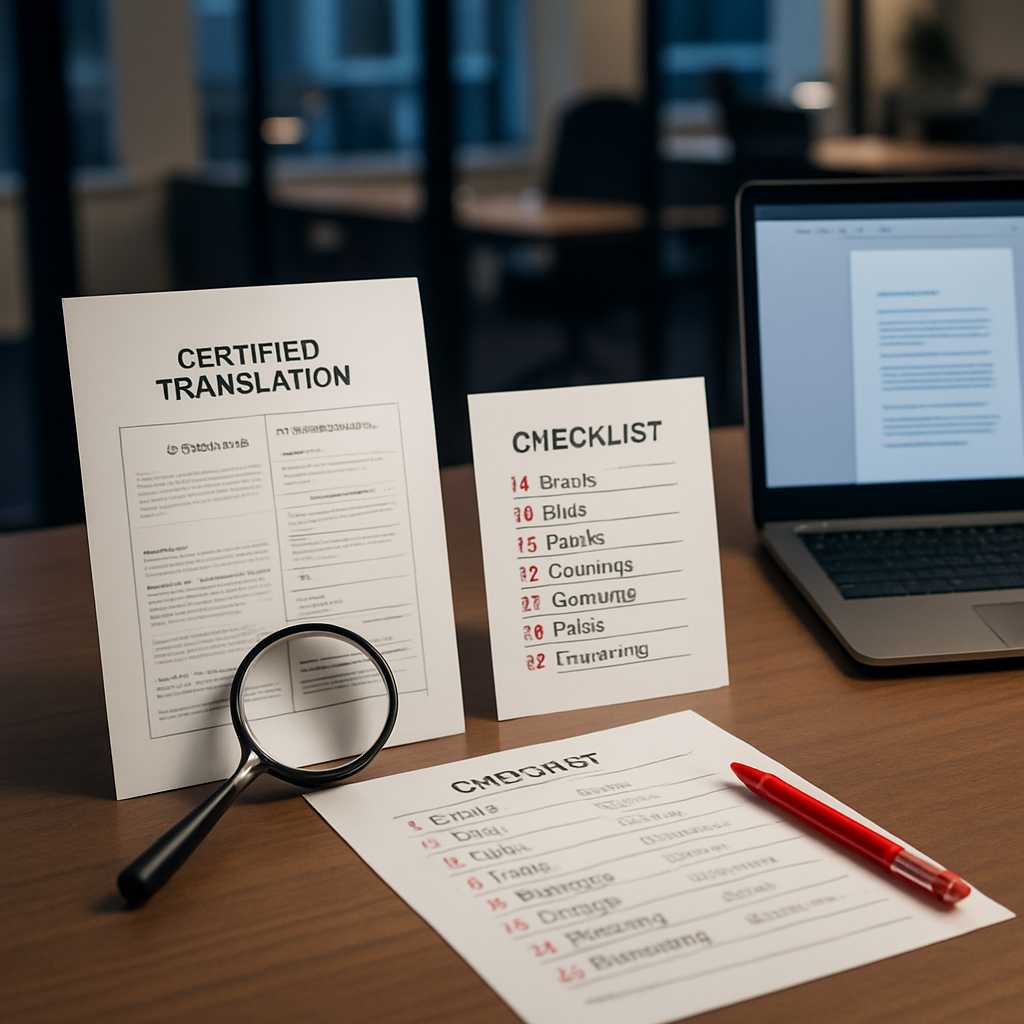
A Simple Quality-Check Before You Submit
Before sending your file to an authority, check the following:
- Every visible seal or stamp is accounted for.
- Readable wording inside seals has been translated.
- Unclear areas are marked as partial or illegible rather than guessed.
- Back-page marks and reverse-side seals are included where relevant.
- Bracketed notes are used consistently.
- The translation is easy to compare with the source page by page.
- The certification statement is signed, dated, and complete if official use requires it.
This one-minute check catches many of the issues that lead to delays.
When Notarisation or Legalisation Enters the Picture
Some clients confuse the source document’s original seal with the later steps applied to the translation itself. These are separate things. The source document may contain an issuing authority’s seal. The certified translation may include a translator’s certificate. A notarised translation may then add a notary’s signature and seal to the certification step. A legalised or apostilled package may involve further authentication depending on the destination country.
So when a client asks whether the “seal should be copied,” the answer depends on which seal they mean. The authority seal appearing on the source document should be described and translated, not reproduced. A notary or legalisation step, by contrast, concerns how the translated pack is formally authenticated afterwards.
If your receiving authority has asked for more than a standard certified translation, notarized translation services may be the right next step.
Case-Style Insight: Where Seal Problems Usually Begin
Most seal-related problems start long before the translation itself. They begin with:
- Low-resolution phone photos
- Cropped document edges
- Scans that flatten embossed seals until they disappear
- Pages uploaded out of order
- Back pages not included because they appear “blank” at first glance
A document can be linguistically translated well and still become awkward to submit if the source file does not show the marks clearly enough. That is why the smartest workflow is:
- Scan every page fully
- Include front and back where relevant
- Photograph embossed seals with enough lighting to show the impression
- Send the file for review before translation starts
You can upload those pages through the document translation page or go straight to the contact page if your file needs urgent advice first.
What a Strong Certificate of Accuracy Should Support
A professional translation is not strengthened by dramatic claims. It is strengthened by accountability. That means the certificate attached to the translation should support the file by confirming that:
- The translation is accurate
- The translation is complete
- The translator or translation company can be identified
- The date is recorded
- The translated pack is suitable for the stated official purpose where certified translation is accepted
When seals, stamps, signatures, and official markings are handled clearly inside the translation, that certificate becomes much more credible because the document reads as complete, not selective.
Final Word
The correct method is not to redraw a seal. It is to report it properly. If you want the simplest possible rule for how to translate seals correctly, remember this: describe the seal, translate any readable text inside it, mark unclear areas honestly, and never reproduce the official artwork as though the translation were the original document.
This approach is clearer for authorities, safer for official use, and more professional in any certified translation setting. If your file contains seals, stamps, handwritten notes, or hard-to-read official markings, send it for review and get a translation prepared for submission rather than guess your way through the details.
Frequently Asked Questions
How to translate seals correctly in a certified translation?
Translate the readable wording inside the seal, describe the seal in square brackets, and avoid reproducing the design itself. If part of the seal is unclear, mark it as partially legible or illegible rather than guessing.
Should I copy an official seal into the translated document?
No. A translation should record the seal, not recreate it. The correct method is to identify the seal, translate any readable text it contains, and keep that note clearly separate from the main translated text.
Do certified translation notes need to include stamp impression notes?
Yes, when the stamp or seal is visible and relevant to the document. Stamp impression notes help show the reviewer what appears on the original page, especially where a filing stamp, registry mark, or embossed seal affects the document.
What if the seal text is unreadable?
State that clearly in the translation. For example, use wording such as [embossed seal, text illegible] or [round stamp, partially legible]. Clear honesty is safer than inventing wording.
Do I need to translate seals and stamps on the back of the document?
Usually yes, if they form part of the record. Reverse-side registry marks, legalisation notes, archive stamps, and filing impressions can matter just as much as the front page.
Is a seal description enough for UK official use?
In many cases, yes, provided the translation is complete, the seal is clearly described, readable wording is translated, and the file includes a proper signed certification statement where required.