Can a Friend Translate Your Documents? Risks You Should Know
It is a common question, especially when deadlines are tight and money is short: can a friend translate your documents for you? In everyday life, maybe. For official submissions, that is where the friend translating documents risk becomes serious. What seems like a simple favour can create doubts about independence, reduce certification credibility, and increase the chance of delays, requests for replacement documents, or outright rejection.
The issue is not whether your friend is intelligent, bilingual, or genuinely trying to help. The issue is whether the translation will stand up to scrutiny from a caseworker, court clerk, university admissions team, employer, bank, registrar, or government department. Official reviewers are not judging friendship. They are judging reliability, traceability, and accountability.
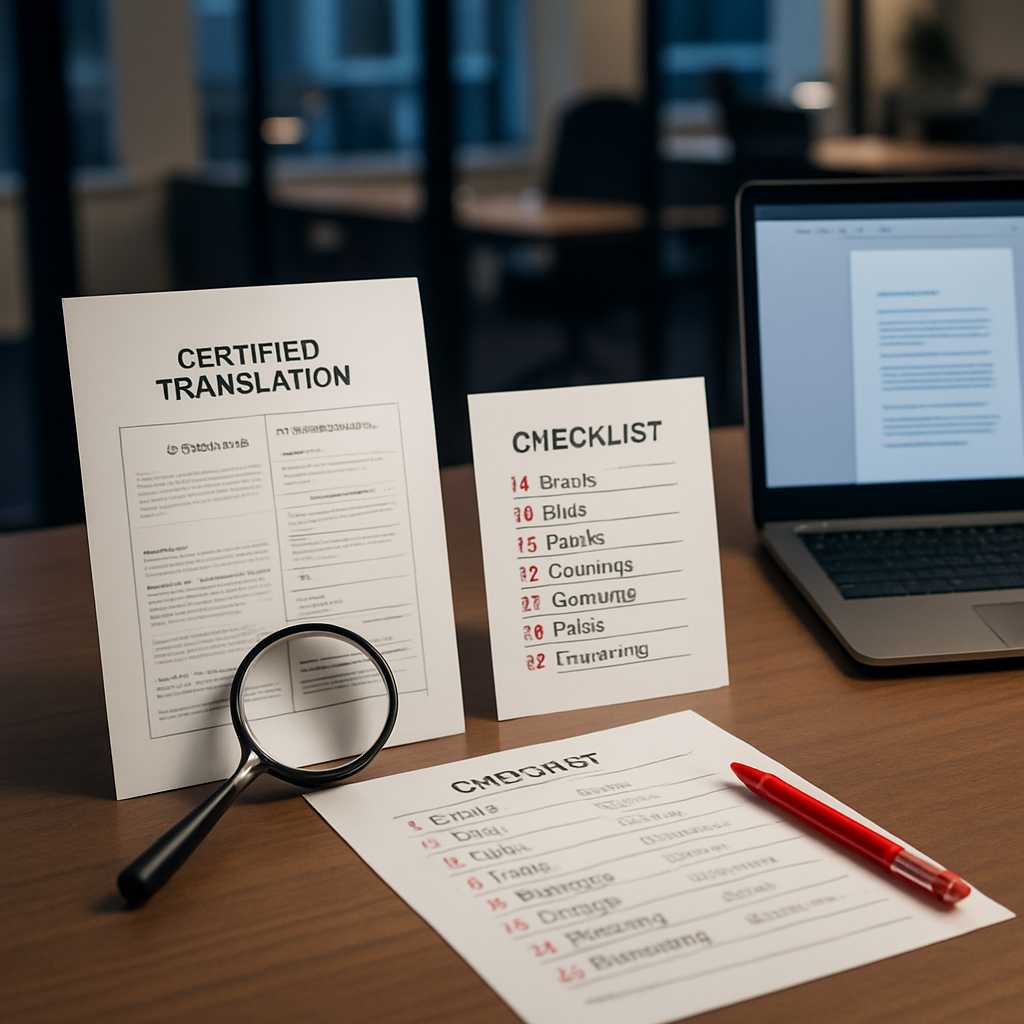
For personal understanding, an informal translation may be enough. For anything being submitted as evidence, the safer standard is very different. A translation for official use needs to look complete, credible, and professionally prepared from the first page to the last. That usually means using a provider that can certify the work, stand behind it, and be contacted if questions arise.
If your document is headed to an authority, employer, court, or university, the cheapest fix is often to avoid a preventable mistake before submission. A professional certified translation service is usually far less expensive than a missed deadline, a resubmission, or an avoidable refusal.
Why People Ask a Friend in the First Place
The idea makes sense on the surface. Your friend already speaks the language. They know your situation. They may do it quickly. They may even promise to keep it confidential. In some cases, they may have translated emails, forms, or messages for you before without any problem.
That convenience is exactly why this mistake happens so often.
Official document translation is not the same as helping someone understand a message on their phone. It involves more than words. It requires consistent names, exact dates, correct formatting, accurate treatment of stamps and seals, neutral handling of unclear wording, and a certification trail that gives the receiving organisation confidence.
Fluency helps. It is not the same thing as submit-ready translation.
The Short Answer
A friend can help you understand your documents. A friend is rarely the safest choice for documents you intend to submit officially.
The real test is not “Does my friend speak both languages?” The real test is “Will the receiving organisation trust this translation as independent, complete, and professionally accountable?”
If the document matters, informality becomes risk.
The Four Biggest Risks of Using a Friend
1. Conflict of Interest Can Damage Credibility
A friend wants to help you. That sounds positive, but it is exactly why their translation may be questioned. When someone knows you personally, there is an obvious concern that they may consciously or unconsciously smooth awkward wording, skip damaging details, simplify handwritten notes, or interpret ambiguous phrases in your favour.
Even if they do none of those things, the perception problem remains. In official settings, credibility matters almost as much as accuracy. A translation is stronger when it comes from an independent third party with nothing to gain from how the wording is understood.
This is why conflict of interest is such an important issue. A translation can be linguistically decent and still feel weak as evidence.
2. Certification Credibility May Be Missing
A translation submitted for official use often needs more than translated text on a page. It needs a statement that the translation is accurate, plus identifiable details showing who completed it and how they can be contacted.
Friends often miss this step completely. They send a Word file, a PDF, or even a typed note with no proper declaration, no signature, no date, no contact details, and no professional credentials.
That creates a certification credibility problem immediately. The reviewer may see a translation, but not a reliable one.
A stronger translation package usually includes:
- a clear statement of accuracy
- the date of translation
- the translator’s full name
- a signature or authorised sign-off
- contact details for verification
- where relevant, credentials or company details
That is the difference between “translated” and “ready to submit.”
3. Rejection Risk Rises When Details Are Omitted
Official documents are full of small details that matter more than clients expect. These include:
- stamps
- seals
- annotations
- handwritten notes
- registration numbers
- margin notes
- headers and footers
- tables
- abbreviations
- signatures and signature labels
A friend may focus only on the main body text and ignore the parts that look repetitive or unimportant. Unfortunately, those are often the exact details that make a document usable.
A school record without grading notes, a bank statement without the right table structure, or a birth certificate with one wrongly rendered place name can create problems far beyond the translation itself.
The rejection risk does not come only from dramatic errors. It often comes from small omissions that make the document feel incomplete.
4. There Is No Clear Professional Accountability
If a provider makes a mistake on an official translation, there should be a clear route to fix it. You should know who prepared it, who checked it, and who can answer questions if the recipient asks for clarification.
With a friend, that chain is usually missing.
What happens if:
- the receiving body asks who translated it
- a name does not match the passport spelling
- a date format creates confusion
- an officer wants a revised certificate
- the translation needs to be re-issued urgently
- a missing stamp translation is noticed after submission
Professional accountability matters because official submissions are rarely just about delivery. They are about being able to stand behind the work after delivery too.
The Risks Most People Forget
Confidentiality and Privacy
Many official documents contain more than simple biographical facts. They may include medical history, financial records, legal issues, immigration history, disciplinary notes, addresses, national identity numbers, or family information.
Handing that to a friend can create a confidentiality risk even when you trust them personally. They may store files casually, forward them between devices, use consumer software without thinking about security, or mention the situation to someone else without meaning harm.
A professional service should treat confidentiality as part of the job, not a casual promise.
Terminology That Feels Obvious But Is Not
Some documents look simple until you try to translate them properly. A word on a police certificate, family registry, court document, academic record, or medical report may have a direct dictionary meaning but the wrong official meaning in context.
This is where subject knowledge matters. A bilingual friend can still get caught by terms that look familiar and are not.
Formatting That Affects Trust
Officials often compare the translation visually against the original. If the original is formal and structured but the translation looks like a plain text summary, confidence drops.
Good official document translation does not just translate content. It preserves structure, labels, document flow, and the presence of important non-text elements so the translation feels traceable to the source.
When Using a Friend Becomes Especially Risky
Immigration and Visa Applications
Applications depend on evidence. If the translation cannot be trusted, the evidence weakens with it. That is why immigration submissions are one of the worst places to cut corners.
Court and Legal Matters
Legal wording is sensitive. One poorly translated term can change how a statement, order, contract, or supporting record is understood.
Academic Admissions and Credential Checks
Universities and evaluators expect complete, consistent translations of transcripts, diplomas, grading systems, and supporting letters.
Civil Records
Birth certificates, marriage certificates, divorce records, police certificates, and name change documents are often used as foundational identity evidence. Tiny inconsistencies in names, dates, or places can cause disproportionate problems.
Financial and Employment Documents
Bank statements, payslips, tax papers, reference letters, and company records are reviewed for precision. Missing columns, simplified headings, or altered currency formatting can create doubts quickly.
If you are dealing with any of these, it is safer to use a provider experienced in legal and business document translation, academic records, and civil documents.
A Better Way to Think About the Decision
Do not ask, “Can my friend translate this?” Ask these five questions instead:
- Is this translation being submitted as evidence?
- Does the receiving body need to verify who translated it?
- Would a missing stamp, note, or label matter?
- Would I know how to fix it fast if it is challenged?
- Is the document too sensitive to handle informally?
If the answer to even two of those is yes, the safer route is usually a professional certified translation.
Friend vs Professional Service: Practical Comparison
| Issue | Friend | Professional Provider |
|---|---|---|
| Independence | May be questioned | Clear third-party position |
| Certification | Often incomplete or missing | Prepared for official use |
| Accountability | Informal | Contactable, traceable, revisable |
| Subject Terminology | Depends on personal knowledge | Matched to document type |
| Formatting and Non-Text Details | Often simplified | Usually preserved more carefully |
| Confidentiality Handling | Casual | Structured process expected |
| Response if Queried Later | Uncertain | Better chance of formal follow-up |
What a Safer Translation Package Should Include
A stronger translation is not just linguistically correct. It is submission-ready. Look for a service that can provide:
- a signed certificate of accuracy
- translator or company contact details
- careful handling of names, dates, and document numbers
- full translation of stamps, seals, and notes
- layout that follows the original closely
- support if a correction or extra copy is needed
- urgent options when deadlines are short
That is the practical difference between a favour and a service.
If you need speed as well as credibility, it makes sense to use a team that already handles urgent certified translation and can tell you quickly whether standard certification is enough or whether your recipient may ask for something more formal.
Example Situations That Show the Risk Clearly
Example 1: The Visa Applicant with a “Good Enough” Translation
A client uses a friend to translate a birth certificate and bank statement. The wording is mostly correct, but the translation leaves out a stamp, shortens a place name, and arrives without a proper certificate. The caseworker now has a simple reason to doubt the evidence, and the applicant loses time replacing documents that could have been prepared properly at the start.
Example 2: The Court Deadline Problem
A friend translates a supporting letter for a legal matter. The phrasing sounds natural, but one key term is softened and a handwritten note is ignored. Suddenly the translation is not just informal. It is potentially misleading.
Example 3: The University Transcript Mismatch
An applicant submits a friend’s translation of an academic transcript. Module names are translated loosely, grade labels are standardised, and the grading explanation is left out. The admissions team cannot map the record with confidence, so the applicant is asked to resubmit everything.
These problems are common because informal translations often fail in the same places: independence, detail, and accountability.
What to Do If Your Friend Already Translated the Document
Do not panic. You may still be able to fix the situation quickly. Use this approach:
- Keep the friend’s version only as a personal reference.
- Do not submit it as official evidence unless you are completely sure the recipient allows it.
- Get a professional review or a fresh certified translation from the original document.
- Ask for the certificate of accuracy and contact details to be included.
- Check names, dates, reference numbers, and document completeness before submission.
If the deadline is close, the priority is not defending the informal translation. The priority is replacing uncertainty with a version you can submit confidently.
How to Choose a Safer Provider
When comparing providers, ask:
- Do you prepare certified translations for official use?
- Will the translation include a signed certificate of accuracy?
- Are your contact details included for verification?
- Do you preserve stamps, seals, tables, and handwritten notes?
- Can you handle urgent turnaround if needed?
- Can you review the original file quality before starting?
- Will you tell me if notarisation or extra formalities may be needed for my recipient?
A reliable provider should answer these clearly.
At Urgent Certified Translation UK, the simplest next step is to send your documents for a fast quote. That lets you confirm the right format before you submit anything and reduces the chance of paying twice for the same job.
The Real Cost of “Saving Money”
Using a friend often feels cheaper only if everything goes right the first time. But once you factor in:
- resubmission delays
- replacement documents
- lost appointment slots
- missed deadlines
- avoidable stress
- extra courier or application fees
- repeated translation work
the cheap option can become the expensive option very quickly.
For official documents, the smarter question is not “What is the cheapest translation?” It is “What gives me the best chance of smooth acceptance the first time?”
Final Word
Your friend may be fluent. They may be trustworthy. They may even be an excellent writer. None of that automatically makes their translation the right choice for an official submission.
When documents matter, the core issue is not friendship. It is independence, certification credibility, professional accountability, and rejection risk.
If the translation will be reviewed by a decision-maker, treat it like evidence, not a favour. Get it prepared properly, check it before submission, and use a provider that can stand behind the work if questions come later. That is the safer path for immigration files, civil records, legal matters, academic documents, and any other paperwork you cannot afford to have questioned.
FAQs
Can a friend translate my documents for a UK visa?
A friend may be able to help you understand the content, but using a friend for a visa submission is risky. Immigration caseworkers want a translation that looks independent, complete, and professionally accountable. If the translation lacks a proper certificate, contact details, or full document coverage, it can create delays or lead to requests for replacement documents.
Is a fluent friend enough for official document translation?
Not usually. Fluency is only one part of the job. Official translation also requires accurate rendering of names, dates, stamps, seals, notes, and document structure, along with a certification trail that makes the translation credible.
Why is conflict of interest a problem in document translation?
Conflict of interest matters because official reviewers want confidence that the translation was prepared neutrally. A friend has a personal connection to you, which can make the translation feel less independent even if the wording is mostly accurate.
What makes a certified translation more credible than a friend’s translation?
A certified translation is stronger because it is tied to a named translator or company that confirms accuracy and can be contacted if questions arise. That improves certification credibility and reduces the risk of informal, incomplete, or untraceable work.
Can a family member or spouse translate official documents?
For official submissions, that is usually even riskier than using a friend. The closer the personal relationship, the easier it is for a recipient to question neutrality, independence, and accountability.
What should I do if I already used a friend’s translation?
Treat it as a personal reference copy and arrange a professional certified translation from the original document as soon as possible. That is the quickest way to reduce rejection risk and avoid further delay.