What is a Foreign Passport Translation?
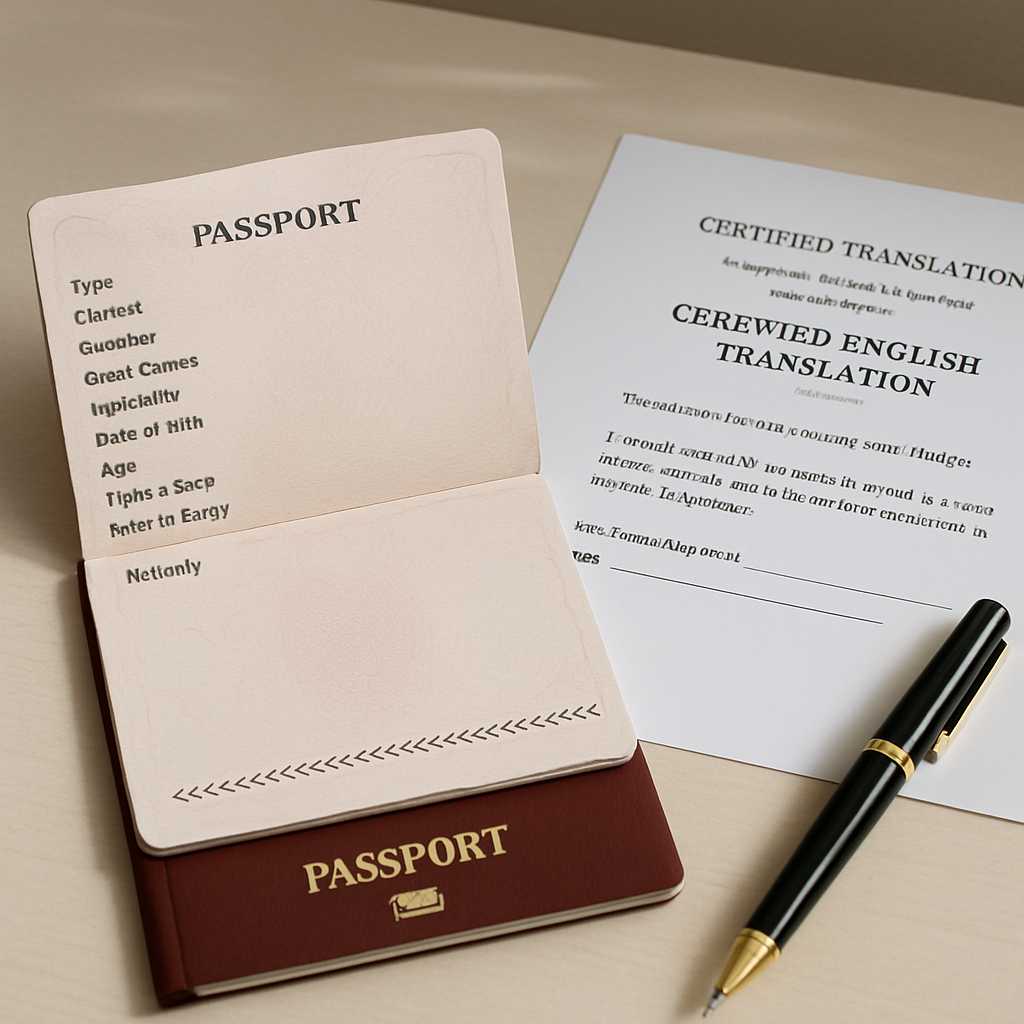
A foreign passport translation is often required when a UK authority, solicitor, court, employer, university, or immigration team needs to read identity details that appear in a language other than English or Welsh. The translation must be complete, accurate, easy to verify, and presented in a format that supports official use.
If you are preparing a passport for a visa matter, legal file, identity check, court bundle, or supporting document pack, it is advisable to treat the passport as an evidence document. This means that names, dates, document numbers, issuing authority details, visas, endorsements, and relevant stamps must be handled with care. A rushed or partial translation can create unnecessary questions at the very point where clarity is needed.
At Urgent Certified Translation UK, we prepare certified passport translations for clients who need a document that reads clearly, closely matches the original, and is ready for confident submission.
When is a Foreign Passport Translation Usually Needed?
A translated passport may be requested for:
- Visa and immigration applications
- Passport-related applications involving supporting evidence
- Legal proceedings or solicitor files
- Court bundles and witness evidence packs
- Employer or right-to-work document checks
- Bank or compliance onboarding
- University or professional registration
- Marriage, civil status, or cross-border administrative matters
Sometimes the receiving body only requires the page showing the holder’s identity details. In other cases, they may also need visas, observation pages, amendments, entry stamps, or handwritten endorsements. The right question to ask is not “Do I need my passport translated?” but rather “Which passport content is relevant to my submission?” This distinction is crucial, as translating too little can delay the process, while translating unnecessary pages can increase costs and slow delivery without adding value.
What to Translate in a Foreign Passport
Usually Essential
In most passport translation jobs, the core page is the biographical page, which typically includes:
- Full name
- Passport number
- Nationality
- Date of birth
- Place of birth
- Date of issue
- Date of expiry
- Issuing authority
- Photograph label text, where relevant
Translate These When They Affect the Case
Additional pages should be translated if they support the purpose of the submission, such as:
- Visa vignettes
- Residence permits placed in the passport
- Entry and exit stamps
- Amendments or official observations
- Extension notes
- Change-of-name or correction endorsements
- Handwritten official notations
- Child or spouse references shown on older passports
- Damaged or partially obscured sections that need explanation
Usually Not Needed Unless Requested
Blank pages are rarely useful unless the recipient specifically asks for a full passport translation. When only selected pages are translated, the package should clearly indicate which pages were included.
The Smartest Way to Decide Which Pages to Include
A practical rule is to match the translation to the reason for submitting the passport.
If the Passport is Used Only as Identity Evidence
Translate the biographical page and any page that contains an official observation affecting identity.
If the Passport Supports an Immigration or Travel-History Issue
Include relevant visas, entry stamps, exit stamps, residence endorsements, and observation pages.
If the Passport is Used in Legal Proceedings
Translate every page that the solicitor, court, or caseworker may rely on, especially pages linked to travel history, identity consistency, status, or timeline evidence.
This page-selection approach is one of the biggest differences between a routine translation and a submission-ready translation. It keeps the file focused, complete, and easier for the receiving body to follow.
What a Certified Passport Translation Should Include
For UK legal and official use, the translation should not resemble a casual typed summary. It must read like a formal supporting document. A strong certified passport translation typically includes:
- A full translation of the relevant passport text
- Clear identification of stamps, visas, seals, and endorsements
- Preservation of names, dates, and numbers exactly as shown
- A certificate or declaration confirming accuracy
- The date of translation
- The translator’s name
- Signature or authorised sign-off
- Contact details for verification
A practical certificate wording structure is:
Certificate of Translation Accuracy
I certify that this is a true and accurate translation of the original document presented to me.
Translator’s full name:
Signature:
Date:
Contact details:
Some recipients may request a stamp, company letterhead, or a particular presentation format. When a receiving authority provides its own instructions, those instructions should always take priority.
How Stamps, Visas, and Endorsements Should Be Translated
Passport translations often become weak when stamps and visas are treated as decoration rather than evidence. In legal and immigration contexts, these markings can be the entire reason for submitting the passport. The best practice is to translate them descriptively, not artistically. For example:
- [Entry stamp: Paris Charles de Gaulle Airport, 14 March 2024]
- [Visa vignette: Type D, valid from 01 September 2025 to 01 September 2026]
- [Observation: Holder previously issued passport no. XXXXXXXX]
- [Handwritten endorsement: partly illegible, appears to read “extension approved”]
This method effectively keeps the document readable, avoids guessing, and preserves the meaning of the original without trying to recreate every graphic element.
Do Not “Clean Up” Awkward Details
A legal-use translation must not rewrite the passport into smoother English. If the original is abbreviated, faint, damaged, or partly illegible, the translation should clearly indicate this.
Do Not Ignore Transliteration Issues
Names can often create avoidable problems. A passport holder’s name may appear differently in the passport, birth certificate, and older visa files. A careful translator checks these differences and maintains consistency in the passport translation while flagging obvious spelling variations when necessary.
Do Not Reproduce Seals as Artwork
The goal is to translate official content, not to redraw the stamp. A bracketed description is usually far more useful than a visual imitation.
Step by Step: How to Translate a Passport Properly
1. Start with a Clear Scan
Use a high-resolution colour scan or photo. Cropped edges, glare, blur, and shadows create avoidable risks.
2. Confirm the Purpose
Specify exactly where the translation will be used. “For UK legal use” is a start, but “for a solicitor’s file,” “for a visa application,” or “for court evidence” is much better.
3. Identify the Relevant Pages
Do not assume the photo page is sufficient. Check whether visas, travel stamps, or observation pages are necessary.
4. Translate Every Visible Relevant Element
This includes printed text, handwritten entries, stamps, labels, and official notes that affect the case.
5. Add the Certification Statement
The translation should be issued with a formal declaration of accuracy and verification details.
6. Review Identity-Critical Details Twice
Names, passport numbers, dates, places, and document references should be checked with extra care.
7. Deliver in a Submission-Friendly Format
A clean PDF is often the fastest option. If a hard copy, ink signature, notary support, or additional authentication is required, arrange this before filing deadlines become urgent. If you already know the deadline, send the scan now and have the page requirements checked before anything is translated unnecessarily.
Common Mistakes That Cause Delays
Many passport translation problems are not language-related but process-related.
Translating Only the Photo Page When the Case Depends on Travel History
This is one of the most common reasons a receiving body requests more information.
Omitting Observation Pages
A small note on a later page can affect identity, validity, or passport history.
Using a Basic Bilingual Summary Instead of a Certified Translation
A summary may help you understand the document, but it is not the same as a submission-ready translation.
Inconsistent Name Spellings
Even a small difference can trigger additional questions when the passport is compared against certificates, court records, or immigration forms.
Leaving Stamps Untranslated
Where dates, locations, or legal status matter, untranslated stamps can create gaps in the evidence.
Attaching a Certificate That is Too Vague
A short “translated by us” note is weaker than a proper accuracy declaration with date and contact details.
Certified, Notarised, and Apostilled: What Is the Difference?
These terms are often confused, but they are not the same.
Certified Translation
This is the standard requirement for many UK submissions. It confirms that the translation is a true and accurate rendering of the original.
Notarised Translation
This adds a notary’s involvement and may be requested where an extra level of formal authentication is needed.
Apostille or Legalisation
This is a further authentication process used in some cross-border situations. It is not automatically needed just because a document is translated.
For a foreign passport being used in the UK, certified translation is often the starting point. Notarisation or legalisation is usually only needed when the receiving body specifically requests it.
What Affects Price and Turnaround
Passport translation is typically priced according to the actual work involved, not just the fact that the document is called a passport. Factors that affect cost and delivery include:
- How many passport pages need translation
- Whether visas and stamps must be included
- The language pair
- Handwriting or poor scan quality
- Whether urgent delivery is required
- Whether hard copy, wet signature, notary support, or extra copies are needed
A simple biographical page can often be handled quickly, while a passport with multiple visas, travel stamps, observations, and handwritten endorsements will take longer because every detail must be checked carefully.
Three Real-World Scenarios Where the Details Matter
Solicitor File for Identity and Timeline Evidence
A client submits only the biographical page, but the legal issue hinges on travel dates. The receiving team later requests translations of entry and exit stamps, causing delays. A better approach would have been to translate the relevant travel-history pages from the start.
Immigration Pack with Inconsistent Names
The passport shows a transliterated surname that differs slightly from an older certificate. A careful translation package notes the exact passport spelling and maintains consistency in the records, reducing back-and-forth later.
Court Bundle with Handwritten Observations
An internal note on the passport may seem minor but can affect the holder’s previous document record. Translating that page turns a vague identity question into a clear evidence trail.
What Good Passport Translation Looks Like
A good passport translation is:
- Complete enough for the purpose
- Exact with names, numbers, and dates
- Readable for a caseworker, solicitor, or court officer
- Transparent about stamps and endorsements
- Formally certified
- Delivered in a format that is easy to submit
This combination transforms a translated passport into a useful legal-use document.
Before You Send Your Passport for Translation
Use this quick check:
- Is the scan clear and uncropped?
- Do you know where the translation will be used?
- Have you identified whether visas or stamps are important?
- Are there observation pages or handwritten notes?
- Do names need to match other translated documents in the file?
- Do you need digital delivery only, or a hard copy as well?
- Has the deadline been shared with the translation provider?
A short review at this stage can prevent longer delays later.
Need a Foreign Passport Translation for UK Legal Use?
If your passport is being prepared for legal, immigration, court, or official submission, the safest route is to have the relevant pages translated, certified, and checked as a complete evidence document rather than as a simple language exercise. Send a clear scan, inform us where the translation will be used, and we can assist you in getting the right pages translated the first time. This approach minimizes follow-up requests, reduces wasted time, and provides you with a document you can submit with confidence.
FAQs
Do I need to translate my whole passport for UK legal use?
Not always. Many cases require only the biographical page, but legal and immigration matters may also necessitate visas, entry stamps, exit stamps, observation pages, or official endorsements. The correct scope depends on what the receiving body will rely on.
Can I translate my own foreign passport for a UK application?
This is usually inadvisable for any official or legal submission. A certified passport translation is expected to come with a formal declaration of accuracy and clear verification details. Independent professional preparation is the safer option.
Are passport stamps and visas included in a certified passport translation?
They should be included whenever they are relevant to the purpose of the file. Travel stamps, visa labels, and handwritten observations often carry important date, status, or location information.
What should a passport translation certificate say?
A practical certificate confirms that the translation is a true and accurate translation of the original document and includes the date, translator name, signature, and contact details.
Do I need notarisation for a foreign passport translation in the UK?
Not usually. Certified translation is often sufficient unless the solicitor, court, embassy, or receiving authority specifically requests notarisation or further authentication.
Is a PDF certified passport translation acceptable?
In many cases, yes. Digital delivery is often suitable for review and submission, but some recipients may request a printed, signed, or otherwise authenticated version. It is best to confirm this before filing.