Introduction
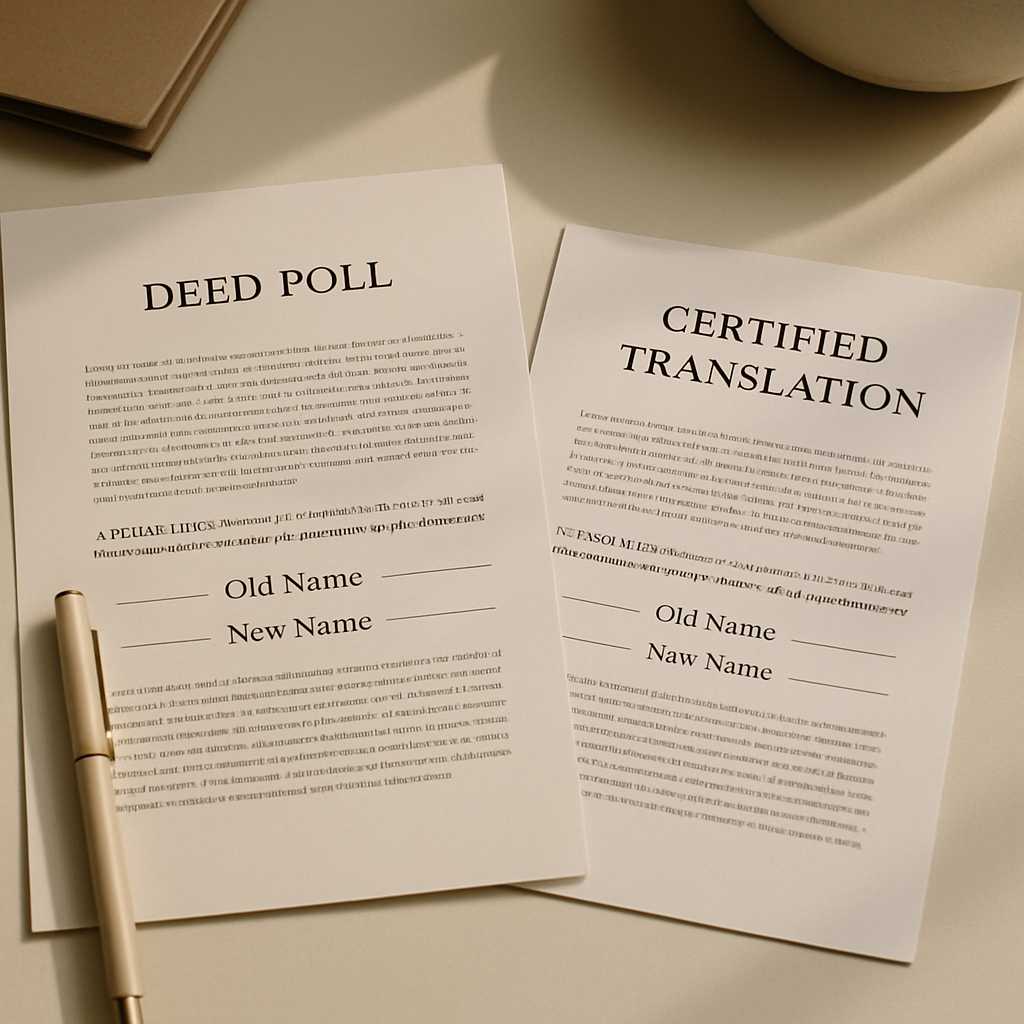
If you need a deed poll translation in the UK, accuracy is not just about getting the wording into the right language. It is about keeping the link between your old name and new name unmistakably clear. A proper translation must preserve the legal declaration, witness details, signature blocks, dates, handwritten notes, and any certification wording so that the receiving authority can follow the document without hesitation.
That matters because name change documents rarely stand alone. They are often reviewed alongside passports, visas, bank records, university files, payroll documents, or overseas civil status records. If one translation drops a middle name, smooths out an unusual date format, or leaves out a witness line, the reviewer may stop and ask for clarification. That is how simple updates turn into delays.
A strong deed poll translation avoids that problem from the beginning. It makes the name change readable, checkable, and ready to submit.
Need your deed poll translated for a passport, visa, bank, employer, or overseas authority? Start with a clear scan of every page and request a certified translation that carries over every name, date, witness line, and document note exactly.
When a Deed Poll Translation is Usually Needed
A name change deed poll translation is commonly required in situations such as:
- Updating a passport where supporting documents are in another language
- Presenting a foreign name change document to a UK authority
- Translating a UK deed poll into another language for use abroad
- Matching old and new names across immigration, banking, study, or employment records
- Proving that a previous surname and current surname belong to the same person
- Supporting a child name change file where multiple documents need to align
In practice, people often search for a deed poll translation only after a mismatch appears somewhere else. A passport may still show the old surname. A bank account may already show the new one. A university transcript may use one version of the name while a visa record uses another. The translation then becomes the document that helps connect the trail.
The Real Goal: Make the Old Name and New Name Connect Without Guesswork
The most useful way to think about deed poll translation is this: A good translation does not only translate the document; it proves identity continuity. That means the finished version should let the reviewer answer three questions immediately:
- What was the previous name?
- What is the new name?
- What wording, dates, witnesses, and document details support that change?
This is where many weak translations fail. They may translate the main sentence but compress the structure, omit the address, remove witness details, or tidy up the format so heavily that the original legal shape is lost. For a name change document, that is risky. The document works because it records a formal declaration. When the translation weakens that structure, it weakens the clarity of the name change itself.
What a Proper Deed Poll Translation Should Include
A complete deed poll translation should normally cover every element that appears on the source document, including:
- The document title
- The full legal wording of the declaration
- The old name exactly as shown
- The new name exactly as shown
- The address, if it appears on the source
- Every date in the format shown on the original
- Witness names
- Witness addresses or identifying details
- Signature labels and signature blocks
- Stamps, seals, embossed marks, handwritten notes, initials, and annotations
- Page numbers, attachments, exhibits, or references if present
Nothing should be skipped simply because it looks routine. A reviewer may care less about the elegance of the language than about whether the translated document still shows the complete chain of evidence. That is why a deed poll translation for UK use should be full, structured, and faithful to the source layout.
Why Witness Lines and Signature Blocks Matter So Much
One of the most common problems in name change deed poll translation is under-translating the bottom section of the page. Many people focus on the declaration itself and forget that the witness and signature area is part of the legal force and evidential clarity of the document. If the original deed poll contains witness names, witness addresses, multiple signatures, or separate signing lines for old and new signatures, the translation should reflect that structure.
A proper treatment usually looks something like this in principle:
Signature of declarant: [signature]
Previous signature: [signature]
New signature: [signature]
Witness 1 name: [translated or transliterated as appropriate]
Witness 1 address: [translated]
Witness 1 signature: [signature]
Witness 2 name: [translated or transliterated as appropriate]
Witness 2 address: [translated]
Witness 2 signature: [signature]
If handwriting is unclear, it should not be guessed. It should be marked honestly, for example, with a note such as “[illegible handwritten text]” or “[signature].” That protects the credibility of the translation and reduces the risk of introducing a new inconsistency.
How to Handle Names Correctly in a Deed Poll Translation
Names are where most deed poll rejections start. A careful translator should check:
- Spelling of every forename and surname
- Middle names and double-barrelled surnames
- Accents, apostrophes, and hyphens
- The order of names
- Whether the document uses one signature in the old name and another in the new name
- Whether other supporting documents use a different transliteration
This is especially important when the deed poll translation sits inside a wider identity pack. A tiny variation can create a larger problem:
- Mohamed / Mohammed
- Sara / Sarah
- Elena Petrova / Yelena Petrova
- Ana Maria / Ana-Maria
- De la Cruz / Dela Cruz
For this reason, deed poll translation should never be treated as a one-page isolated job. It should be reviewed against the other documents that will be submitted with it. A strong approach is to translate the whole name-change bundle together when possible. That lets the translator keep names, places, and dates consistent across the deed poll, passport, birth certificate, marriage certificate, and supporting records.
Date Formats: One of the Easiest Ways to Create Confusion
Date formats cause more trouble than many clients expect. A translation should not silently change the meaning of a date. If the original uses a numeric format such as 03/04/2024, the translator must be careful. Depending on the country, that may be read as 3 April or 4 March.
The safest practice is to preserve the original meaning exactly and, where needed, clarify rather than reinterpret. The key point is simple: Do not “modernise” the date format if doing so could create ambiguity. For deed poll documents, this matters because the effective date of the name change can affect how other records are matched. If the document sits next to payroll records, passport renewals, visa filings, or university enrolment documents, date consistency becomes part of the credibility of the file.
A Practical Certified Translation Statement for Deed Poll Documents
A deed poll translation for official use normally needs a clear certified translation statement attached to it. A strong certified translation statement should include:
- Confirmation that the translation is true and accurate
- The translator’s or authorised representative’s full name
- The date of certification
- Contact details
- Signature
- Company details where relevant
A simple structure can be presented like this:
I certify that this translation is a true and accurate translation of the attached original document.
Name: [Translator or authorised representative]
Signature: [Signature]
Date: [Date]
Contact details: [Email, telephone, address]
Some receiving bodies may also prefer a company stamp or reference number. Those details are helpful, but the core purpose is the same: to make the translation independently checkable and professionally attributable. If you are ordering a name change deed poll translation, ask for the certification page to be prepared as part of the final pack rather than added as an afterthought.
Deed Poll Translation is Not the Same as Notarisation or Apostille
Many clients mix up three separate things: certified translation, notarisation, and apostille or legalisation. They are not interchangeable. A certified translation is usually the starting point when the receiving body needs the content of the document translated. Notarisation adds another layer of formal verification. Apostille or legalisation is about overseas recognition of the underlying UK document or signature.
For UK submissions, a certified translation is often the key requirement when the document is not in English or Welsh. For international use, an overseas authority may also ask for notarisation or apostille, depending on the country and the exact purpose. The safest rule is to check the wording from the receiving authority before ordering extras. That prevents paying for steps that are not required and avoids missing steps that are.
Common Mistakes That Make a Deed Poll Translation Look Weak
Thin competitor pages often stop at “we translate deed polls.” That is not enough. The real issue is what causes a document to be questioned after translation. Here are the mistakes that most often create avoidable problems:
1. Translating Only the Obvious Parts
Some translations carry over the headline names and main declaration but leave out witness details, document notes, or certification elements. That weakens the evidential value of the file.
2. Changing the Layout Too Heavily
A polished layout is fine. A rewritten layout is not. The structure should still mirror the original closely enough that a reviewer can compare sections easily.
3. Guessing at Illegible Handwriting
If a witness surname cannot be read clearly, it should be marked honestly, not invented.
4. Inconsistently Handling Old and New Names
A deed poll may show the old name in the declaration and the new name in the signature line. If those are handled inconsistently, the translation loses clarity at exactly the point where clarity matters most.
5. Tidying Up Date Formats Without Explanation
This can create a conflict with other documents in the file.
6. Omitting Stamps, Seals, Initials, and Margin Notes
These details may look minor, but they can matter during verification.
7. Treating the Deed Poll as Separate from the Identity Pack
A deed poll translation should be checked against passports, birth certificates, marriage certificates, and any other supporting documents to make sure the chain of names stays consistent.
What to Send Before Ordering a Name Change Deed Poll Translation
If you want a fast and clean result, send the translator more than the front page alone. The ideal document pack includes:
- A clear full scan or photo of the deed poll
- Every page, including blank reverse pages if they contain stamps or notes
- Any attached exhibit, reference sheet, or court form
- A note explaining where the translation will be submitted
- Your deadline
- Any related documents already translated
- Any passport spelling or transliteration you need matched exactly
This last point is especially useful. If your passport, visa, birth certificate, or bank already uses a particular spelling, tell the translator before work begins. It is much easier to align the pack at the start than to revise it after certification. Upload your file with the receiving authority’s name and deadline in the message. That single step often prevents the most common formatting and certification problems.
If the Deed Poll is for a Child, Extra Care is Needed
Child name change files often involve more than one document. Depending on the circumstances, the authority may need to see the deed poll, supporting consent documents, or other evidence linked to parental responsibility and use of the new name. That means the translation job may not be “just one page.” It may need to cover the entire supporting bundle so the record reads as one complete file.
Where a child’s name is involved, consistency becomes even more important. Every spelling, date, and relationship reference should line up across the translated set.
Using a UK Deed Poll Abroad
A UK deed poll may also need translation for use outside the UK. This often comes up when someone needs to:
- Update a foreign passport
- Align records for dual nationality purposes
- Amend civil status records abroad
- Register a marriage, birth, or family record under a new surname
- Prove the continuity of identity for overseas banking, residency, or inheritance matters
In those cases, the receiving country may want the deed poll translated into its official language, and it may also ask for notarisation or apostille depending on local rules. The translation still needs the same core qualities: complete wording, accurate old and new names, preserved dates, clear witness details, and a robust certification statement.
A Better Way to Assess Deed Poll Translations
Here is a simple rule that helps separate strong translations from weak ones: If someone reviewing the translation can understand the legal wording but still has to guess how the identity changed, the translation is not finished. A strong deed poll translation should make the identity trail obvious.
That is why the best translations do four things together:
- Translate every meaningful element in full
- Preserve the structure of the original
- Keep old and new names consistent across the wider file
- Attach a clear certification statement fit for submission
This is the gap many competing pages leave open. They promise speed, but they do not explain what makes a name change translation genuinely submission-ready.
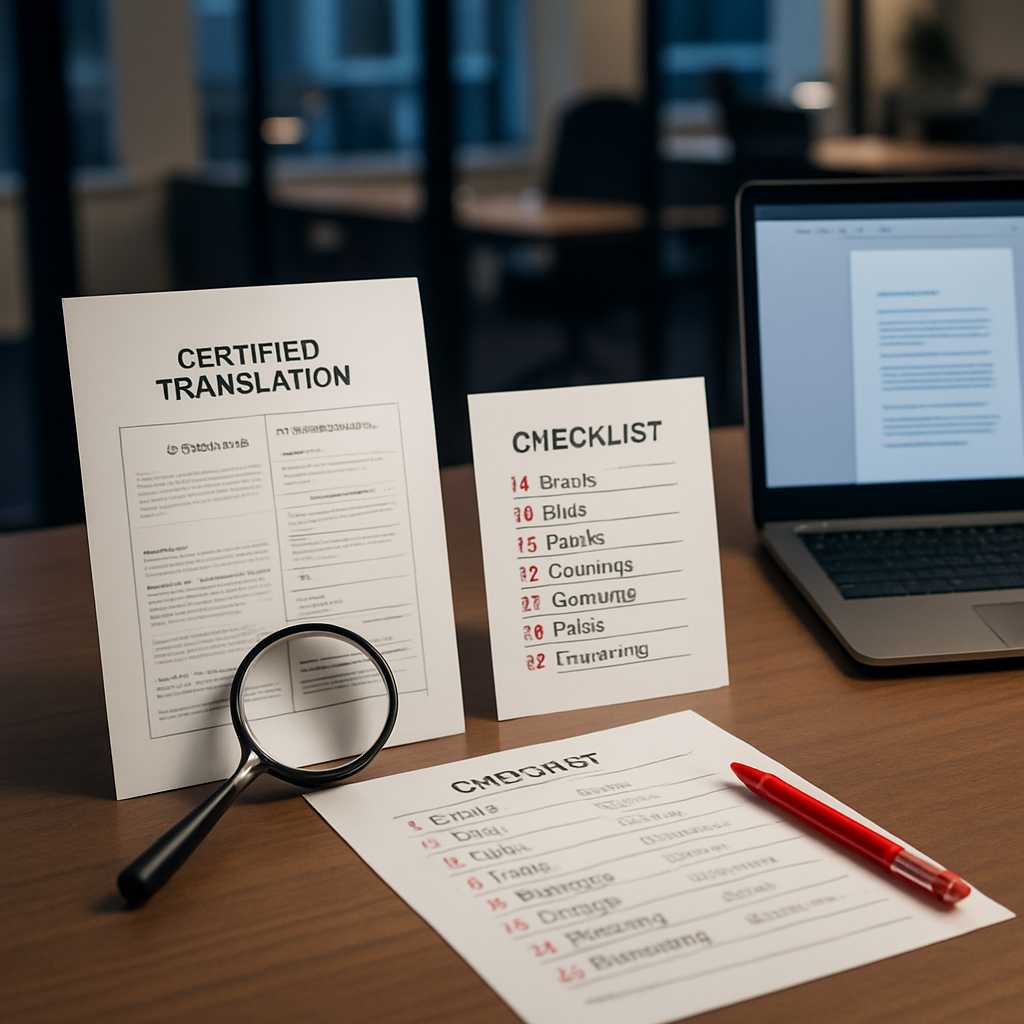
A Submission Checklist You Can Use Before Sending the Document
Before you submit your deed poll translation, check that:
- The old name matches the source exactly
- The new name matches the source exactly
- Middle names, hyphens, and punctuation are preserved properly
- Every page has been translated
- Witness names and witness details are included
- Signature blocks are shown clearly
- Handwritten notes, stamps, and seals are described
- Date formats have not been changed carelessly
- The certification statement is attached
- The certification includes name, date, signature, and contact details
- The translation matches the spelling used in your other supporting documents
- Any extra requirement from the passport office, visa team, bank, employer, or overseas authority has been followed
If even one of these points is missing, it is worth fixing before submission.
Final Word
A deed poll translation is not just an administrative extra. It is often the document that makes the rest of your file make sense. When it is done properly, it shows the name change clearly, preserves the legal wording faithfully, and gives the receiving authority enough detail to accept the document without unnecessary follow-up. When it is done poorly, it creates exactly the kind of uncertainty that name change documents are supposed to remove.
If your deed poll, name change certificate, or related supporting documents need to be translated, send the full pack together and ask for a certified translation that preserves names, dates, witness blocks, and document notes from start to finish. That is the fastest route to a clean submission.
Frequently Asked Questions
Do I need a certified translation for a deed poll in the UK?
If the receiving UK authority is reviewing a deed poll or related name change document that is not in English or Welsh, a certified translation is typically the right format. The translation should be full, accurate, and accompanied by a proper certification statement.
Can I translate a deed poll myself?
For official use, self-translation is risky. A receiving body may want an independently prepared certified translation that clearly states accuracy and includes the translator’s details. For name change documents, independence and traceability matter.
Should a name change deed poll translation include witness signatures and signature blocks?
Yes. A proper deed poll translation should normally include witness lines, signature labels, and any related document structure that appears on the source. Those details help preserve the legal and evidential shape of the document.
How should date formats be handled in a deed poll translation?
Dates should be handled carefully and without changing their meaning. Ambiguous numeric dates should not be silently reformatted in a way that could alter interpretation.
Does a deed poll translation need a certified translation statement?
Yes, in most official-use situations that statement is a key part of the pack. It should confirm accuracy and include the translator’s or authorised representative’s name, date, signature, and contact details.
Can a UK deed poll be translated for use abroad?
Yes. A UK deed poll can be translated for overseas use, but the receiving country may also ask for notarisation or apostille depending on its local rules. It is best to confirm the exact requirement before ordering.