Will a “Certified Translation” Need a Wet Signature?
If you are ordering a certified translation for immigration, a passport application, a university, a court, or an overseas authority, one question comes up again and again: does it need a wet signature, or is a signed PDF enough?
The honest answer is that there is no universal rule for every authority, every country, or every stage of submission. Some recipients are perfectly happy with a certified PDF sent by email. Others want a printed version with an original ink signature. Some only care once a document moves into notarisation, apostille, legalisation, or paper-file processing.
That is why the smartest way to approach a certified translation is not to ask, “Is wet ink more official?” but to ask: What does the receiving authority need at this stage of the process?
At Urgent Certified Translation UK, we help clients avoid over-ordering, under-ordering, and last-minute resubmissions by matching the delivery format to the real requirement. If you already know the authority, deadline, and country of use, you can get a fast quote here.
What “Wet Signature” Actually Means
A wet signature is a handwritten signature applied in physical ink to a paper document.
In certified translation, people usually use the phrase to mean one of these:
- the translator signed the certificate or translation by hand
- the translation was printed and issued as a physical original
- the recipient wants something more than a plain emailed PDF
This is where confusion begins. A certified translation can be:
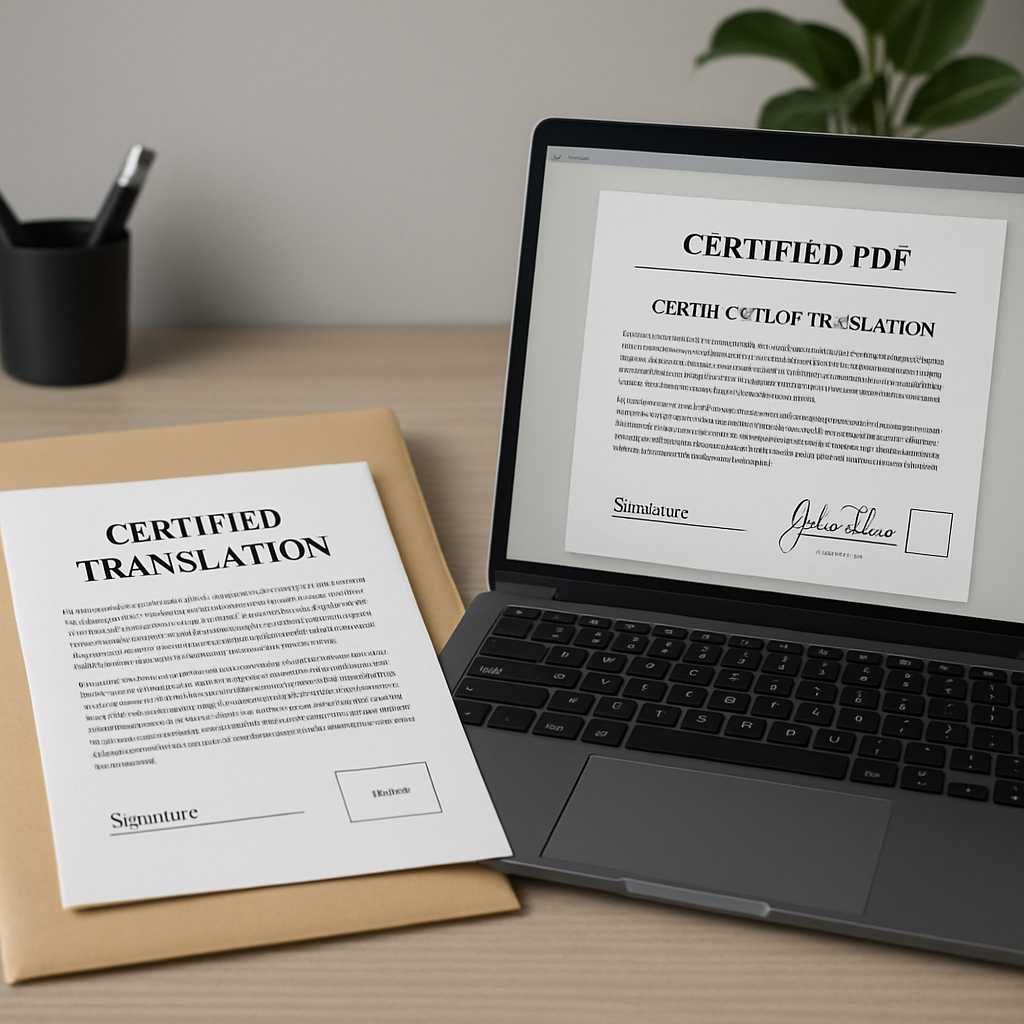
- A signed PDF delivered by email
- A printed certified translation posted to you
- A printed and notarised translation
- A translation prepared for apostille or legalisation
Those are not interchangeable in every situation.
The Simple Rule: Follow the Recipient, Not Habit
Many people assume a wet signature is always safer. Sometimes it is. But sometimes it adds cost, shipping time, and stress without adding any value at all.
A more reliable test is this three-step check:
1. What Does the Authority Actually Ask For?
Look for wording such as:
- signed translation
- certified translation
- original signed copy
- wet ink signature
- hard copy only
- notarised translation
- apostilled translation
- certified true copy and translation
If the authority only says certified translation, that does not automatically mean it wants a paper original. If it says original, wet ink, hard copy, notarised, or apostilled, you should not assume a PDF will be enough.
2. How Are You Submitting the Documents?
The submission route matters.
If the process is:
- online upload
- email submission
- portal-based application
- pre-check before final filing
Then a digital certified translation is often the practical format. If the process is:
- paper application pack
- consular appointment
- court bundle
- notary appointment
- legalisation chain
Then a printed original is far more likely to be needed.
3. Is This the Final Use, or Just the First Use?
A translation may be accepted digitally at the first stage, then required in hard copy later. This happens when:
- a portal accepts uploads first, then originals are requested later
- a notary has to verify a signature
- an apostille or legalisation step follows
- a consulate or foreign authority wants physical originals for its file
That is why the cheapest order is not always the cheapest outcome.
When a Certified PDF is Usually Enough
A digitally delivered certified translation is often the right choice when speed matters and the receiving process is already digital. Common examples include:
- upload-based immigration submissions
- initial employer or university reviews
- application pre-checks
- internal compliance or HR review
- urgent deadlines where a same-day translation is needed first
In these situations, the real requirement is usually that the translation is:
- complete
- accurate
- clearly certified
- signed or otherwise properly issued
- traceable to a real translator or translation company
If your deadline is tight, a PDF-first approach can keep your case moving. You can then add posted originals only if the recipient later asks for them. For urgent digital delivery, our certified translation service is built for official document submissions, with hard-copy options available where needed.
When You Should Order a Wet-Signature Original from the Start
There are situations where ordering a posted original is the smarter move immediately.
The Authority Explicitly Says Original, Wet Ink, or Hard Copy
This is the clearest case. If the instructions use that wording, do not gamble on a PDF.
The Translation Will Be Notarised
Notarisation does not certify translation quality. It verifies the identity of the person signing the certification. That usually means the signature itself becomes important as a physical act or part of a formal signing process. If you may need notarisation, contact our team before ordering so the translation format matches the next step.
The Translation Will Be Apostilled or Legalised
Apostille and legalisation workflows often depend on underlying signatures, stamps, and document handling rules. If your translation is heading into that chain, wet ink is usually the safer starting point.
The Recipient is a Consulate, Embassy, Court, or Paper-File Authority
Some institutions still operate around physical originals, physical seals, or manually assembled document packs. In those cases, printed originals reduce friction.
You Already Know Authenticity May Be Challenged
If the receiving side is likely to ask, “Can you post the original?” then it is often better to arrange that upfront rather than lose time later.
Wet Signature vs Scanned Signature vs Digital Signature
These terms are often mixed together, but they are not the same.
Wet Signature
A handwritten ink signature on paper.
Scanned Signature
A photo or image of a handwritten signature inserted into a digital document.
Digital Signature
A more secure electronic method tied to the document in a way that helps show whether it has been altered.
For many clients, the real issue is not whether the signature is physically wet. It is whether the recipient accepts the format as authentic and sufficient. That is why a scanned signature may be accepted in one workflow, while another authority wants either:
- a physical original, or
- a more securely signed digital document
If you are unsure, ask the authority one very specific question: “Do you require a posted original with an ink signature, or will a certified PDF be accepted?” That one sentence can save days.
Why Certified Translations Get Rejected on Signature Issues
Rejection is often caused by misunderstanding the requirement rather than by translation quality. Here are the most common problems:
The Certification is Incomplete
The certificate may be missing the translator’s name, date, contact details, signature, or accuracy statement.
The Client Ordered the Wrong Format
A digital copy was submitted where the recipient wanted a hard copy, or vice versa.
Certified, Notarised, and Apostilled Were Confused
These are related services, but they are not the same thing.
The Translation Company Was Not Independently Verifiable
Some authorities want clear company details or traceable professional credentials.
The Original Document Had Stamps, Seals, or Handwritten Notes That Were Not Handled Properly
A beautifully signed certificate will not fix a translation that ignored key document elements. If your file includes stamps, seals, side notes, or handwritten additions, it helps to check our document translation guidance before submission.
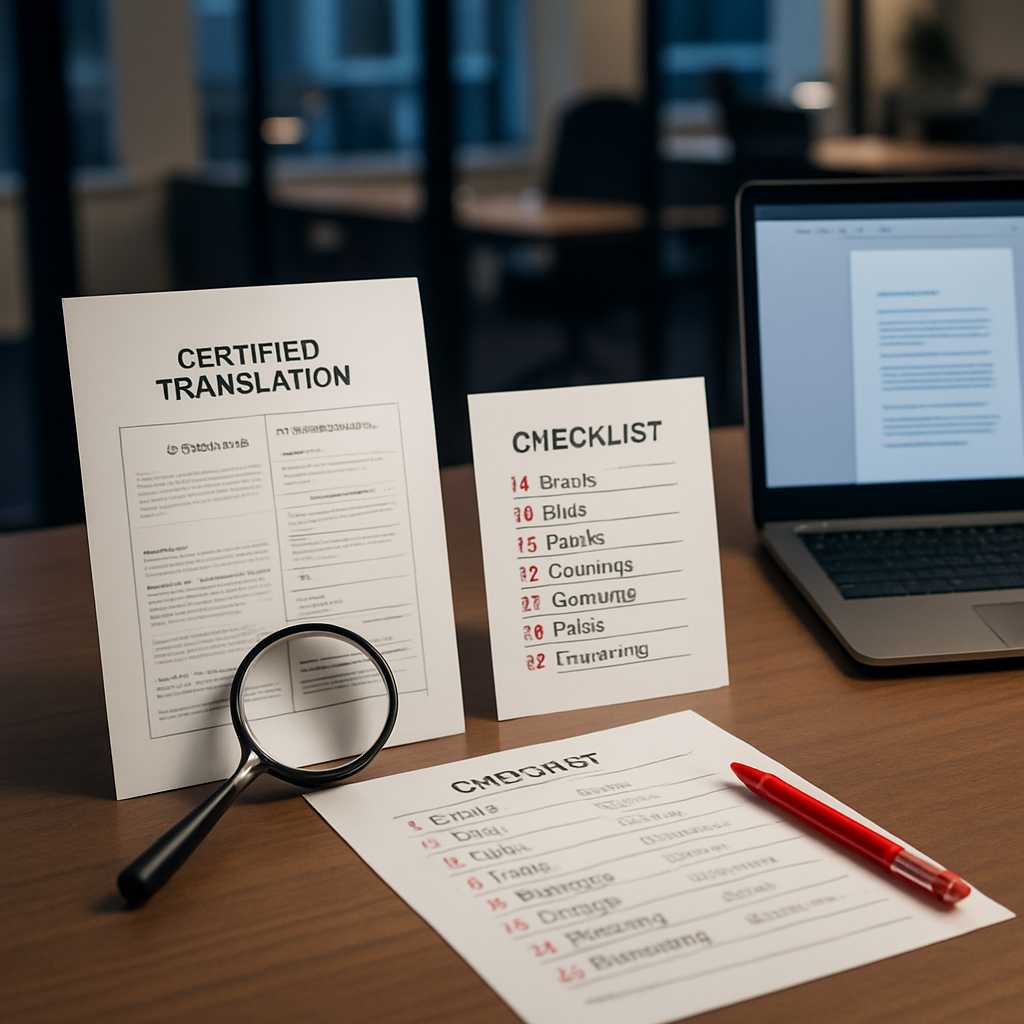
A Better Way to Decide: The Recipient-Led Checklist
Before ordering, use this checklist.
Order a Certified PDF If:
- the application is upload-only
- the authority has not asked for original paper
- speed matters more than shipping
- you need the translation for review, screening, or first-stage submission
Order a Printed Wet-Signature Original If:
- the authority says original, hard copy, or wet ink
- you are attending an appointment with paper documents
- a notary or legalisation step is likely
- the receiving country or institution is known for paper-based formalities
Order Both If:
- the deadline is urgent
- you want to submit digitally now
- there is a real chance printed originals will be requested later
For many clients, PDF now + posted originals if needed is the most efficient balance between speed and caution.
Which Format Should You Choose? A Practical Comparison
| Format | Best For | Main Advantage | Main Risk |
|---|---|---|---|
| Certified PDF by email | Upload-based submissions, urgent deadlines, early-stage review | Fastest turnaround | May not satisfy paper-original requests |
| Printed certified translation | Paper submissions, consulates, some official files | Physical original available | Slower due to delivery |
| Printed + notarised translation | Formal verification of signer’s identity | Stronger document chain | Extra step and cost |
| Translation prepared for apostille/legalisation | Overseas legal or official use | Supports later legalisation process | Needs the right setup from the beginning |
Real-World Examples
Example 1: Urgent Upload Deadline
A client needs a birth certificate translated for an online application due tonight. The portal accepts document uploads and does not mention originals. A certified PDF is usually the practical choice.
Example 2: Overseas Passport or Consular Requirement
A client is asked for an official translation that must be signed and stamped. Here, a printed original is the safer choice, especially if the instruction wording sounds formal or paper-based.
Example 3: Translation First, Legalisation Later
A client needs documents translated for use abroad and already knows notarisation or apostille may follow. Ordering the right physical version at the start avoids re-issuing the file later.
The Most Useful Question to Ask Before You Pay
If you only ask one thing, ask this: “Will you accept a certified PDF, or do you require a physically signed original?” Not: “Do you accept certified translations?” “Is a signature needed?” “Can I send a scan?” Those questions are too vague. The more precise your question, the more useful the answer.
What to Ask Your Translation Provider
A good provider should be able to answer these without hesitation:
- Will my translation include a signed certification statement?
- Can you provide digital delivery first?
- Can you post originals if the authority asks later?
- Do I need notarisation or apostille for this use?
- Have you handled this type of document before?
- Can you preserve stamps, seals, handwritten notes, and formatting?
At Urgent Certified Translation UK, we handle official document types across a wide range of languages, and we help clients work out whether they need a PDF, a posted original, or a more formal certification route.
Our Recommendation
If the recipient has explicitly asked for wet ink, original paper, notarisation, or legalisation, order that format from the start. If the recipient has not said that, and the submission is digital, a properly prepared certified PDF is often the right first move. If you are under time pressure and the requirement is unclear, the safest practical option is often: get the certified PDF immediately, confirm the authority’s wording, and add posted originals only if required. That keeps your application moving without paying for unnecessary extras.
Final Answer
So, will a certified translation need a wet signature? Sometimes yes. Often no. Always check the receiving authority, the submission method, and whether a later notarisation or legalisation step is involved. If you want a quick answer tailored to your document, send the file, tell us the authority you are submitting to, and mention the country of use. We will tell you whether a certified PDF is likely to be enough or whether you should order a printed original from day one. Upload your file for a fast quote or contact us today if you want us to check the requirement before you order.
FAQs
Does a certified translation always need a wet signature?
No. A certified translation does not always need a wet signature. In many cases, a certified PDF is accepted, especially where the submission process is digital. But if the authority asks for an original, a hard copy, notarisation, or apostille, a wet-signature version may be necessary.
Is a scanned signature acceptable on a certified translation?
Sometimes. A scanned signature may be accepted where the authority only needs a certified digital copy, but it is not the same as a posted original with ink signature. Acceptance depends on the recipient’s rules.
Do UK authorities require a wet ink signature on certified translations?
Not all of them in the same way. Some UK-facing guidance focuses on signature and translator details, while other routes focus on written certification details. That is why the exact authority and application type matter.
Is a printed certified translation better than a PDF?
Not automatically. A printed certified translation is better only when the receiving authority wants a physical original, when notarisation or apostille is involved, or when paper-file handling is expected. Otherwise, a PDF may be enough.
Should I order both a PDF and a posted original?
If your deadline is urgent and the requirement is unclear, ordering a PDF first and arranging posted originals if needed can be a practical approach. If you already know the authority wants originals, order the hard copy from the start.
Does notarisation mean the translation has to have a wet signature?
In many cases, yes, because notarisation is tied to the signature being formally verified. If notarisation may be required, it is best to plan the translation format correctly from the beginning.