Choosing Between Email PDF and Posted Originals
Choosing between an email PDF and posted originals may seem straightforward, but it is a common reason for delays in official submissions. The safest choice depends not just on the document itself but on the preferences of the receiving body. For instance, a visa portal that requires uploads typically indicates a preference for digital delivery, whereas a court filing or embassy instruction often necessitates posted originals from the outset. UK guidance emphasizes the content of the translation, but the required format can vary by authority.
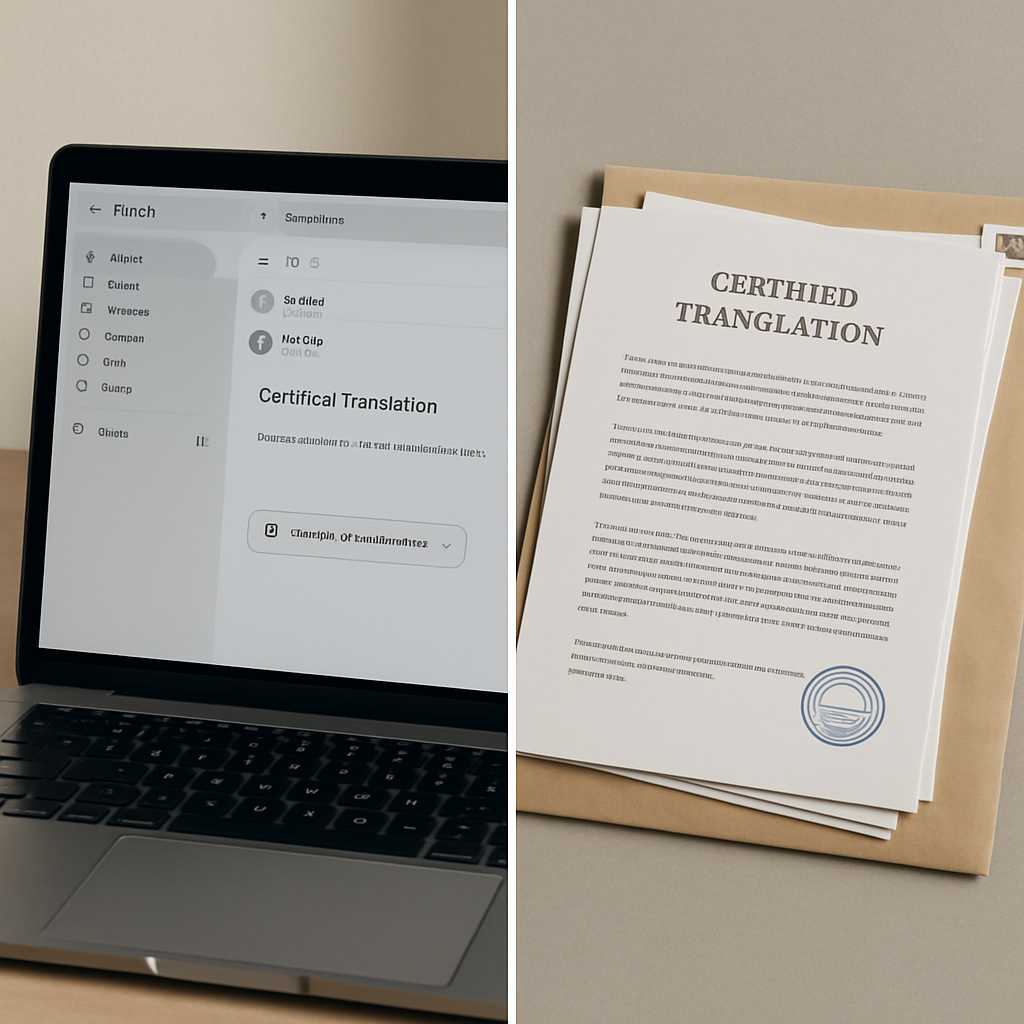
Most individuals do not need to choose between speed and safety. The most effective approach is often to order a PDF first and originals if necessary. This allows for a digital version to be reviewed, uploaded, or submitted urgently, while still being prepared if the receiving body later requests a stamped paper version.
The practical rule: Choose delivery based on the submission path, not merely the document type.
A birth certificate intended for an online visa upload may only require a certified PDF, while the same document for a paper passport application or notarized bundle may necessitate posted originals. The document remains unchanged; it is the submission route that varies.
Why Delivery Format Matters More Than Most People Expect
A certified translation encompasses more than just translated text. For uses within the UK, official guidance typically expects a translation that confirms accuracy and includes the date, translator’s name, signature, and contact details. In some passport contexts, the guidance is even more specific, requiring an official translation signed and stamped by a translator who is a member of a recognized professional organization.
This is why delivery format is significant. A clear PDF may be suitable when the receiving body accepts digital uploads. However, when the process involves physical document collection, wet-ink verification, notarization, or legalization, the paper version becomes essential for compliance. The UK legalization process, for example, is centered around verifying signatures, stamps, and seals against official records.
The Short Answer: When to Choose Email PDF
Opt for email PDF when speed, remote submission, and easy sharing are priorities, and when the receiving body accepts uploads or electronic copies.
Email PDF is Usually the Right Choice When:
- You are uploading documents to an online portal.
- Your caseworker, admissions team, or employer has requested scans via email.
- You require same-day or urgent submission.
- You want to review the translation before dispatching hard copies.
- You are outside the UK and need the fastest initial delivery.
- The recipient has not requested a wet-ink original, stamped paper original, or posted set.
What Makes PDF Delivery Attractive
- It eliminates the shipping leg. A translation can be completed and sent as soon as certification is finished, without waiting for packing, collection, transit, customs, or redelivery attempts.
- It aligns with many real-life workflows. A significant portion of immigration, academic, and employer processes now begin with uploads, emailed scans, or document portals rather than relying solely on paper submissions.
- It allows for early detail verification. Names, dates, reference numbers, and layout issues can be checked before any originals are sent.
- It is easier to resend. If a university, solicitor, HR team, or caseworker requests the document again, you can forward the file immediately.
- It supports urgent turnaround. Urgent Certified Translation UK incorporates digital delivery as part of its standard workflow, stating that completed translations are sent by email, with printed copies available when required.
Best Use Cases for PDF Delivery
Online Visa or Immigration Uploads
If the application is submitted through an online account with digital uploads for supporting evidence, a certified PDF is typically the best first choice. The translation must contain the required certification details and be readable, complete, and easy to verify.
University, Employer, and Admissions Pre-Checks
Admissions teams and HR departments often review scans first, particularly during the initial assessment stage. A PDF is quicker to circulate internally and easier for the recipient to store in their system.
Urgent Deadlines
If your interview, submission window, or internal review is imminent, PDF delivery can prevent the translation stage from becoming a bottleneck.
When Posted Originals Are the Safer Choice
Opt for posted originals when the receiving body requires paper submissions, requests an original certified translation, or when the next step depends on physical signatures, stamps, or seals.
Posted Originals are Usually the Right Choice When:
- The authority requests an original certified translation.
- The process is paper-based rather than upload-based.
- You are attending an in-person appointment and must bring a physical pack.
- You require notarization.
- You need apostille or legalization support.
- Your solicitor, court, or embassy requires a stamped paper version.
- The receiving body explicitly mentions wet ink, stamp, seal, or original hard copy.
Why Originals Still Matter
- Paper can be the final submission format. Some processes still rely on physical files rather than digital uploads.
- Wet-ink steps can depend on it. Notarization and legalization remain document-handling processes where physical execution is often central.
- It avoids a second round of delay. One frustrating scenario is successfully uploading a PDF only to be later instructed to mail or bring the original certified translation. Ordering originals from the start can prevent this reset.
Best Use Cases for Posted Originals
Passport and Paper Application Processes
Current GOV.UK passport guidance for some overseas applications states that an official translation must be signed and stamped by a translator who is a member of a recognized professional organization. In document-heavy and paper-led processes, it is safer to assume originals may be needed unless specified otherwise.
Notarized or Apostilled Translations
If the document is going to a notary or into a legalization workflow, posted originals are usually the safer option. GOV.UK explains that legalization checks signatures, stamps, and seals against official records, and certain documents can only be legalized if issued by specific bodies or certified by a UK public official.
Court, Embassy, and Solicitor-Led Submissions
When a legal representative is compiling a submission bundle, physical originals reduce uncertainty. The more formal the file, the more valuable a posted original becomes.
The Better Framework: Choose by Submission Path
Many articles discuss delivery by document type, but this approach lacks precision. A better framework is to choose based on the submission path.
Path 1: Upload-Only or Email-First Submission
Choose: PDF first
Examples: Online visa uploads, university portals, HR onboarding systems, first-stage case review.
Path 2: Hybrid Submission
Choose: PDF plus posted originals
Examples: Uploads now, originals later on request; solicitor review now, final pack later; embassy pre-check by email followed by appointment.
Path 3: Physical Submission from Day One
Choose: Posted originals, often with tracked delivery or courier
Examples: Paper applications, notary workflows, apostille/legalization, in-person appointments where originals are collected.
This decision model saves the most time because it aligns delivery with the actual document journey.
PDF Only, PDF Plus Originals, or Courier: Which is Best?
PDF Only
Best when:
- The recipient accepts digital submissions.
- Speed is critical.
- You want the lowest-friction delivery route.
- No physical original has been requested.
Watch for:
- Later requests for paper originals.
- Unclear wording such as “official copy” or “certified original” in the instructions.
PDF Plus Posted Originals
Best when:
- You want immediate use plus a paper backup.
- The recipient may request originals later.
- You are dealing with an online-first process that may transition to paper-based.
- You are close to a deadline and cannot risk restarting delivery.
Watch for:
- Choosing untracked shipping on a time-sensitive matter.
- Ordering only one original when multiple recipients may need separate sets.
Courier or Tracked Hard Copy
Best when:
- There is a fixed appointment.
- The submission pack is time-sensitive.
- You need reliable delivery evidence.
- Replacement would be costly or disruptive.
Watch for:
- Address errors.
- Customs or cross-border delivery delays.
- Weekend timing gaps.
What to Ask Before You Order
Before selecting a delivery option, consider these five questions:
- How will the recipient receive the documents? Upload, email, post, or in-person appointment?
- Have they requested an original certified translation? Those exact words matter.
- Will the documents go to a notary, solicitor, embassy, or legalization office? If so, hard copies become more likely.
- Do you need one set or multiple originals? A visa file, employer file, and university file may each require their own copy.
- What is the true deadline? Translation time is only one part; delivery time can mean the difference between “on time” and “too late.”
A fast translation can still arrive too late if the delivery method is poorly chosen.
The Hidden Cost of Choosing the Wrong Format
People often focus on translation costs and overlook delivery costs. However, the more significant expense is often the cost of delays, which can include:
- Missing a submission window.
- Paying for rushed reposting.
- Having to reorder originals.
- Wasting time on an appointment that cannot be easily rescheduled.
- Sending corrected copies to multiple recipients.
The cheapest option is not always the one with the lowest invoice; it is the one that gets accepted the first time.
Common Mistakes People Make
Assuming Every Certified Translation Must Be Posted
This is not true. Many recipients start with digital files, and a PDF may be entirely appropriate where the system is designed for uploads.
Assuming Every PDF is Enough
This is also incorrect. Some authorities, paper-based processes, and legalization routes still depend on original hard copies or specific physical execution.
Ordering One Original When the File May Be Reused
If the same translation may be sent to a solicitor, employer, university, and government body, ordering multiple originals can save future delays.
Leaving Delivery Decisions Until After the Translation is Finished
This is where avoidable problems begin. Delivery should be part of the quote and workflow from the start, not an afterthought.
Not Sending the Recipient’s Instructions to the Translation Provider
This is one of the easiest wins. If the authority has a checklist, portal screenshot, or email instruction, send it with the document. This allows the translation team to recommend the safest format before work begins.
So What Should Most Clients Choose?
For most modern submissions, the most practical choice is:
Start with PDF When the Recipient Accepts Uploads
Add posted originals when the process, wording, or next step suggests they may be needed. This approach provides speed without risking acceptance.
If the receiving body uses terms like:
- Original certified translation
- Wet-ink signature
- Stamped original
- Bring documents to appointment
- Send by post
- Notarised
- Apostille
- Legalised
Then skip the guesswork and order posted originals from day one. Professional guidance in the UK also emphasizes that there is no single government-regulated certification format for every use case, so the organization receiving the translation may require a specific presentation. This is precisely why delivery format should be confirmed against the recipient’s instructions, rather than assumed based on habit.
A Smarter Way to Order Certified Translations
The safest workflow looks like this:
Step 1: Send a Clear Scan
A readable document speeds up quoting, translation, and certification.
Step 2: Share the Recipient’s Exact Instructions
Forward the email, checklist, portal wording, or appointment note.
Step 3: Confirm Delivery Before Work Starts
Ask whether you need:
- PDF only
- PDF plus originals
- Multiple original sets
- Tracked post or courier
Step 4: Build Delivery into the Deadline
Do not measure turnaround by translation time alone. Measure it by translation plus certification plus delivery.
Need it Fast Without Guessing Wrong?
If you are uncertain whether your recipient will accept a PDF or expect a posted original, send the instructions with your file during the quote stage. This is the quickest way to avoid rework. Upload your document, include the name of the receiving body, and ask for the safest delivery route for your deadline. When digital submission is sufficient, you can expedite the process. When originals are likely to be necessary, you can order them before time starts working against you.
Final Word
Email PDF is often the quickest and most convenient option, while posted originals are typically the safest choice when the process involves physical, legalized, notarized, or explicitly requested originals.
The right choice is not merely “digital versus paper.” It is about understanding what the recipient will actually accept and what the next step will require. Getting this right from the outset simplifies the entire process, making it faster and significantly less stressful.
FAQs
Is a PDF certified translation accepted in the UK?
It can be, depending on the receiving body and submission method. If the process is upload-based and the translation includes the required certification details, a PDF may suffice. If the authority requests an original certified translation, wet-ink signature, or paper submission, order posted originals instead.
When should I order posted originals for a certified translation?
Order posted originals when the recipient requests an original certified translation, the process is paper-based, you have an in-person appointment, or the document is going to a notary, embassy, solicitor, or apostille/legalization stage.
Can I upload a certified translation by email for a visa application?
Often yes, where the application system uses digital uploads and the translation includes the required certification details. GOV.UK guidance for supporting documents focuses on the content of the translation and independent verification, which is why PDF delivery can work well in upload-led cases.
Do notarized or apostilled translations need paper originals?
In many cases, paper originals are the safer choice because notarization and legalization involve physical signatures, stamps, seals, or certified documents moving through formal verification steps.
Is courier delivery worth paying for on urgent certified translations?
Yes, when there is a fixed submission date, appointment, or cross-border delivery risk. Courier or tracked delivery provides certainty, not just speed.
What is the safest certified translation delivery option overall?
For many clients, the safest choice is PDF plus posted originals. This provides an immediate digital copy for review or upload while protecting you if the recipient later requests a paper original.