The short answer: what a UK certificate of accuracy should include
At a minimum, a certificate of accuracy should include:
- a statement confirming the translation is a true and accurate translation of the original document
- the date of the translation
- the full name of the translator or an authorised representative of the translation company
- a signature
- contact details that allow the translator or company to be independently verified
In many cases, it is also wise to include:
- the source language and target language
- the name or description of the document translated
- the translator’s qualifications, membership, or credentials
- the company name and registered address
- a stamp or letterhead if used by the translation provider
This additional information not only enhances presentation but also reduces the likelihood of follow-up questions. The clearer your certificate is about who translated the document, what was translated, and how to contact that person or company, the less likely you are to face requests for clarification later.
The minimum wording that usually works
For many UK submissions, the safest approach is plain wording that says exactly what it needs to say and no more.
Basic certificate of accuracy wording
Certificate of Accuracy
I certify that the attached document is a true and accurate translation of the original document.
Translated from [source language] into English.
Date: [date]
Name: [full name]
Signature: [signature]
Contact details: [email, telephone number, address]
This version is short, direct, and suitable for many standard uses where the receiving body mainly wants confirmation of accuracy and traceable translator details.
A stronger version that reduces follow-up questions
The problem with very short certificates is not that they are wrong; it is that they leave room for avoidable questions. A stronger version usually performs better because it answers the next questions before they are asked: who translated it, what document was translated, what languages were involved, and whether the translator is competent to do the work.
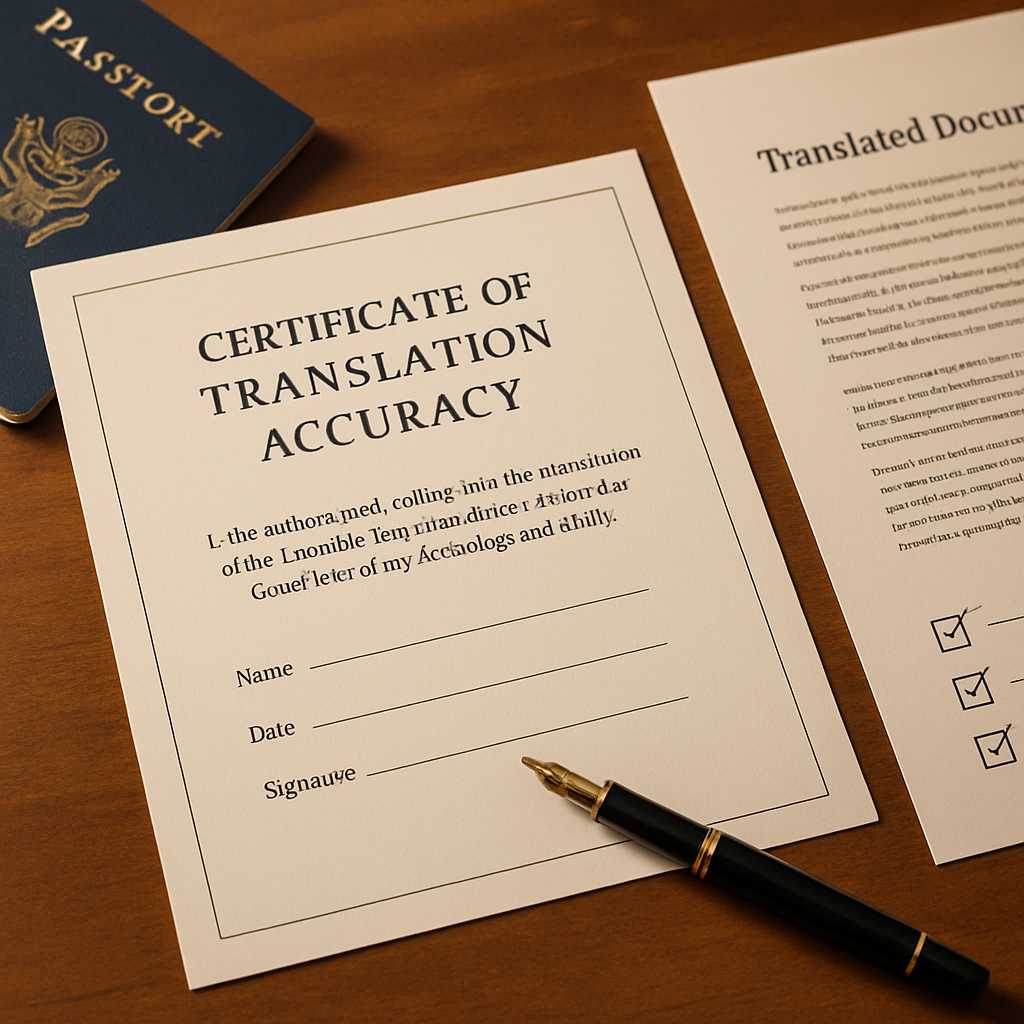
Extended certificate of accuracy wording
Certificate of Translation Accuracy
I certify that I am competent to translate from [source language] into English and that the attached translation of [document title or description] is a true and accurate translation of the original document to the best of my knowledge and ability.
Source language: [source language]
Target language: English
Date of translation: [date]
Translator name: [full name]
Company name: [translation company, if applicable]
Contact details: [email, telephone number, business address]
Qualifications or membership: [optional but recommended]
Signed: ____________________
This certificate relates to the accuracy of the translation and not to the authenticity of the original document.
This version is usually the better choice for immigration files, legal bundles, academic applications, and any submission where the reader may be reviewing many documents quickly.
The best structure for a certificate of accuracy
A certificate of accuracy should not feel like an afterthought attached at the end of the job; it should feel like part of a complete submission pack. A practical structure looks like this:
1. Title
Use a clear heading such as:
- Certificate of Accuracy
- Certificate of Translation Accuracy
- Translator’s Declaration
- Certification Statement
“Certificate of Translation Accuracy” is usually the clearest option because it removes doubt about what is being certified.
2. Accuracy statement
This is the core sentence. It should confirm that the translation is true and accurate. The safest wording is still the simplest: “a true and accurate translation of the original document.” Avoid vague marketing language such as “professionally translated” or “reviewed by experts.” Those phrases sound polished but do not fulfill the legal and administrative requirements of a clear accuracy statement.
3. Document identification
State what the translation relates to. This can be as simple as:
- Birth Certificate
- Marriage Certificate
- Bank Statement dated 12 January 2026
- Court Order issued by [court name]
- Academic Transcript
This small detail matters more than many providers realize. It helps the receiving authority match the certificate to the translation immediately.
4. Language pair
Include both languages. For example:
- translated from Spanish into English
- translated from Arabic into English
- translated from Romanian into English
This is especially helpful where the file contains several multilingual documents.
5. Date
The certificate should be dated. Not the estimate date. Not the order date. The translation date. A signed certificate with no date is one of the easiest ways to make an otherwise good submission look incomplete.
6. Translator or company details
Include the full name of the translator, or the full name of the authorised representative signing on behalf of the translation company. Where possible, also include:
- company name
- business email address
- telephone number
- address
A certificate should be easy to verify without the receiving authority having to chase the applicant for more information.
7. Signature
A signature remains one of the strongest trust signals in the certificate pack. A typed name on its own is weaker than a signed declaration. A stamp on its own is weaker than a signed declaration. A logo on its own means almost nothing. The signature is the point at which responsibility becomes clear.
What UK authorities and institutions usually care about most
Different bodies have different internal checks, but in practice, most of them focus on the same questions:
- Is the translation clearly presented as a full and accurate version of the original?
- Can the translator or translation company be identified?
- Is there enough information to verify the translation if needed?
- Is the certificate signed and dated?
- Does the pack look complete and consistent?
This is why a certificate should never be treated as decoration. It is not there to make the translation look formal; it is there to answer those five questions quickly. If your document is for a visa, passport, university, court, employer, or official registry, getting the certificate right the first time can prevent unnecessary delays. Upload your file, and we will confirm whether standard certification is enough or whether you may also need notarisation or apostille support.
When you should add translator credentials
Many people assume qualifications are always optional. That is not always the safest assumption. For straightforward submissions, the core certificate wording may be enough. But for some immigration and legal contexts, including translator credentials or professional membership details can make the certificate stronger and reduce the chance of follow-up questions.
Useful details to add include:
- professional membership
- translator qualification
- years of specialism in legal or official documents
- company registration details
- membership body number if relevant
This does not need to become a biography. One clean line is enough.
Example:
Qualifications or membership: Member of a recognised professional translation body / professional legal translator / authorised representative of [company name]
Does a certificate of accuracy need letterhead, a stamp, or a seal?
These features can help, but they are not the core requirement.
Letterhead
Helpful for presentation and credibility, especially for formal submissions.
Stamp
Useful where the receiving body expects a visibly certified pack, but it should support the wording, not replace it.
Seal or embossed mark
Can add perceived formality, but is not a substitute for a signed statement of accuracy.
Signature
This is the part you should never treat as optional. A common mistake is assuming a provider’s stamp makes the translation look official enough. In reality, the wording and the traceable details do the heavy lifting. The stamp is just supporting presentation.
Certificate of accuracy vs notarisation vs apostille
These are often confused, and that confusion leads people to order the wrong service.
Certificate of accuracy
Confirms the translation is true and accurate.
Notarisation
Adds a notary’s involvement, usually to verify the identity of the signatory or the execution of the declaration.
Apostille
Adds legalisation for use in another country where that extra level of authentication is required. A standard certified translation for UK use often only needs a certificate of accuracy. A court, embassy, overseas authority, or foreign registrar may ask for more. The safest approach is to confirm the end-use before work starts. If you are not sure what level of certification you need, contact Urgent Certified Translation UK with the document and destination country. We will tell you whether you need standard certification, notarisation, or apostille support before the job begins.
The most common certificate mistakes
This is where many low-quality providers get caught out.
1. The wording is too vague
Bad example: “Translated and checked by our team.”
Why it fails: It does not clearly certify accuracy.
2. There is no full name
Bad example: “Signed by admin team.”
Why it fails: No individual or authorised representative is clearly identified.
3. The contact details are missing
Bad example: A signature with no business email, address, or telephone number.
Why it fails: The translation cannot be easily verified.
4. The certificate is not dated
Why it fails: It looks incomplete and can trigger follow-up requests.
5. The certificate does not identify the document
Why it fails: It becomes harder to match the certificate to the translated file.
6. The provider relies on a stamp only
Why it fails: A stamp without a proper declaration is weak evidence of compliance.
7. The wording suggests review, not translation responsibility
Bad example: “Reviewed for accuracy.”
Why it fails: That can imply the signatory proofread someone else’s work rather than taking responsibility for the full translation.
8. The certificate looks detached from the translation pack
Why it fails: If the certificate, translation, and source document do not clearly belong together, the whole submission looks less reliable.
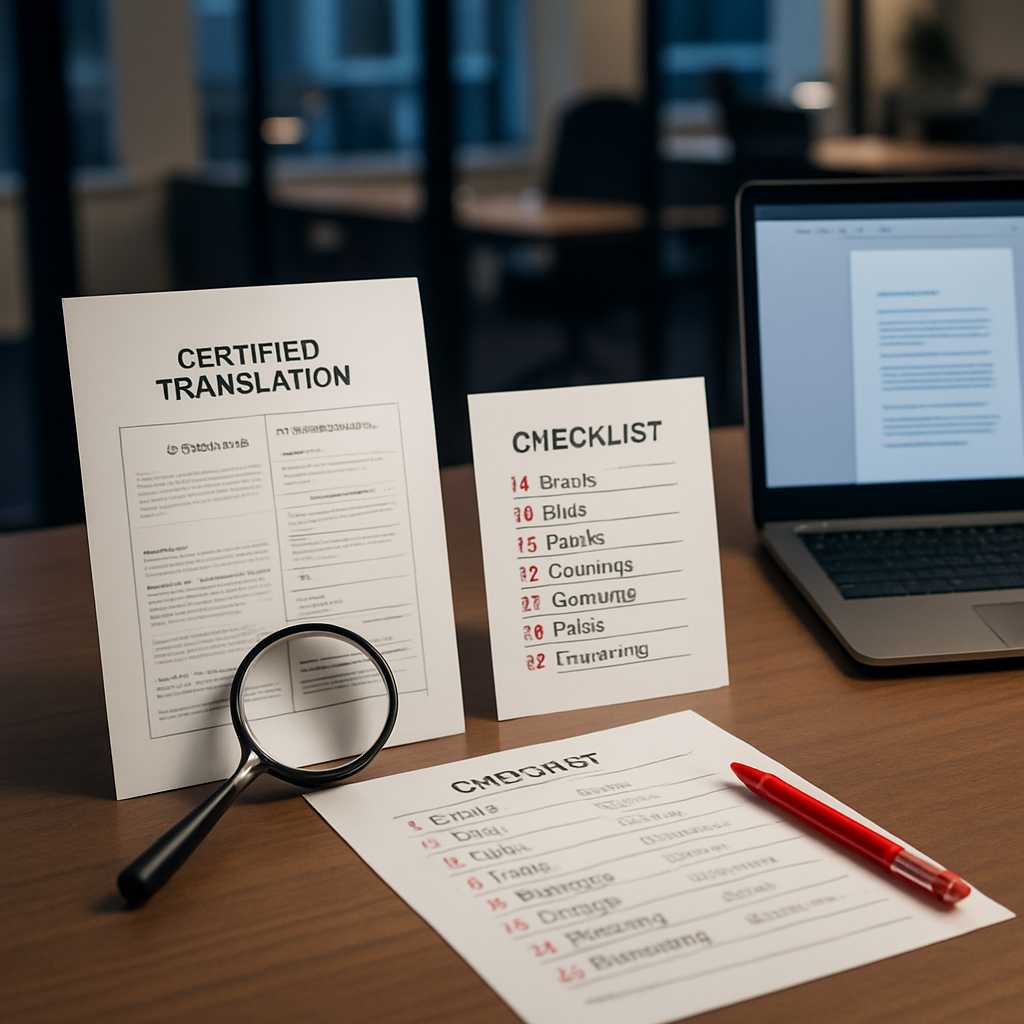
A practical UK checklist before you submit
Before sending your translated documents, check the following:
- the original document is clear and complete
- the translation covers the full content, not selected parts only
- the certificate states the translation is true and accurate
- the certificate is signed
- the certificate is dated
- the translator or authorised representative is named in full
- contact details are included
- the document title or description is included
- the language pair is included
- credentials are added where helpful or required
- the certificate is attached to the translation in a clear, professional format
This simple check catches most of the problems that cause rework.
A better way to think about certificate wording
The strongest certificate wording does three jobs at once:
- it confirms accuracy
- it identifies responsibility
- it allows verification
That is the difference between a certificate that merely looks official and one that actually works. A weak certificate says, “Trust us.” A strong certificate says, “Here is exactly who translated this, what was translated, when it was done, and how to verify it.” That is the standard you should aim for.
Copy-ready template for service pages, email delivery, or PDF packs
Here is a polished version suitable for most certified translation packs in the UK:
Certificate of Translation Accuracy
I certify that I am competent to translate from [source language] into English and that the attached translation of [document description] is a true and accurate translation of the original document.
Date of translation: [date]
Translator / Authorised Representative: [full name]
Company: [company name]
Contact details: [email, telephone number, business address]
Qualifications / Membership: [optional]
Signed: ____________________
This certificate applies to the translation only and does not certify the authenticity of the original document.
For many clients, this wording is strong because it is specific without becoming overcomplicated. It is clear enough for official review, readable enough for non-specialists, and professional enough for formal submissions.
Who this matters for most
This matters especially if you are submitting:
- birth certificates
- marriage certificates
- divorce papers
- passports and identity documents
- bank statements
- police certificates
- court orders
- academic transcripts
- diplomas
- employment letters
- company documents
These are exactly the kinds of documents where a missing signature, weak declaration, or absent contact detail can turn a fast submission into a delayed one. If your deadline is tight, send your file today, and we will prepare a certified translation pack with the correct certificate wording for the intended use.
Final takeaway
The best certificate of accuracy wording in the UK is not the most complicated wording; it is the clearest wording. Keep it direct. Confirm the translation is true and accurate. Add the date. Add the full name. Add the signature. Add contact details that can actually be used. Then strengthen the pack with document identification, language pair, and credentials where appropriate. That is what turns a translation from “looks fine” into “ready to submit.”
FAQs
What is the correct certificate of accuracy wording UK authorities expect?
The safest wording is a clear declaration that the document is a true and accurate translation of the original, followed by the date, the translator’s or authorised representative’s full name, signature, and contact details. Adding the document name and language pair usually makes the certificate stronger.
Does a certificate of accuracy need a stamp in the UK?
A stamp can help presentation, but it should not replace the core wording, signature, date, and contact details. A proper declaration carries more weight than a stamp on its own.
Does the translator need to include qualifications or professional membership?
Not every submission asks for it, but including credentials is a sensible way to strengthen the certificate, especially for immigration, legal, and formal institutional use.
Can a translation company sign the certificate instead of the individual translator?
Yes, an authorised representative of the translation company can sign, provided the certificate clearly identifies the signatory and includes the company’s contact details.
Is a certificate of accuracy the same as notarisation?
No. A certificate of accuracy confirms the translation is accurate. Notarisation adds a notary’s involvement. They are different levels of document support and are not interchangeable.
Can I translate my own document and add a certificate of accuracy?
For official submissions, self-translation is risky and often rejected. A professional, independent translator or translation company is the safer option because the certificate must be credible, traceable, and acceptable to the receiving authority.