How to Handle Illegible Sections: What a Professional Translator Does
An illegible section is never a small detail when the document is meant for official use. On a birth certificate, academic transcript, bank statement, medical report, police certificate, court order, or power of attorney, one unclear word can affect names, dates, reference numbers, signatures, stamps, or legal meaning.
That is why illegible text in translation must be handled with care. A professional translator does not guess. They do not quietly skip a blurred line. They do not “clean up” uncertainty to make the page look more complete than it really is. They translate what is readable, mark what is unclear, preserve the layout as closely as needed, and make the limits of the source document clear.
When this is done properly, the translation stays honest, defensible, and suitable for official review.
If your file is faded, blurred, cropped, or partly handwritten, the safest next step is simple: upload the clearest version you have and get it checked before anyone starts typing. That one step often prevents avoidable delays later.
Why illegible sections matter more than people think
Illegible content creates risk in two directions at once.
First, it creates an accuracy risk. If the unclear part contains a surname, registry number, issue date, amount, grade, court section, or medical abbreviation, guessing can create a false record.
Second, it creates a submission risk. Even where the main body is readable, poor scans and unclear sections make it harder for a caseworker, solicitor, admissions officer, employer, or authority to compare the source document against the translation.
The problem is rarely just “bad handwriting.” In practice, illegibility usually comes from one or more of these issues:
- faint ink or faded stamps
- motion blur in phone photos
- glare across glossy paper
- cropped corners or cut-off margins
- low-resolution scans
- handwritten amendments squeezed between lines
- old records with damaged paper or broken type
- overlapping stamps, seals, signatures, or embossed marks
A strong translation process treats each of those as a document-handling issue, not just a language issue.
The rule a professional translator follows
Translate what is visible. Mark what is unclear. Never invent what cannot be read.
That principle sounds simple, but it is what separates a submission-ready translation from a risky one.
A professional translator working on unclear material will usually aim for four things at the same time:
- Accuracy: The translation must reflect the source document, not assumptions about what the source probably meant.
- Transparency: Any unclear or partially readable part should be flagged clearly rather than hidden.
- Consistency: Names, dates, places, ID numbers, stamps, and headings should remain consistent across the file.
- Usability: The final translation should still be easy for an authority to review alongside the original.
That balance is especially important in certified translations, where the translation is being presented not as a rough interpretation, but as a faithful rendering of the original document.
What a professional translator does not do
When dealing with unclear scans or hard-to-read handwriting, weak providers often take shortcuts. A professional does not.
They do not:
- guess a surname from context
- replace a blurred figure with an estimated number
- omit a stamp because it is hard to read
- smooth over missing text to make the translation look cleaner
- rewrite handwritten notes into something more readable than the source
- certify a translation as complete without acknowledging genuine unreadability
- rely on machine output for difficult handwritten or degraded content without human review
Those shortcuts may make the page look tidy, but they increase the risk of mismatch, challenge, or rejection.
The professional workflow for illegible text in translation
A good translation team usually follows a repeatable method. One of the clearest ways to think about it is this five-step process:
1. Review the source before quoting or certifying
Before the translation starts, the file is checked for readability. This review looks at:
- whether the page is complete
- whether all corners, margins, and reverse-side notes are visible
- whether stamps or seals overlap key text
- whether handwriting is readable enough to translate with confidence
- whether the issue is image quality, source handwriting, or both
This is the stage where a professional decides whether the document is workable as-is, whether a better scan is needed, or whether the translation can proceed with clear notes on partial readability.
2. Rescue readability without changing the source
Professionals often improve visibility during review, but not by rewriting the source. They may zoom, inspect contrast, compare repeated fields elsewhere in the document, or review adjacent pages for the same proper noun, authority name, or numbering pattern. If a name appears clearly on page one and faintly on page three, that can help confirm consistency.
What they do not do is “fill in the blanks” based only on what seems likely.
3. Separate what is readable from what is only partly readable
Not every unclear section is completely unreadable. A skilled translator distinguishes between:
- fully readable text
- partially readable text
- illegible text
That distinction matters. If only part of a handwritten note can be read, the translation should reflect that honestly instead of pretending the full line is clear. For example, a professional might identify a note as partly readable and preserve the readable part while marking the rest as unclear, rather than converting the whole phrase into a confident-sounding translation.
4. Use clear translator notes
This is where translator notes illegible handling becomes critical. A professional translator commonly uses short, neutral notes in brackets to show what the source contains or what cannot be read. The wording varies by house style, but the purpose is always the same: accuracy without guesswork.
Typical note types include:
- [illegible]
- [partially illegible]
- [illegible signature]
- [illegible stamp]
- [handwritten note: partially legible]
- [seal present, text illegible]
- [one word illegible]
These notes should be factual, restrained, and easy to understand. They are not there to dramatize the issue. They are there to preserve the record honestly.
5. Certify the translation in a way that matches the source reality
In official work, the certification should match what the translator has actually seen and translated. Where the source contains unreadable content, a professional may include a brief explanatory note so the receiving authority understands that the limitation comes from the source document, not from careless translation.
That is especially important for a certified translation disclaimer. The disclaimer should not weaken the whole translation. It should simply make clear that unreadable parts were marked transparently rather than guessed. A practical example might read like this:
Translator’s note: Any text in the source document that could not be read with reasonable certainty has been marked in brackets as illegible or partially illegible.
That kind of note protects the integrity of the translation because it shows the translator handled uncertainty correctly.
What professional marking looks like in real documents
Birth certificates and civil records
Civil records often contain faded registry stamps, handwritten entries, side notes, or issuing authority marks. A professional translator will usually:
- preserve the main structure of the record
- translate visible field labels and entries
- mark faded registry text if unreadable
- keep names and dates aligned with the source
- note signatures and seals instead of omitting them
Academic transcripts and diplomas
Academic records often include handwritten grade changes, abbreviations, signatures, and stamped remarks. A professional translator will:
- translate module titles and visible grading information
- preserve tables, sequence, and document hierarchy
- mark handwritten additions if unclear
- avoid “normalizing” a confusing note into a neat but unsupported interpretation
Court orders, legal notices, and affidavits
Legal documents are especially sensitive because numbering, references, signatures, and official marks matter. A professional translator will:
- keep headings, clauses, numbering, and exhibit references aligned
- identify unclear signatures, seals, or handwritten marginal notes
- request a better copy if a blurred clause could affect legal meaning
- refuse to guess where the missing text changes the substance of the document
Bank statements and financial evidence
Statements are often damaged by low-quality scans, dark photocopies, cropped edges, or glare. A professional translator will:
- preserve dates, balances, headings, and transaction layout where readable
- avoid reconstructing cut-off numbers
- flag cropped or missing entries
- request a clearer copy when the issue affects figures, account details, or official bank marks
Medical reports and handwritten notes
Medical files can contain abbreviations, clinician handwriting, stamps, and handwritten recommendations. A professional translator will:
- distinguish between technical terminology and true illegibility
- translate readable medical language carefully
- flag uncertain handwriting instead of guessing a diagnosis, dosage, or date
- request clarification when a clearer source may change the meaning materially
When a better scan is needed before translation continues
Not every unclear document should be translated immediately. Sometimes the right professional decision is to stop and request a better file first. That usually happens when:
- a name is unclear
- a date is partially cut off
- a document number is unreadable
- a seal or stamp overlaps a key field
- part of the page is cropped out
- important text sits in shadow or glare
- the certification would otherwise overstate what can actually be read
This is not delay for the sake of delay. It is good document handling. In many cases, a better phone photo taken in daylight, with no glare and all four corners visible, solves the issue in minutes.
Best practice for unclear scans before you send them
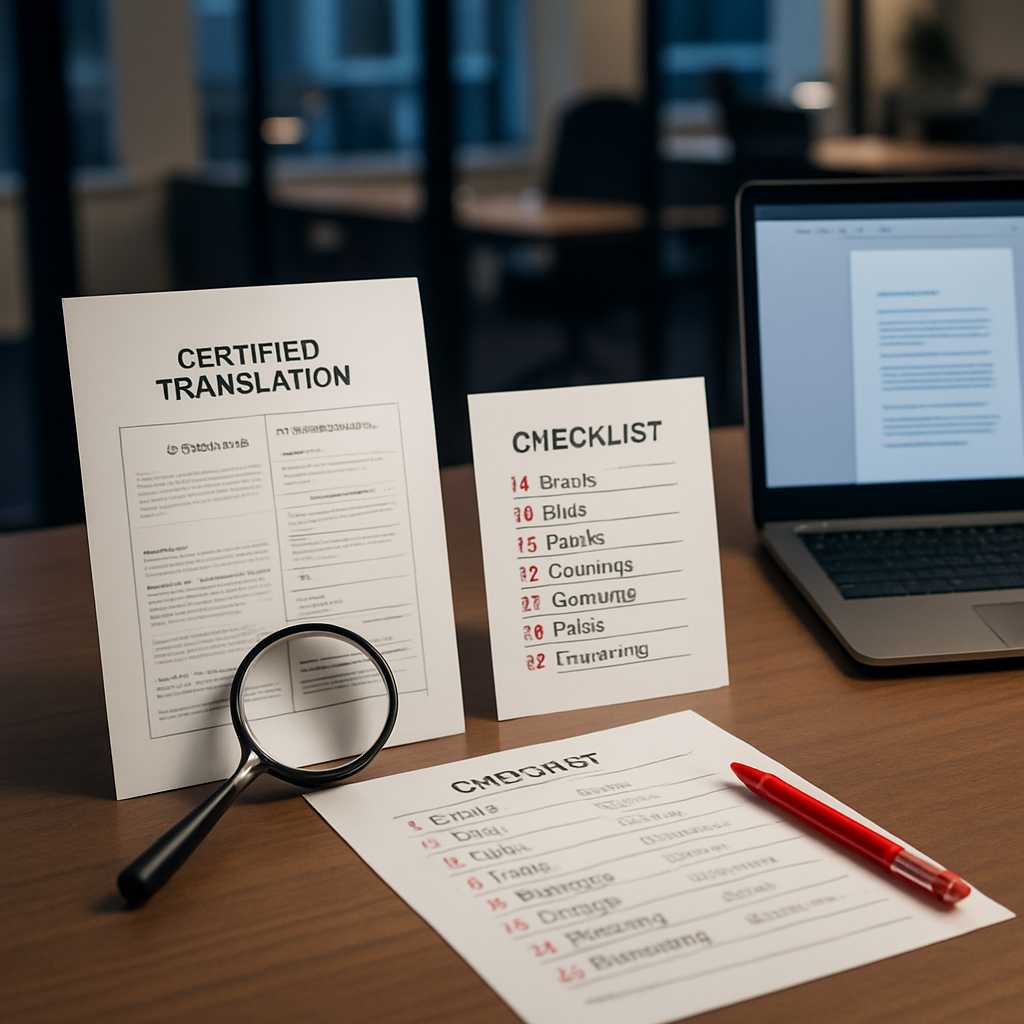
The easiest way to reduce unreadability is to fix the image before translation starts. If you are sending a file for official translation, use this checklist:
- Place the document on a flat surface.
- Use bright, even light and avoid direct flash glare.
- Keep all four corners visible.
- Do not crop out stamps, margins, handwritten notes, or reverse-side entries.
- Take the image straight-on, not at an angle.
- Send the highest-resolution version you have.
- If there is embossing, raised seal detail, or faint ink, send a second photo from a slightly different angle.
- If a name or handwritten note also appears clearly on another supporting document, send that too for consistency checking.
This is the simplest best practice for unclear scans: give the translator the fullest, clearest record available before certification begins.
Can a client tell the translator what the unclear word says?
Sometimes yes, but only carefully. A professional translator may ask for clarification where the client has reliable supporting knowledge, especially for:
- personal names
- place names
- issuing authorities
- repeated document numbers
- known dates or reference codes appearing elsewhere in the file
That said, a responsible translator will still avoid turning unsupported client memory into “source text.” If the original remains unreadable, the translation should reflect that reality. The goal is not to patch over the source. The goal is to produce the most accurate and honest record possible.
Why this matters in certified translations
Certified work raises the standard because the translation is expected to be complete, accurate, and professionally traceable. That means unclear source material must be handled in a way that remains:
- faithful to the visible document
- clear enough for an authority to review
- transparent about any unreadable content
- properly supported by certification wording and translator details
For official submissions, the safest translation is not the one that looks artificially polished. It is the one that is accurate, complete where possible, and open about the limits of the source. That is exactly why partial readability needs professional handling. A blurred stamp, faint handwritten line, or unclear footer should never be quietly ignored.
A practical comparison: poor handling vs professional handling
Poor handling
A blurry handwritten surname appears in a civil record. The translator assumes the spelling based on context and types it cleanly into the translation without comment.
Professional handling
The translator checks whether the surname appears more clearly elsewhere in the document set. If it cannot be confirmed with confidence, the unclear element is marked appropriately, or a clearer copy is requested before certification.
Poor handling
A stamp overlaps a date field, so the stamp is omitted and only the visible line is translated.
Professional handling
The visible text is translated, the presence of the stamp is noted, and any unreadable stamp text is marked as illegible rather than erased from the record.
Poor handling
A cropped bank statement image cuts off the final digits of a balance, but the provider translates the line anyway.
Professional handling
The provider asks for a complete image because the missing figures affect meaning and should not be guessed.
A better way to think about “complete”
Many people assume a complete translation means “translate every readable word.” In official document work, complete usually means more than that. It means handling the whole document responsibly, including:
- visible text
- headings and labels
- stamps and seals
- signatures where relevant
- handwritten additions
- marginal notes
- footers, reference numbers, and reverse-side entries
- any unreadable part that must be acknowledged rather than hidden
That is the real standard clients should look for.
What to do if your document is old, faded, or partly handwritten
Do not assume the document is unusable just because it looks difficult. Many old records can still be translated successfully when handled by someone who understands official formatting, document structure, and translator-note practice. Start with this approach:
- send the clearest copy you have
- mention where the translation will be submitted
- flag any areas you are concerned about
- include any second scan that shows faint text more clearly
- ask whether the file is ready for certified translation or whether a better copy would be safer
If a page is workable, a professional translator can usually proceed with careful notation. If it is not workable, you will know before time is lost. If you have a birth certificate, transcript, legal paper, medical report, or bank statement with blurred or handwritten sections, send it for review before the deadline becomes urgent. A quick scan check now is easier than explaining a questionable translation later.
Why clients choose a specialist for difficult scans
Difficult documents do not need guesswork. They need process. That means:
- careful review before work begins
- attention to names, dates, numbers, and formatting
- transparent notes for unreadable sections
- certification prepared for official use
- a clear answer on whether the scan is good enough
- fast turnaround options when the file is workable
When the document matters, clarity is not just about language. It is about how uncertainty is handled. If your document is partly faded, partly handwritten, or not fully readable, upload your file and get it checked properly. You will know whether it can be translated as-is, whether a better scan is needed, and how the unclear sections should be marked so the final translation stays accurate and credible.
FAQs
Can a certified translation include illegible text?
Yes. If part of the original document cannot be read with reasonable certainty, a professional translator may mark that section clearly rather than guess. That is often the safest and most accurate way to handle illegible text in translation.
Will a translator notes illegible entry make my document unusable?
Not necessarily. It depends on what is unclear. If the unreadable part is minor and the rest of the document is complete, the translation may still be usable. If the unclear section affects a key name, date, number, or legal statement, a better scan may be needed first.
What is the best practice for unclear scans?
Use a flat, well-lit image with all corners visible, no glare, and no cropped edges. Send the highest-resolution version available. If faint text or embossing is hard to see, send a second image from a different angle.
Can I ask the translator to fill in a word I already know?
You can provide supporting clarification, especially for names or repeated details, but a professional translator should still avoid presenting unsupported guesswork as if it were clearly visible in the source. The translation must reflect the document honestly.
How is partial readability handled in a professional translation?
When only part of a word, note, or stamp can be read, the readable portion may be translated and the unclear portion marked transparently. This is better than pretending the whole section is fully legible.
What should a certified translation disclaimer say for unclear text?
It should be brief and factual. A typical disclaimer explains that text which could not be read with reasonable certainty has been marked as illegible or partially illegible in brackets.